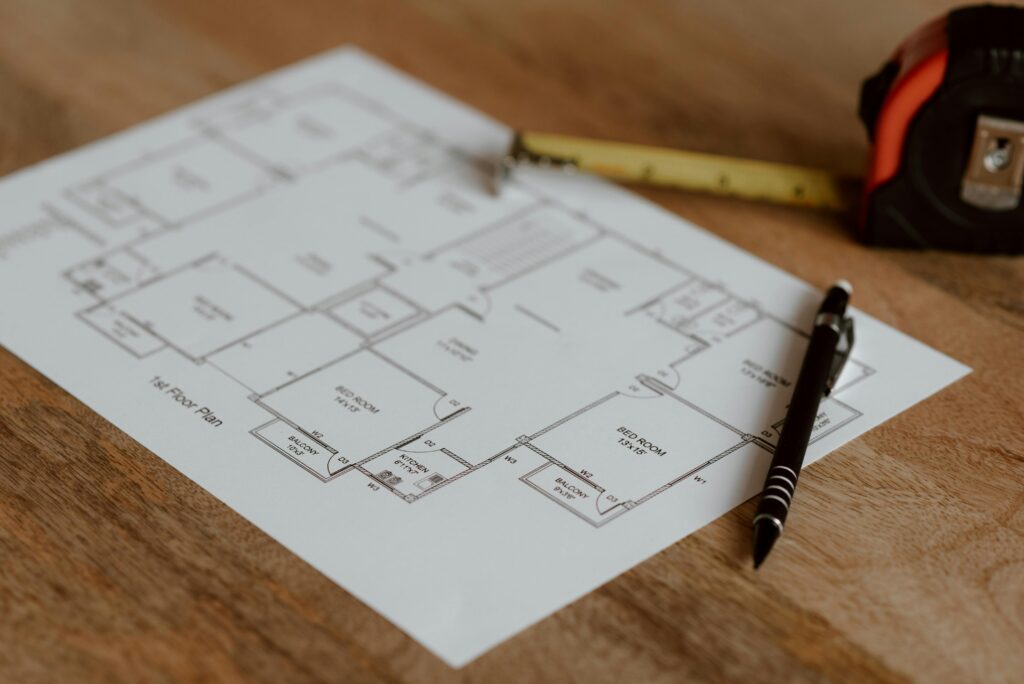

While architectural blueprints provide the overarching vision for a build, they rarely specify the exact manufacturer data, fabrication methods, or physical paint colors required for installation. That gap is bridged by the submittal process. Before a specialty trade can order materials or begin fabrication, they must submit detailed product data, shop drawings, and physical samples to the general contractor and design team for official approval. This exhaustive review workflow ensures that every beam, fixture, and finish adheres to the project’s strict quality and safety standards. Furthermore, if a submittal requires a material substitution that alters the original project scope, cost, or timeline, it will trigger the need for a formal change order.
The Submittal Process in Construction Projects
At the start of a well-organized project, it is common for a general contractor to create a submittal schedule or registry—a list of all required materials, equipment, and shop drawings specified in the contract documents. Once subcontractors and other stakeholders of the project are defined, the relevant submittals are assigned to them, and they can begin to demonstrate how their proposed materials meet the project’s technical requirements and coordinate with the rest of the project team through submittals.
Because construction projects are complex, additional submittals may be required if specifications change or if material substitutions are needed. Subcontractors send submittals to the general contractor to verify that their intended products and methods comply with the project’s established quality standards and contract documents before any work is installed.
As submittals come in and provide necessary technical details, the general contractor and design team will review them to ensure they conform to the design intent of the project.
Construction Submittals Workflow
A standard lifecycle mapping the preparation, review, and execution of project submittals.
»Related: Sometimes, a submittal brings new information to light that changes some of the important project details. If a submittal impacts cost, scheduling, or the scope of work, a change order could be necessary.
Examples of Submittals
‘Submittal’ is a broad term that refers to the submission of information needed for the construction project. However, these submittals could be a number of different items. Here are a variety of examples of what might be included in a submittal:
Technical and Action Submittals
- Product information
- Product manuals
- Materials samples
- Engineering calculations
- Coordination drawings
- Shop drawings
- Test results
Certification and Licensing Documentation
- Certificates of insurance
- Contractor certifications
- Contractor bonds
- Building permits
Close-out Items
- Warranties
- As-built drawings
- Operations and maintenance manuals
- Final lien waivers
Submittal Software
For large projects, the submittal process is typically managed using construction project management software. Systems such as Procore and Autodesk (specifically Forma Build) feature built-in, AI-powered workflows for requesting, tracking, and managing submittals.
Smaller projects and teams typically leverage submittals as well but may not have the budget for enterprise-grade platforms. For these users, cloud-based tools like Bluebeam Cloud provide a more streamlined and cost-effective management system for tracking submittals and coordinating reviews.
Related Posts

A general contractor (GC) is a construction professional or firm responsible for overseeing a project, managing specialized subcontractors, and ensuring…

A construction punch list is a formal document created during a project's final walkthrough that details incomplete work, minor repairs,…

A Request for Information (RFI) is a formal construction document used to clarify design specifications, resolve site discrepancies, and establish…

A construction change order is a legally binding amendment to an existing contract that formally authorizes and records agreed-upon modifications…
The best construction accounting software in 2026 are QuickBooks Online for small contractors, CrewCost for growing and midmarket construction businesses,…

The best builders risk insurance companies for 2026 are Nationwide for general contractors, State Farm for homeowners and owner-builders, and…

The best construction project management software of 2026 includes Procore for enterprise general contractors, Buildertrend for residential builders, and Contractor…

The best construction estimating software of 2026 includes STACK for all-in-one takeoffs, Sage Estimating for commercial general contractors, and Clear…