
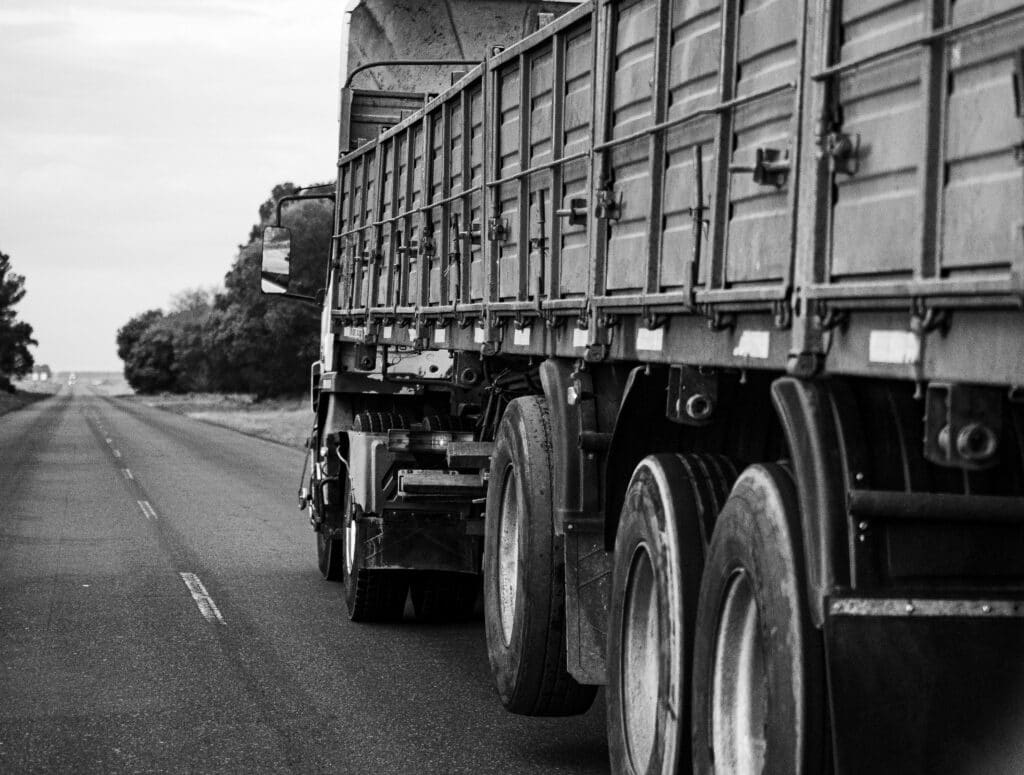


This guide is for heavy civil contractors, site-prep crews, specialty tradesmen hauling heavy equipment trailers, and fleet managers operating vehicles with a Gross Vehicle Weight Rating (GVWR) or Gross Combination Weight Rating (GCWR) of 10,001 pounds or more.
Key Takeaways
- Commercial truck insurance replaces standard commercial auto insurance when a vehicle’s size, weight, or cargo requires higher statutory liability limits and specialized physical damage protection.
- Vehicles or vehicle combinations with a GVWR or GCWR of 10,001 pounds or more operating in interstate commerce trigger Federal Motor Carrier Safety Administration (FMCSA) regulations in addition to state vehicle laws.
- While commercial truck insurance handles vehicle liability and physical damage, contractors must layer separate endorsements—such as motor truck cargo, inland marine equipment floaters, and CGL mobile equipment forms—to cover hauled machinery, tools, and jobsite operations.
- Because construction fleets typically operate within a 50-mile radius rather than long-haul freight lanes, contractors generally pay lower premiums than over-the-road carriers, provided their broker classifies the fleet radius correctly.
- Clean driver MVRs, current DOT medical cards, three to five years of loss runs, and telematics or dashcam installation help contractors secure preferred underwriting tiers and avoid rate hikes.
Looking to compare rates and buy a policy? Jump straight to our guide on the Best Commercial Truck Insurance Companies to see our top picks for construction fleets.

Get a Commercial Truck Insurance Quote With Progressive
Table of Contents
Read on for a complete breakdown of what commercial truck insurance is, what it covers, what it costs, and how to find the right policy. If you already know what you’re looking for, jump directly to the resource you need:
- Cost Guide: Learn how much you should expect to pay based on vehicle weight, operational radius, and cargo type.
- Coverage Guide: Understand exactly what is covered—and what is excluded—under a standard policy.
- Requirements Guide: Ensure your policy meets FMCSA regulations, state DOT laws, and GC contract standards.
- Best Companies: Compare top carriers to find the right underwriter for heavy construction fleets.
Related Truck Insurance Guides



How Commercial Truck Insurance Works for Contractors
Commercial truck insurance operates as a modular policy built around a standard Business Auto Policy (BAP) structure or specialized commercial motor carrier form. Primary liability and physical damage form the base coverage, protecting owned or operated heavy vehicles against road accidents and direct physical loss.
Because standard vehicle policies exclude jobsite operations, cargo in transit, and heavy equipment, contractors customize their coverage by adding specialized endorsements and supplementary policies:
- Motor truck cargo or installation floaters cover materials, equipment, and structural components while transported to jobsites.
- Contractors’ equipment floaters protect mobile machinery, skid steers, and tools whether in transit or parked at a work site.
- Mobile equipment endorsements bridge coverage between road transit under the auto policy and stationary jobsite operations under commercial general liability.
Commercial Auto vs. Commercial Truck
The boundary between standard commercial auto and commercial truck insurance depends on vehicle classification, operating weight, and usage. Standard commercial auto policies cover light-to-medium-duty vehicles—such as sedans, SUVs, and standard pickup trucks—used primarily for moving personnel and light jobsite supplies.
Heavy construction fleets operating as private motor carriers—transporting their own tools, machinery, and materials—require commercial truck underwriting once vehicles or combined setups cross specific weight thresholds. Crossing a Gross Vehicle Weight Rating (GVWR) or Gross Combination Weight Rating (GCWR) of 10,001 pounds triggers Federal Motor Carrier Safety Administration (FMCSA) safety standards, while hitting 26,001 pounds mandates commercial driver licensing and federal heavy-vehicle compliance.
| Feature / Metric | Standard Commercial Auto | Commercial Truck (Private Motor Carrier) |
| Typical Vehicles | Sedans, SUVs, utility vans, and light pickups | Dump trucks, concrete mixers, semi-tractors, and heavy pickups towing equipment trailers |
| Weight Threshold | Light to medium duty (Under 10,001 lbs GVWR) | Heavy duty (10,001 lbs to 80,000+ lbs GCWR) |
| Regulatory Oversight | State insurance departments and motor vehicle divisions | FMCSA and state transportation departments |
| Standard Liability Limits | $300,000 to $1,000,000 combined single limit (CSL) | $750,000 to $2,000,000+ CSL depending on vehicle class and cargo |
| Cargo & Equipment | Minor incidental tool coverage | Requires inland marine floaters and dedicated cargo endorsements |
When contractors tow heavy equipment trailers using three-quarter-ton or one-ton pickups, the combined weight often pushes the setup into commercial motor carrier territory. Standard auto policies require trailing units over specific weight thresholds to be explicitly scheduled to maintain liability and physical damage coverage during transit.
For a comprehensive analysis of policy forms, symbol designations, and trailer scheduling requirements, see our complete guide on Commercial Auto vs. Commercial Truck Insurance.
What Construction Vehicles Require Truck Insurance?
Construction vehicles operating on public roads require commercial auto or commercial truck insurance whenever their weight, operational hazards, or attached trailers subject them to state motor vehicle registration and financial responsibility laws. Fleet operations in the building trades differ significantly from standard freight logistics; construction hauling centers on moving heavy machinery, structural materials, and raw aggregates directly to active jobsites.
Heavy off-road construction equipment—such as bulldozers, excavators, and forklifts—is classified as mobile equipment under standard insurance definitions. Third-party liability for mobile equipment operations falls under a Commercial General Liability (CGL) policy, while direct physical damage is covered under an inland marine contractor’s equipment floater rather than an auto policy. Once machinery is mounted to a licensed truck chassis and driven on public roads, the vehicle unit requires commercial vehicle coverage.
Earthmoving & Site Prep Trucks
Earthmoving and site prep vehicles operate under harsh jobsite conditions. They require policies built for off-road hazards, heavy payloads, and flying debris.
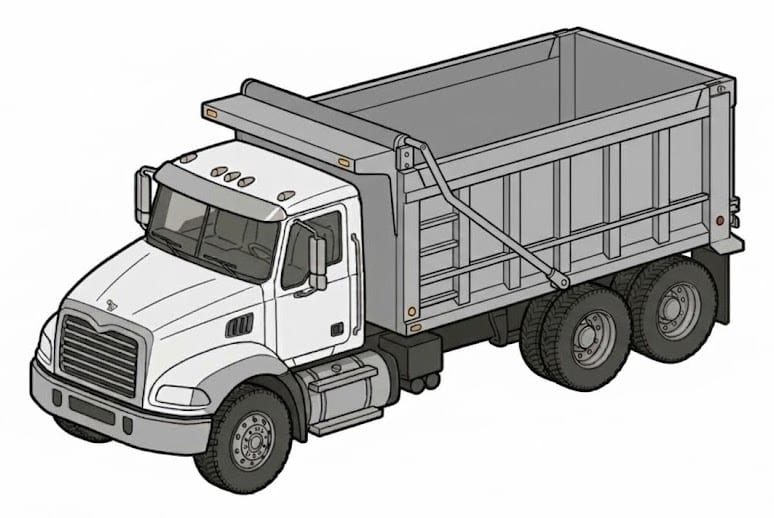
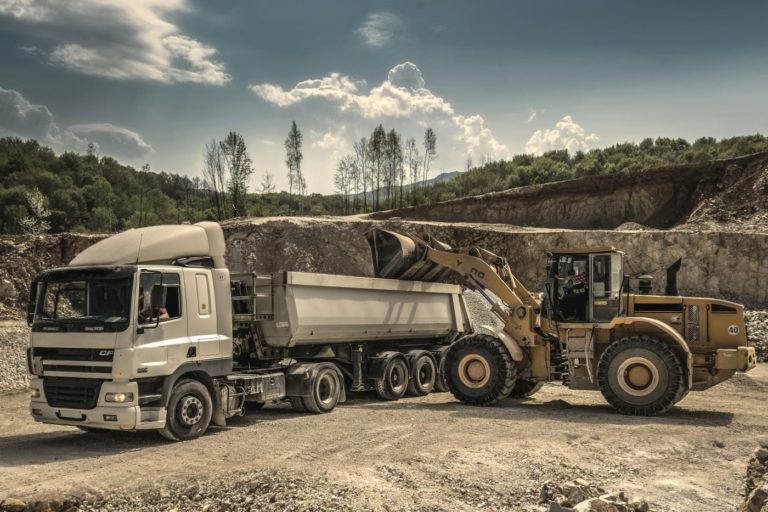
Dump Trucks: Single-axle, tandem, and tri-axle dump trucks often dump on uneven ground, making them prone to tipping over. If a truck rolls, standard actual cash value policies do not cover the full replacement cost of a custom dump body and hydraulic hoist. Protecting upfitted components requires a Stated Amount physical damage endorsement. On the road, gravel escaping the bed creates regular windshield and paint claims, making comprehensive deductibles a major factor in policy setup.
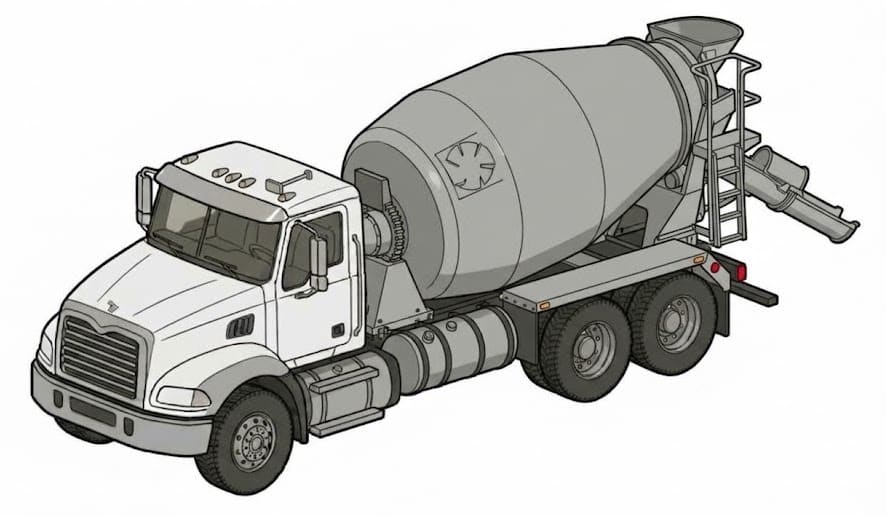
Concrete Trucks: Ready-mix and pump-equipped concrete trucks haul time-sensitive liquid payloads. If a truck breaks down or crashes and concrete sets inside the drum, the entire drum assembly—valued at tens of thousands of dollars—is ruined. Boom pump trucks introduce distinct operational hazards. Driving the pump to the jobsite falls under a commercial auto policy, but once outriggers deploy and the boom raises, jobsite accidents—such as a boom collapsing onto a structure—are covered by commercial general liability (CGL), not auto insurance.
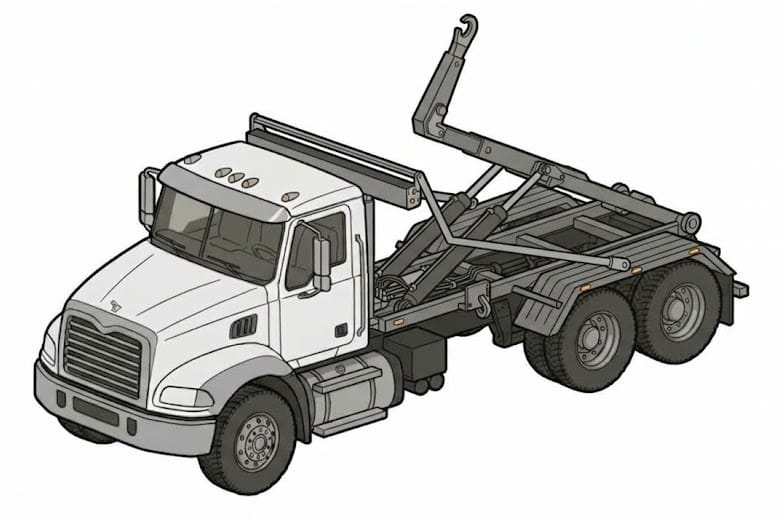
Roll-Off Trucks: Dropping heavy steel containers in residential driveways or narrow city streets creates unique liabilities for roll-off trucks. The weight of loaded containers can crack concrete driveways, crush underground pipes, or cause collisions if unlit dumpsters sit on public streets overnight. Maintaining adequate liability limits protects against the entire mechanical hoist cycle, including claims if a hydraulic cable snaps while winching a container.
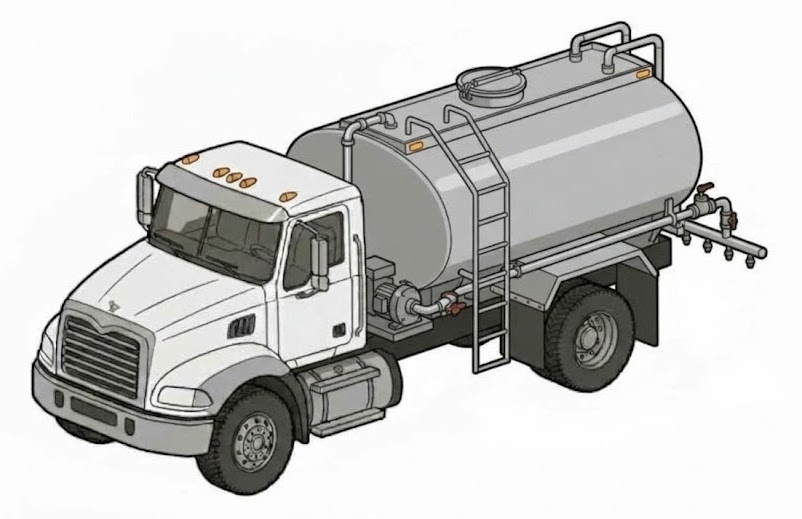
Water Trucks: Highway-rated and off-road water trucks haul thousands of gallons of shifting liquid for dust control and soil compaction. Liquid surge makes these trucks top-heavy and prone to rolling over during sudden stops or sharp turns. Underwriters evaluate this specific rollover risk when rating physical damage and liability coverage.
Heavy Machinery & Material Transport
Transporting heavy machinery and structural components requires high-limit commercial motor carrier policies due to gross payload mass and strict securement regulations.
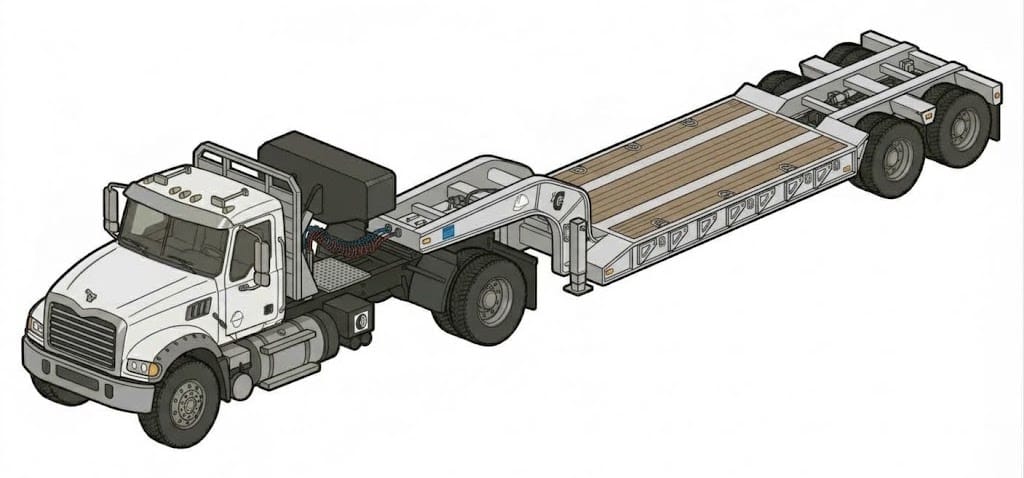
Semi Trucks: Class 8 tractors and lowboy setups operating as construction semi trucks haul heavy equipment like excavators and directional drills. Moving a combination setup that weighs over 80,000 pounds means a single accident can destroy both a highly expensive power unit and the multi-million-dollar machinery sitting on the trailer. Policies must account for bridge weight formulas, route survey protocols, and adequate motor truck cargo limits to protect the hauled equipment against transit damage.
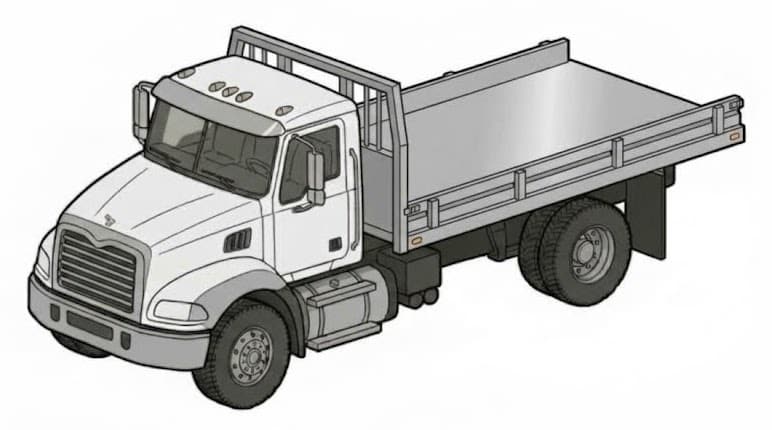
Flatbed Trucks: Straight flatbeds and tractor units configured as flatbed trucks haul structural steel, precast concrete, and lumber. These loads fall under strict FMCSA tie-down and securement rules. If a strap fails and rebar shifts during hard braking, commercial auto liability covers third-party damage to other vehicles. However, covering the lost or damaged materials themselves requires a dedicated installation floater or motor truck cargo endorsement.
MEP & Specialty Trade Trucks
Mechanical, electrical, plumbing, and specialty trade vehicles require commercial policies that account for specialized utility equipment, onboard inventories, and aerial platforms.
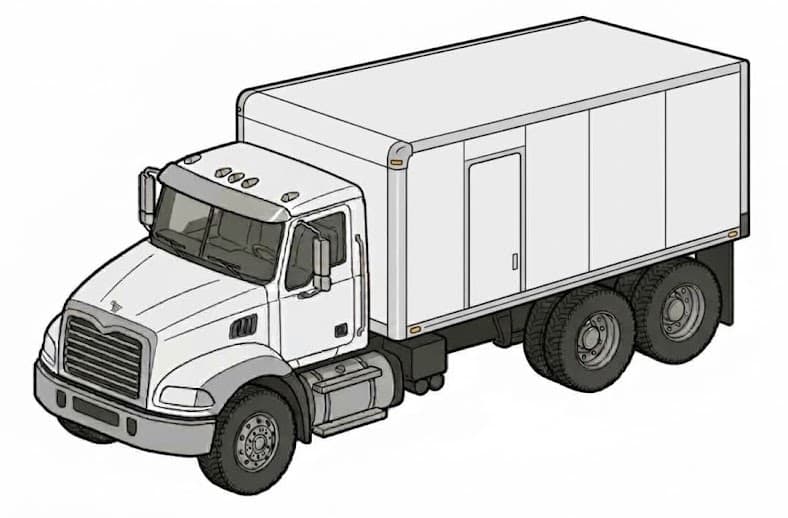
Box Trucks: Mechanical and electrical subcontractors rely on box trucks to move high-value gear like HVAC rooftop units and switchgear. A standard commercial auto policy only covers the truck chassis and the box itself; it completely excludes cargo. This leaves tens of thousands of dollars in onboard inventory entirely uninsured in a crash. Protecting those specific materials during transit requires an installation floater, which covers the components until they are permanently installed at the jobsite.
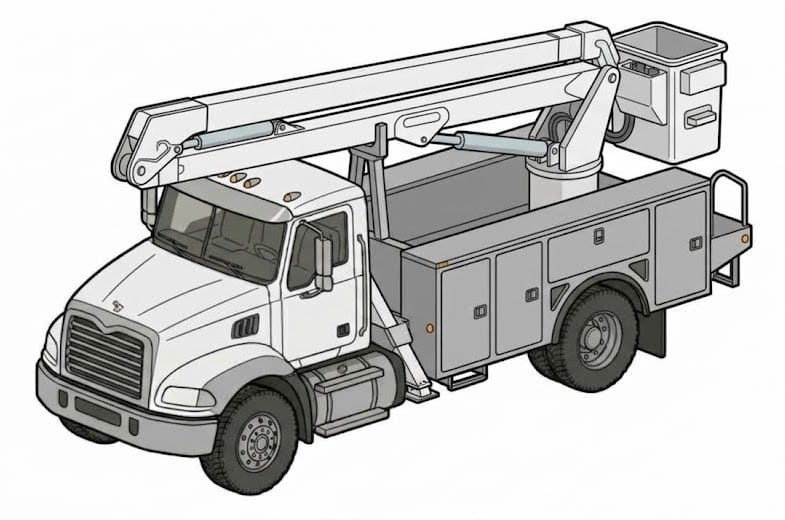
Bucket & Boom Trucks: Specialty contractors operating bucket trucks and custom boom trucks handle two distinct phases of risk. Road transit falls under commercial auto insurance. Once the truck is parked and lifts a worker into the air, jobsite accidents—such as a bucket detachment or boom contact with power lines—fall under general liability through a specific exception for worker-lifting platforms.
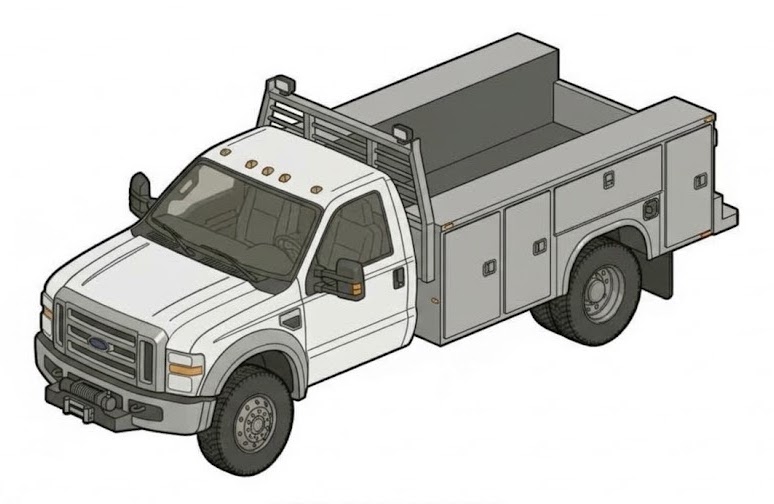
Utility Trucks: Field mechanics and service techs run utility trucks loaded with custom service bodies, power tools, and mounted cranes. A standard auto policy only covers factory-stock vehicles, meaning it will not pay to replace a custom utility bed or the thousands of dollars of loose tools stored inside it. Contractors must explicitly schedule the upfitted utility body on the auto policy to protect the hardware, and secure a contractors’ equipment floater to cover the tools.
Service, Light Hauling & Combination Rigs
High-payload pickups, cargo vans, and heavy trailers represent a major area of misclassified coverage in construction fleets.
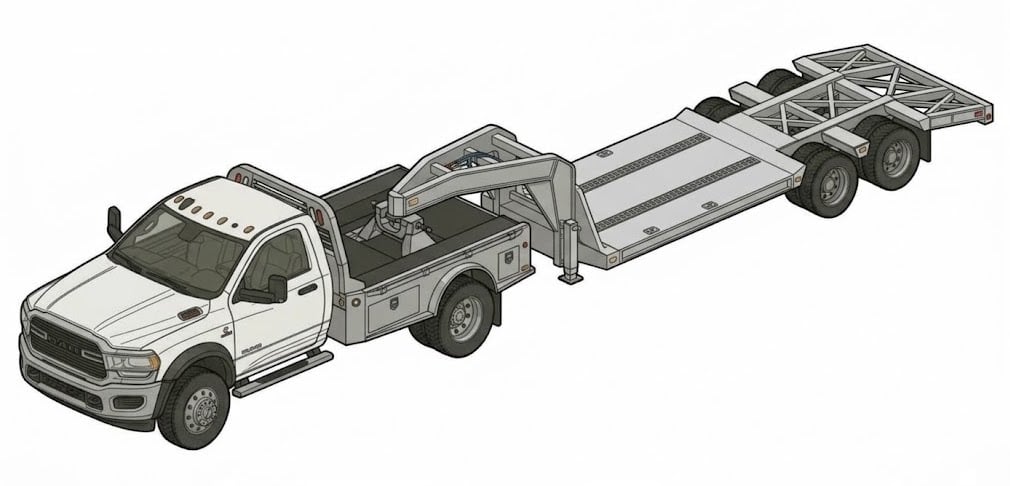
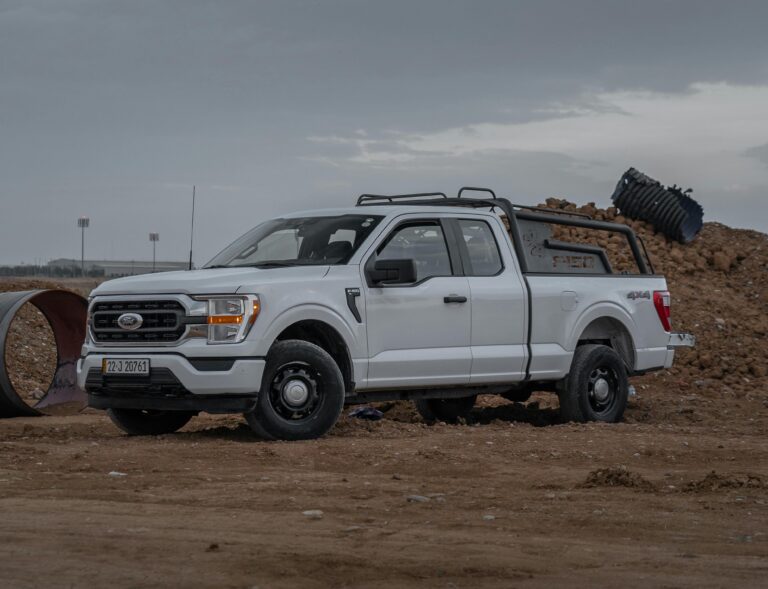
Hot Shots: Hitching a 14,000-pound gooseneck trailer to a three-quarter-ton or one-ton pickup in a hot shot setup pushes the combined weight past statutory commercial thresholds. Crossing 10,001 or 26,001 pounds GCWR triggers commercial motor carrier rules, requiring commercial driver licensing, federal DOT filings, and heavy-vehicle truck underwriting that schedules the trailer.
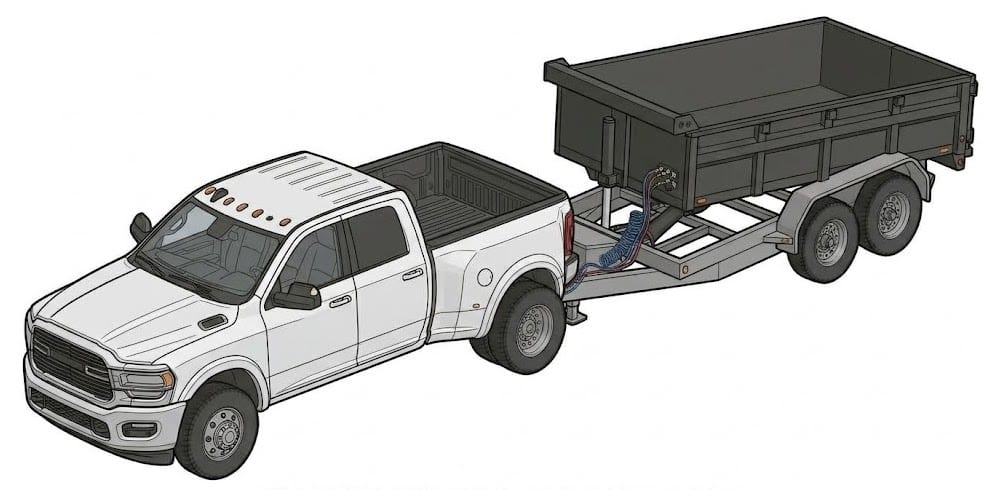
Dump Trailers: Hydraulic gooseneck and bumper-pull dump trailers present a common and expensive coverage gap. When a trailer is hitched to a covered truck, the auto policy generally extends liability coverage to the trailing unit, paying for third-party damages if the driver causes a crash. However, this automatic extension provides zero physical damage protection for the trailer itself. If a trailer flips over while discharging a load of aggregate, repairing the unit requires explicit comprehensive and collision coverage scheduled directly on the auto policy. Even with physical damage coverage, structural frame failure caused by overloading the trailer is typically excluded. Any machinery hauled inside the trailer, such as a skid steer, is also excluded from the auto policy and requires a separate contractors’ equipment floater.
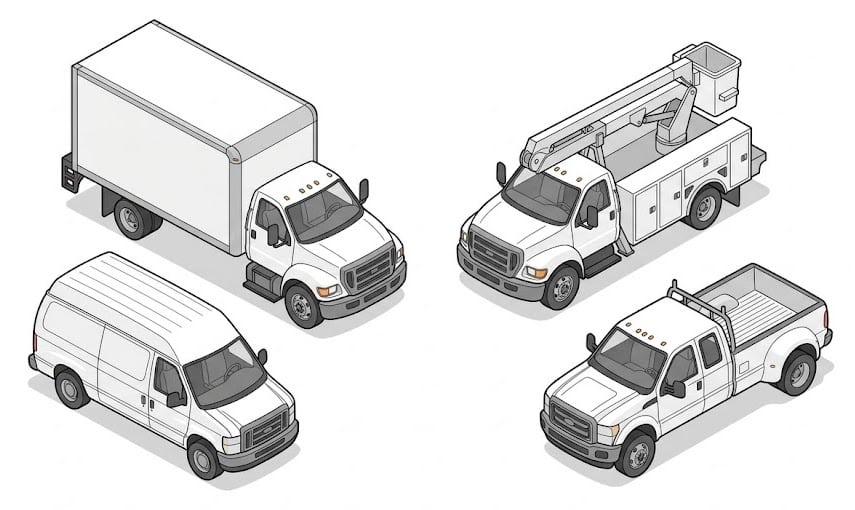
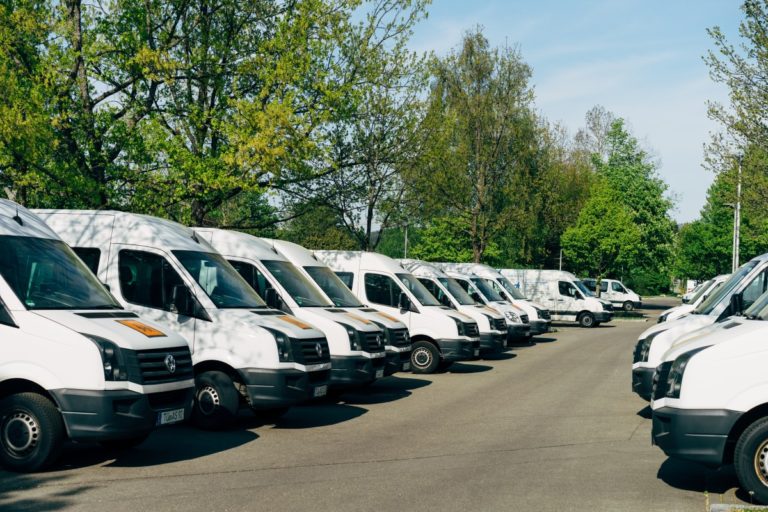
Pickups, Vans & Fleets: Standard commercial pickups and cargo vans used for superintendents or light service work belong on commercial auto policies. As operations grow, consolidating vehicles under a single commercial fleet insurance policy simplifies administration, establishes uniform liability limits, and secures fleet pricing discounts.
What Does Commercial Truck Insurance Cover?
Commercial truck insurance does two main things: it pays for damage and injuries a company driver causes to others, and it pays to repair the company’s own trucks after an accident. However, standard truck policies do not cover the materials sitting in the truck bed, trailers rented from a dealership, or accidents caused by operating heavy machinery on the jobsite. Contractors close these gaps by adding specific endorsements to the base policy.
Liability & Physical Damage
Base commercial truck policies are built on three primary components designed to handle roadway accidents and vehicular damage.
Primary Auto Liability: This is the baseline coverage required by law. If a company driver runs a red light and hits another car, this pays for the other driver’s medical bills and vehicle repairs, plus the contractor’s legal defense. For heavy trucks over 10,001 pounds, insurance companies typically write this as a “combined single limit” (CSL) of $750,000 to $1,000,000. Instead of setting separate limits for property damage and bodily injury, a CSL provides one large pool of money per accident to cover whatever damages occur.
Physical Damage Coverage: This pays to repair or replace the company’s own trucks. It splits into two parts:
- Collision coverage pays out if a truck flips on a dirt haul road, jackknifes, or hits another vehicle.
- Comprehensive coverage pays for non-driving damage, like a stolen truck, a fire, or a smashed windshield from flying gravel.
Standard policies only pay out the depreciated actual cash value of a truck. For trucks with expensive modifications—like custom dump beds or mounted cranes—contractors must list the exact value of that equipment on the policy upfront (often called a “Stated Amount”). Otherwise, the insurance company will not pay the full cost to replace the custom setup after a total loss.
Uninsured & Underinsured Motorist (UM/UIM) Coverage: This protects company drivers if they are hit by someone who does not have insurance or flees the scene. If a driver gets hurt on the clock in a crash, workers’ compensation pays their medical bills and lost wages first. UM/UIM coverage then kicks in to pay for damages that workers’ compensation does not cover, such as pain and suffering.
Specialized Endorsements for Construction
Standard commercial auto forms explicitly exclude loose cargo, unowned trailers, and off-road mechanical operations. Contractors customize their coverage using specific endorsements to protect the assets moving through their supply chain.
- Inland Marine Coverages (Floaters): A standard auto policy provides zero coverage for the tools, supplies, or heavy machinery sitting in the truck bed or on the trailer. Contractors buy separate inland marine policies to protect these items. An “equipment floater” pays to replace stolen or damaged tools and mobile machinery, while an “installation floater” covers building materials—like structural steel and HVAC units—while they are transported and waiting to be installed.
- Rented Trailer Coverage: Contractors often haul trailers rented from an equipment yard. A standard policy only covers trailers the company actually owns. To cover a rented trailer if it flips or gets damaged, the contractor must add a specific rented-trailer endorsement (often referred to as hired auto physical damage or trailer interchange coverage, depending on the rental contract).
- Mobile Equipment Endorsement: Trucks with mounted machinery, like concrete pumps or bucket lifts, act as vehicles on the road but operate as heavy machinery on the jobsite. A standard general liability (CGL) policy excludes vehicles driven on public roads. Adding a mobile equipment endorsement to the auto policy bridges this gap. It ensures the auto policy covers the drive to the site, while the general liability policy takes over for any accidents that happen once the truck is parked and the machinery goes to work.
Trucking policies require highly specific endorsements to protect hauled equipment. Read our full guide on What Commercial Truck Insurance Covers for a deep dive into cargo limits and bobtail liability.
Truck Insurance Requirements for Contractors
Federal Motor Carrier Safety Administration (FMCSA) and Department of Transportation (DOT) regulations apply to any contractor operating commercial motor vehicles that cross specific weight thresholds or transport materials across state lines. Many construction business owners assume these rules apply exclusively to for-hire freight haulers. In reality, private motor carriers—including specialty trade contractors and heavy civil firms moving their own tools, machinery, and jobsite supplies—are subject to federal motor carrier safety standards.
Crossing statutory weight thresholds changes the legal classification of work trucks from standard business vehicles to regulated commercial motor vehicles. When that transition occurs, state and federal agencies impose compliance guidelines governing vehicle maintenance, driver qualifications, and insurance filings. Failing to meet these standards can result in roadside out-of-service orders, civil fines, and denied insurance claims.
USDOT Number & Safety Requirements
Operating a single vehicle or truck-and-trailer combination with a Gross Vehicle Weight Rating (GVWR) or Gross Combination Weight Rating (GCWR) of 10,001 pounds or more in interstate commerce requires the business to register for a USDOT number. Crossing this weight boundary triggers mandatory compliance with foundational motor carrier safety regulations:
- Driver Qualification Files: Employers must maintain complete qualification records for every driver, including employment applications, three-year driving history checks, and annual Motor Vehicle Record (MVR) reviews.
- DOT Medical Examinations: Drivers must pass a physical examination by a certified medical examiner and maintain a valid DOT medical card.
- Hours of Service (HOS) & Maintenance: Drivers must record operating hours to prevent fatigue, and fleet managers must maintain systematic inspection, repair, and maintenance logs for every vehicle.
For intrastate operations, 38 states require a USDOT number even if vehicles never cross state lines, though enforcement weight thresholds vary by jurisdiction.
Commercial Driver’s License (CDL) Rules
Drivers must hold a valid Commercial Driver’s License (CDL) when operating a single vehicle with a GVWR of 26,001 pounds or more, or a combination setup with a GCWR of 26,001 pounds or more (provided the towed trailer exceeds 10,000 pounds GVWR).
Operating at or above this weight threshold introduces additional regulatory requirements:
- FMCSA Drug & Alcohol Clearinghouse: Employers must register with the federal database, conduct pre-employment queries, and enroll drivers in a mandatory random drug and alcohol testing pool.
- Heavy Highway Vehicle Use Tax (IRS Form 2290): Power units registered at a gross taxable weight of 55,000 pounds or more must pay this annual federal tax to maintain valid state vehicle registrations.
FMCSA Insurance Filings & Minimum Limits
The FMCSA enforces mandatory public liability limits that exceed standard state auto minimums. For non-hazardous freight transported across state lines in vehicles over 10,000 pounds, federal regulations mandate a baseline limit of $750,000 in Combined Single Limit (CSL) liability, supported by an MCS-90 policy endorsement.
While private contractors hauling their own non-hazardous machinery and supplies are generally exempt from federal financial responsibility filings (such as the BMC-91X), hazardous cargo removes this exemption. Private or for-hire fleets transporting fuel tanks, hazardous jobsite chemicals, or contaminated demolition waste requiring DOT safety placarding must maintain minimum liability limits of $1,000,000 or $5,000,000 per occurrence, depending on the payload class.
Insurance underwriters regularly evaluate a contractor’s public safety record through the FMCSA Safety Measurement System (SMS). Clean roadside inspection logs, up-to-date driver medical cards, and documented fleet maintenance schedules directly improve safety scores, helping contractors qualify for preferred liability rates.
Depending on gross vehicle weight, contractors can face strict federal oversight. Check our complete checklist of Commercial Truck Insurance Requirements to help ensure a fleet operates legally.
How Much Does Commercial Truck Insurance Cost?
Commercial truck insurance for construction fleets typically costs between $2,500 and $15,000 per vehicle per year, depending on gross vehicle weight, operating territory, and vehicle vocational class. Research from the American Transportation Research Institute (ATRI) indicates that operational insurance costs per mile continue to hit industry highs across the transportation sector. Construction contractors, however, routinely secure lower rates than interstate freight haulers because their fleets log fewer annual highway miles and operate within tightly defined geographic areas.
The physical size of a vehicle and the mechanics attached to its chassis serve as the baseline for carrier underwriting. A light-duty service pickup carries far less third-party damage potential than a fully loaded tri-axle dump truck or a ready-mix concrete truck. The table below outlines estimated annual insurance premiums across common construction vehicles based on commercial carrier benchmarks.
| Vehicle Type | Weight Class (GVWR) | Estimated Annual Premium | Primary Construction Application |
| Commercial Pickup / Hot Shot | Class 3–5 (10,001–19,500 lbs) | $1,500 – $5,000 | Superintendent transit, equipment towing, light freight |
| Box Truck | Class 4–6 (14,001–26,000 lbs) | $3,000 – $11,000 | MEP trades, HVAC deliveries, finish materials |
| Single-Axle Dump Truck | Class 6–7 (19,501–33,000 lbs) | $3,300 (average) | Residential paving, light aggregate, site cleanup |
| Tri-Axle Dump Truck | Class 8 (Over 33,000 lbs) | $6,750 (average) | Heavy civil, quarry hauling, bulk excavation |
| Concrete Mixer | Class 8 (Over 33,000 lbs) | $5,000 – $10,000+ | Ready-mix transport, time-sensitive liquid payloads |
| Semi-Tractor / Lowboy | Class 8 (Over 33,000 lbs) | $9,000 – $20,000+ | Heavy equipment transport, structural steel |
Primary Rating Factors
Underwriters establish premiums for commercial construction vehicles by analyzing several core operational variables that measure loss probability:
- Gross Vehicle Weight Rating (GVWR): The manufacturer-specified maximum weight rating dictates baseline liability exposure. Combined setups are measured by Gross Combination Weight Rating (GCWR). Heavy vehicles rated at 26,001 pounds or more generate significantly higher kinetic force in a collision, increasing potential third-party property damage and bodily injury payouts.
- Cargo Classification: The materials hauled directly alter a fleet’s risk profile. Transporting clean fill, raw aggregates, or boxed building supplies carries standard rating tiers. Hauling hazardous liquids, asphalt emulsion, or oversized machinery triggers higher liability brackets.
- Driver Motor Vehicle Records (MVRs): Commercial drivers with clean records, extensive experience, and valid CDLs qualify for lower premium tiers. A single moving violation, speeding ticket, or at-fault accident within a 36-month lookback window can substantially increase individual vehicle premiums.
How Contractors Can Lower Insurance Premiums
Contractors can take proactive operational steps to secure carrier underwriting credits and reduce annual fleet overhead:
- Local Radius Classification: Construction vehicles operating within a restricted regional radius secure significantly lower premiums than long-haul carriers. Long-haul freight transport involves routes spanning multiple states and prolonged highway driving. Construction fleets typically run within a local radius (up to 50 miles) or intermediate radius (51 to 200 miles). Ensuring brokers explicitly classify fleet schedules under local radius codes prevents underwriters from applying default long-haul rates, which can inflate baseline premiums by 30% to 50%.
- Telematics & Dashcam Credits: Due to rising litigation costs and commercial vehicle claims, insurance carriers offer premium discounts to fleets that implement safety technology. Installing dual-facing dashcams and commercial telematics systems allows fleet managers to monitor driver behavior, verify accident details, and demonstrate risk mitigation to underwriters during policy renewals.
- Secure Fleet Yard Storage: Demonstrating that fleet vehicles return to a gated, well-lit, or monitored company yard overnight reduces comprehensive risk ratings. Lowering exposure to theft, vandalism, and jobsite damage results in reduced comprehensive premium charges across the fleet.
To evaluate detailed cost breakdowns across specific vehicle classes, see our full Commercial Truck Insurance Cost Guide.
How to Choose the Best Commercial Truck Insurance
The best commercial truck insurers for contractors offer specialized equipment endorsements, local operating radius classifications, and fast claims processing for heavy machinery. Construction fleets present unique operational risks—such as off-road jobsite transit, heavy equipment trailering, and custom upfitted truck bodies—that standard commercial auto carriers are rarely equipped to handle.
When evaluating commercial truck carriers, construction businesses should prioritize underwriters that actually understand trade workflows:
- Stated Amount Valuation for Custom Equipment: Standard auto policies pay actual cash value for the base chassis. Look for carriers that write “Stated Amount” physical damage coverage to ensure expensive custom upfits—like hydraulic dump bodies, transfer tanks, and boom cranes—are included in the valuation if the truck is totaled.
- Local & Intermediate Radius Rating: Default long-haul trucking rates will artificially inflate your premiums. Ensure the carrier offers flexible local (under 50 miles) and intermediate (up to 200 miles) radius classifications to secure contractor-specific rate discounts.
- Heavy Trailer & Towing Alignment: Hitching a 14,000-pound gooseneck trailer changes compliance and coverage needs for a construction fleet. Choose a carrier with clear heavy-trailering provisions that easily schedules equipment trailers on the primary policy without requiring complicated standalone trailer coverage.
- Seamless Inland Marine Integration: A commercial truck policy does not cover the tools inside the cab or the excavator sitting on the trailer. The best carriers allow you to bundle Contractors’ Equipment Floaters and Motor Truck Cargo coverage directly with the auto policy, avoiding secondary carriers and split claims.
- Instant Digital COI Access: General contractors routinely require proof of coverage—often demanding specific additional insured, waiver of subrogation, and primary and noncontributory endorsements—before granting jobsite access. A carrier with an intuitive mobile portal allows you to generate and email Certificates of Insurance (COIs) containing these exact stipulations instantly from the cab of your truck, preventing your crew from getting stalled at the gate.
- Fast-Track Claims for Specialized Equipment: If your tri-axle dump truck or concrete mixer is sidelined, daily revenue stops. Prioritize carriers with dedicated heavy-equipment adjusters and robust downtime or rental reimbursement limits specifically for commercial-grade replacement trucks.
What You Need to Get a Quote
To get accurate pricing from top-tier carriers, contractors must present a complete operational history. Having these documents ready prevents artificially low quotes that jump in price once final records are pulled.
Before deciding whether to use a broker, agent, or buy direct, gather these three items:
- Detailed Vehicle Schedule: Compile your business EIN and USDOT number. List every vehicle by year, make, model, VIN, Gross Vehicle Weight Rating (GVWR), and the stated physical value of any custom upfits.
- Currently Valued Loss Runs: Request official loss run reports from your current and prior insurance carriers, dated within the last 90 days, to prove your 3-to-5-year claims history.
- Driver MVRs and CDLs: Collect driver’s license numbers and dates of birth for all operators. Pulling Motor Vehicle Records (MVRs) within 30 days of the quote—and providing current DOT medical cards for heavy equipment drivers—helps lock in accurate rates.
Top Commercial Truck Insurers for Construction Businesses
Comparing underwriters based on fleet size, vehicle weight classes, and required endorsements ensures your policy fits your specific trade operations:
| Company | Best For | AM Best Rating | Get a Quote |
|---|---|---|---|
|
Progressive
|
Top pick for small fleets; one of the largest selections of commercial truck policies with great quoting tools | A+ | |

The Hartford
|
High-risk drivers and large fleet management; top-ranked for customer satisfaction | A+ | |

Sentry
|
Best customer experience with highly customizable policies; 34-year streak of A+ financial ratings | A+ |
*We may earn a commission when you click through these links.
Compare complete carrier reviews, coverage options, and direct rating benchmarks in our guide to the Best Commercial Truck Insurance Companies.
Frequently Asked Questions
Do I need commercial truck insurance for a pickup truck?
Generally, no—unless the pickup and its trailer exceed 10,001 pounds. Light-duty half-ton and three-quarter-ton pickups used for superintendent transit or light tool transport fall under standard commercial auto policies. However, commercial truck underwriting is required when a heavy-duty pickup (such as an F-350 or Ram 3500) operates with a Gross Vehicle Weight Rating (GVWR) exceeding 10,001 pounds, or when hitched to a heavy equipment trailer that pushes the combined weight past that limit. Crossing this statutory threshold requires a heavy commercial truck policy to comply with federal and state regulations.
Does commercial truck insurance cover construction tools?
No. Commercial truck insurance only protects the vehicle chassis and permanently mounted equipment. It explicitly excludes loose hand tools, power equipment, and materials carried in the truck bed or cab. To cover proprietary tools and mobile machinery against theft, transit damage, or jobsite loss, contractors must secure a separate inland marine policy, specifically a contractors’ equipment floater.
What is Hired and Non-Owned Auto (HNOA) coverage for contractors?
Hired and Non-Owned Auto (HNOA) coverage protects a business from liability when employees drive vehicles the company does not own. Standard commercial auto policies only cover scheduled, company-owned fleet vehicles. An HNOA endorsement closes this gap by extending liability coverage to vehicles a contractor rents for temporary project needs (Hired), as well as employees driving their personal pickups on company errands, such as material runs (Non-Owned).
How much liability coverage does the FMCSA require?
The FMCSA mandates a minimum of $750,000 in public liability coverage for interstate vehicles over 10,001 pounds. However, operational realities typically demand more. General contractors, project owners, and municipalities routinely require trade contractors to maintain at least $1,000,000 in Combined Single Limit (CSL) liability—and provide a Certificate of Insurance (COI) naming them as an additional insured—before granting jobsite access. For fleets hauling fuels or hazardous chemicals that require DOT safety placards, federal minimums jump to $1,000,000 or $5,000,000 per occurrence.
References & Additional Resources
- Federal Motor Carrier Safety Administration (FMCSA). The federal regulatory agency governing commercial motor carrier safety, driver qualification standards, and mandatory public liability insurance filings.
- American Transportation Research Institute (ATRI). A transportation research organization compiling operational fleet cost benchmarks, carrier safety data, and commercial insurance market analytics.
- FMCSA Drug & Alcohol Clearinghouse. The mandatory online database used by employers to verify CDL driver violations and manage random drug testing compliance.
- Internal Revenue Service (IRS) — Heavy Highway Vehicle Use Tax. Official filing guidance and portal for IRS Form 2290, required annually for power units operating at a gross taxable weight of 55,000 pounds or more.
Related Guides
Commercial auto insurance is a policy designed to cover liability and physical damage for vehicles used in business operations. [cc_button…
The best commercial auto insurance companies in 2026 are Progressive for newly licensed contractors, ERGO NEXT for specialty trades wanting…
In 2026, commercial auto insurance for a light-duty vehicle typically costs $250 to $400 per month. Because pricing is not…
Commercial auto insurance requirements are governed by three distinct authorities: state DMVs require basic split limits for vehicle registration, the…
Commercial auto insurance covers the vehicles owned or used by your business. It protects the company from liability claims if…
The main difference between commercial vs. personal auto insurance is intent: personal policies cover daily commuting, while commercial policies cover…

Based on our evaluation of coverage limits, replacement cost options, and claims processing speeds, the best contractors tools and equipment…

The Hartford, ERGO NEXT, and Hiscox are the best general liability insurance providers for contractors in 2026. Progressive, Thimble, and…
The best builders risk insurance companies for 2026 are Nationwide for general contractors, State Farm for homeowners and owner-builders, and…