
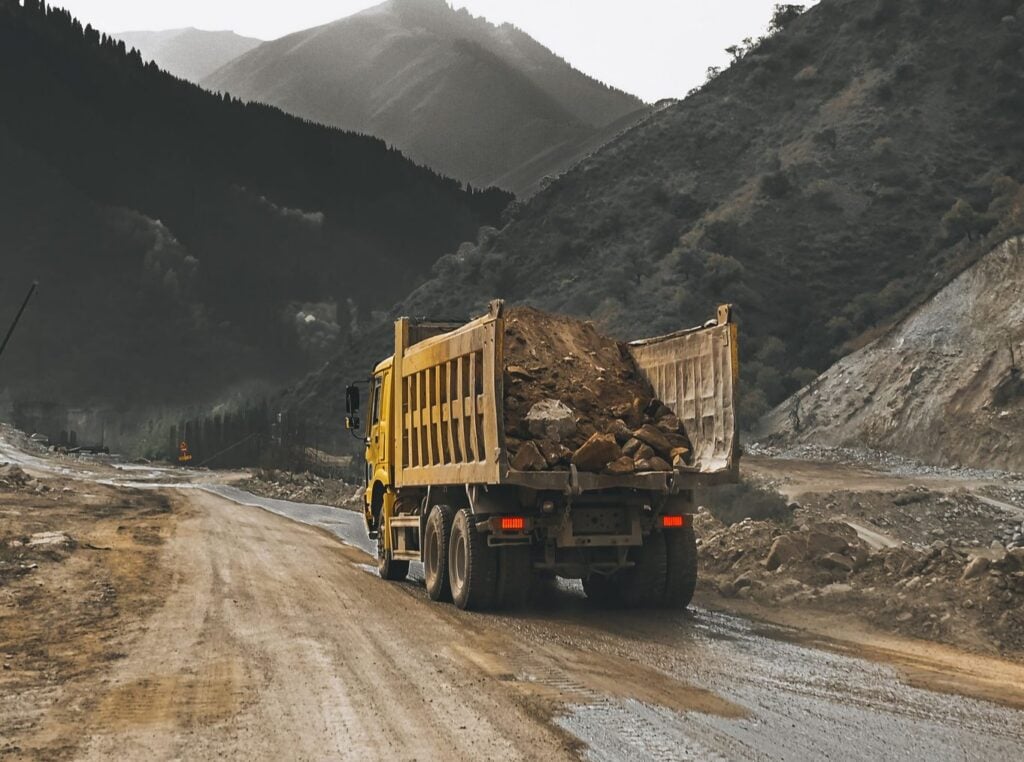


Upgrading from standard pickups to heavy commercial vehicles like dump trucks, flatbeds, and bucket trucks changes a company’s financial exposure. An off-the-shelf auto policy isn’t built for the risks of a construction fleet. A commercial truck policy is built by adding specific endorsements based on the truck’s weight, what it hauls, and the mounted machinery it uses. The goal is to keep liability protection intact whether the truck is driving down the highway or actively working on a jobsite.
This guide is for general contractors, heavy civil firms, specialty trades, and fleet managers structuring coverage for heavy commercial vehicles.
Key Takeaways
- Standard policies leave tools and cargo unprotected: The base policy pays for third-party liability and repairs to the factory cab and chassis, but it provides zero protection for unattached equipment and hauled materials.
- Expensive upfits are underinsured by default: Basic auto policies pay out based on depreciated value, which leaves heavy upfits like cranes and hydraulic beds short on cash after a wreck. Covering custom machinery requires locking in a stated amount or an agreed value backed by an appraisal.
- Coverage changes the moment the truck starts working on-site: Commercial auto handles the truck on public roads. Once outriggers deploy or the truck engages in active construction operations, liability transfers over to the commercial general liability policy.
- Legal minimums don’t hold up against severe accidents: While federal rules require as little as $750,000 for some carriers, most construction fleets carry $1 million to $2 million in primary auto liability, backed by an umbrella policy to protect company assets after major highway collisions.
- Standard freight policies miss heavy construction risks: Construction fleets face hazards that standard delivery trucks don’t. Closing these gaps takes specialized coverage additions to handle things like jobsite pollution spills, driving mobile equipment on public roads, and towing rented trailers.
Table of Contents
Related Truck Insurance Guides


Core Commercial Truck Coverages
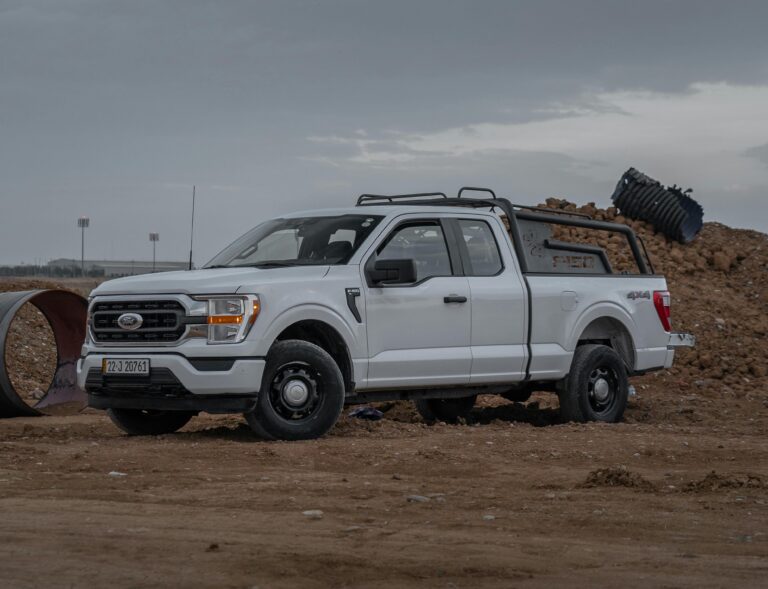
Whether a company runs standard box trucks or multi-axle concrete mixers, every commercial truck policy starts with the same core framework to address road risk, physical vehicle damage, and third-party liabilities. State and federal regulators require liability coverage before a heavy truck can legally operate on public roads, while equipment lenders require physical damage protection for their collateral. Establishing this core coverage prevents a severe transit accident from draining the company’s financial reserves.
Note on policy structure: These coverages are not separate policies. They act as building blocks within a single commercial auto package. Primary liability is the mandatory foundation, while physical damage, uninsured/undersinsured motorist, and medical payments coverages can be added to that exact same policy. Even though an insurer considers those additions optional, equipment lenders and state laws usually require them to finalize the package.
Primary Auto Liability (Bodily Injury & Property Damage)
Primary auto liability pays for third-party medical expenses, legal defense costs, and property repairs when a commercial truck driver causes an accident on a public roadway. It applies exclusively to damage inflicted on other motorists, pedestrians, and surrounding infrastructure. It provides zero reimbursement for damage to the policyholder’s own vehicle. Because commercial trucks carry significant mass and kinetic energy, bodily injury and property damage settlements can rapidly exhaust substandard coverage.
State insurance commissions and the Department of Transportation enforce rigid financial responsibility guidelines for commercial carriers. For interstate for-hire carriers transporting non-hazardous property, the Federal Motor Carrier Safety Administration (FMCSA) mandates at least $750,000 in liability limits for vehicles with a gross vehicle weight rating of 10,001 pounds or more. Private carriers transporting their own tools, equipment, or materials are generally exempt from federal filing requirements for non-hazardous cargo. Their limits are dictated by state regulations and private commercial contracts, which typically demand a minimum of $1,000,000. Carriers hauling hazardous materials, petroleum products, or specialized chemicals must maintain limits ranging from $1,000,000 to $5,000,000, depending on the cargo classification. You can review the full breakdown of DOT and FMCSA insurance requirements for your specific vehicle class.
The 2026 market has added another layer of pressure. A persistent rise in nuclear verdicts, court judgments or settlements exceeding $10 million, has prompted commercial auto underwriters to tighten risk capacity substantially. Plaintiff attorneys routinely target construction fleets following severe highway incidents, citing corporate negligence, driver fatigue, or aggressive jobsite dispatching schedules. Operating at basic state-level limits or relying on a minimal $750,000 policy creates extreme financial exposure. Professional risk managers advise construction firms to carry between $1,000,000 and $2,000,000 in primary auto liability, structuring commercial umbrella or excess liability policies directly above that threshold to insulate enterprise assets.
Physical Damage (Collision & Comprehensive)
Physical damage coverage pays to repair or replace the company’s truck after an accident or outside peril. It breaks down into two distinct parts:
- Collision: Covers structural and mechanical repairs if the truck hits another vehicle, strikes a guardrail, or rolls over on an unstable grade.
- Comprehensive: Covers non-collision losses like theft, fire, vandalism, hail damage, or a cracked windshield from highway debris.
For construction contractors, establishing the right valuation method within physical damage coverage is critical. Standard business auto policies default to actual cash value (ACV), which compensates the owner based on the vehicle’s depreciated market value at the time of loss. That works adequately for standard passenger pickups, but it creates serious exposure for custom vocational trucks when specialized upfits and machinery aren’t properly declared.
For example, a vocational service truck might have a base actual cash value of $50,000. Adding a $100,000 articulating crane and custom utility bed onto that frame pushes the true replacement cost to $150,000. If the truck is totaled and is not covered by a policy that explicitly includes the new equipment, the insurance adjuster bases the payout solely on the original factory build. They pay $50,000 for the base chassis and leave the company short $100,000 for the upfit.
Selecting the right valuation method when the policy is written prevents this type of shortfall. The table below outlines how each method calculates payouts, where each fits best, and how they compare on policy cost.
| Valuation Method | How the Payout is Calculated | Relative Premium Cost | Best Fit For | Limitation |
| Actual Cash Value (ACV) | Depreciated market value of the vehicle and any scheduled, permanently attached equipment. | Lowest (Standard baseline) | Unmodified box trucks, standard pickups, and factory-standard vehicles. | Subject to heavy depreciation; assumes all custom upfits are properly declared upfront. |
| Stated Amount | A maximum value declared by the policyholder and backed by documentation. | Moderate (Caps insurer exposure) | Older specialty trucks where the owner wants to establish a coverage ceiling while controlling costs. | Insurer pays the lesser of the stated figure, ACV, or repair cost. It still factors in depreciation and does not guarantee a fixed payout. |
| Agreed Value | A fixed settlement amount determined upfront by an independent appraisal. | Highest (Requires formal appraisal) | Concrete pumpers, heavy haulers, and high-value customized upfits. | Guarantees a set payout and eliminates depreciation disputes after a total loss, but requires an upfront appraisal and higher premium. |
Supply chain pressures in 2026 make this even more consequential. Specialized components like power take-off units, hydraulic hoists, and heavy-duty axles face extended lead times and inflated part costs, pushing repair cycles well past two or three months on major losses. Locking in the right valuation method upfront prevents a coverage shortfall from compounding an already expensive downtime event.
Uninsured/Underinsured Motorist (UM/UIM)
Uninsured and underinsured motorist coverage pays for repairs and driver medical treatment when an insured truck is struck by a motorist who carries no insurance or whose policy limits can’t cover the resulting damage. While commercial truck operators are required to maintain substantial liability insurance limits, private passenger vehicle operators often carry bare minimum insurance policies. In many jurisdictions, state-mandated property damage liability minimums sit as low as $5,000 to $15,000.
If a passenger car strikes a tandem-axle dump truck, even moderate impact can bend the front steering axle, rupture diesel fuel tanks, and crack the steering box. Mechanical repairs for heavy-duty components routinely exceed $50,000, quickly exhausting the at-fault driver’s coverage. UM/UIM bridges the financial gap between the at-fault motorist’s exhausted policy limit and the real cost of repairing a commercial asset, while also covering hit-and-run incidents where the responsible party flees the scene entirely.
Medical Payments (MedPay) / PIP
Medical payments (MedPay) and personal injury protection (PIP) cover immediate medical care, ambulance rides, and emergency treatment for people inside the truck cab during a crash, regardless of who was at fault.
How this applies to the driver depends entirely on employment status. If the driver is a W-2 employee, standard commercial auto policies exclude their on-the-job injuries. Their medical bills route directly to the workers’ compensation policy instead. However, if the driver is an owner-operator or a 1099 independent contractor without workers’ comp coverage, MedPay or PIP steps in. It covers their medical bills immediately without waiting for a lengthy fault investigation.
Standard Commercial Truck Exclusions (What Is NOT Covered)
Commercial truck policies provide substantial protection against road accidents and direct vehicular damage, but they do not cover all risks. Policyholders frequently make costly assumptions about what falls within the scope of an auto insuring agreement, only to face formal claim denials following jobsite incidents or mechanical failures. The exclusions below represent the hard limits where vehicular coverage ends and separate commercial insurance policies take over.
| Excluded Loss Category | Governing Exclusion Provision | Primary Policy Denial Basis | Appropriate Alternative Policy |
|---|---|---|---|
| Driver Work Injuries | Statutory workers’ compensation and employer’s liability exclusions. | Bodily injury to an employee arising out of employment duties. | Workers’ Compensation & Employers’ Liability |
| Premises & Operations | Operations and completed operations exclusions. | Property damage or bodily injury unrelated to vehicle movement or transit. | Commercial General Liability (CGL) |
| Overweight Frame Stress | Wear and tear, freezing, mechanical or electrical breakdown exclusion. | Mechanical or structural failure caused by exceeding manufacturer weight limits. | Non-insurable business risk (preventative maintenance) |
| Cargo & Tool Loss | Care, custody, or control exclusion. | Damage to business-owned property or cargo hauled in the truck bed. | Inland Marine / Motor Truck Cargo |
Employee Injuries
Commercial auto liability covers damage inflicted on third parties, such as other motorists, pedestrians, and public infrastructure. It universally excludes bodily injury, medical care, and lost wages sustained by a company’s own employees while working.
Even if an employee suffers severe injuries in a highway collision while driving a company dump truck, the primary auto liability section pays nothing toward their recovery. Because standard auto policies explicitly exclude injuries covered by workers’ compensation laws, employee medical bills and lost wages route directly to the workers’ comp carrier. The commercial auto policy stays completely out of employee injury claims.
General Jobsite Liability & Stationary Operations
Commercial auto and commercial general liability (CGL) mutually exclude each other, drawing a firm line at the loading and unloading phase. The business auto policy covers accidents that occur during transit or during active loading and unloading performed by hand, a hand truck, or an attached mechanical device. Once materials are fully delivered and staged on the ground, jobsite hazards shift back to the CGL policy.
For example, if a dump truck parks on a commercial site to deliver crushed stone and a laborer trips over the lowered tailgate during active unloading, the auto policy takes the claim. If that same laborer trips over the stone after it is staged on the ground, the CGL policy takes over. Coordinating these two policies with the same carrier prevents coverage disputes over material staging and stationary equipment operation.
Overweight Frame Stress & Mechanical Breakdown
Physical damage coverage pays for sudden, accidental collisions or comprehensive losses like fire and theft. It explicitly excludes mechanical failures, bent frames, and cracked axles caused by progressive wear and tear or operational neglect. When a contractor routinely loads aggregate or heavy excavation attachments beyond a truck’s certified gross vehicle weight rating (GVWR), insurance adjusters classify the resulting damage as a maintenance issue rather than an insurable loss.
If a crew loads 18 tons of wet gravel into a truck rated for a 14-ton payload, the excessive weight strains the hydraulic hoist and suspension. If the rear axle snaps under that strain, the physical damage carrier will deny the claim under the policy’s mechanical breakdown exclusion.
If a catastrophic brake failure on that overloaded truck causes a highway collision, the primary auto liability insurer must still defend and settle the third-party claims up to the policy limit. However, the insurer will likely cancel or non-renew the policy going forward due to willful non-compliance with safety standards. Strict adherence to certified chassis weight limits is the only defense against these mechanical losses.
Tools, Equipment, and Cargo
Standard commercial auto policies strictly insure the vehicle and its permanently attached modifications. They exclude unattached property under a “care, custody, or control” provision. The moment a crew loads portable generators, hand tools, or project materials into a truck bed or trailer, that payload travels completely unprotected by the auto policy.
If an unsecured load shifts and destroys project supplies, or if thieves steal tools out of a locked utility box, the auto policy pays to fix the broken lock, but pays nothing for the stolen contents. Closing this gap requires specific property policies based on who owns the items in transit.
| Policy Type | Property Ownership | Primary Purpose | Example |
| Inland Marine (Equipment Floater) | Business-owned | Insures mobile tools, attachments, and heavy machinery while in transit or stored on a jobsite. | An excavation contractor hauling their own mini-excavator on an equipment trailer. |
| Inland Marine (Installation Floater) | Business-owned | Protects building materials from the moment they leave the supplier until they are permanently installed at the project site. | A plumbing contractor hauling high-value copper piping to a commercial build. |
| Motor Truck Cargo | Third-party property | Insures freight and goods being hauled for a paying customer under a shipping contract or bill of lading. | A dedicated heavy-haul operator moving bridge beams for a local municipality. |
Important Truck Insurance Endorsements for Contractors
Securing primary liability and physical damage provides the foundation, but a complete commercial truck policy requires specific modifications. Standard coverage does not account for hauling bulk fuel, pulling rented equipment, or dispatching crews in personal vehicles. Endorsements are the exact tools used to close these operational gaps and build a comprehensive fleet package.
“Any Auto” Coverage (Symbol 1)
Construction fleets change constantly. Trucks are bought, sold, and leased mid-project. Standard policies often use a “Scheduled Autos” designation, meaning the policy only covers the exact vehicles listed by VIN on the policy documents.
If a contractor buys a new F-250 on a Friday, forgets to notify their broker, and a driver rear-ends a commuter on Monday, the insurance company will deny the claim because the truck is not on the schedule. Upgrading the policy to “Any Auto” coverage automatically extends liability protection to all owned, hired, and non-owned vehicles the moment they are used for the business. This prevents administrative delays from creating massive liability gaps.
Hired and Non-Owned Auto (HNOA)
Contractors frequently rely on vehicles they do not formally own. Project managers rent pickup trucks while traveling, and field crew leaders use their personal vehicles to run to the supply house for extra materials.
If a foreman drives his personal truck to pick up PVC piping and causes a multi-vehicle accident on the way back to the jobsite, his personal auto insurance will likely deny the claim because the trip was for business purposes. The injured driver’s attorney will immediately target the construction company. Hired and Non-Owned Auto (HNOA) liability extends the company’s commercial auto limits to cover these accidents, protecting the company’s balance sheet from employee-owned vehicle liabilities.
Broadened Pollution Liability
Standard commercial auto liability covers environmental cleanup only if the pollutant comes directly from the truck’s own operating systems—like a cracked oil pan or a ruptured factory fuel tank spilling onto the highway. It explicitly excludes the cleanup of spilled cargo.
For contractors, this presents a massive gap. Service trucks routinely carry 100-gallon diesel slip tanks in the bed to fuel jobsite excavators, and paving contractors haul bulk liquid asphalt. If a truck rolls over and a slip tank empties into a public waterway, the environmental cleanup costs fall entirely on the contractor. A broadened pollution liability endorsement forces the auto policy to cover the environmental cleanup of pollutants hauled as cargo.
Non-Owned Trailer Coverage
Heavy civil contractors often own their truck-tractors but rent specialized drop-decks or lowboys to move excavators and bulldozers. A standard auto policy only covers physical damage to the specific trailers explicitly scheduled on the policy.
If a driver clips a tight corner and bends the frame of a rented lowboy, the standard physical damage policy pays nothing. Non-owned trailer coverage extends the company’s physical damage protection to rented or borrowed trailers. This endorsement prevents out-of-pocket repair bills and satisfies the rental yard’s insurance requirements before the equipment ever leaves the lot.
Bobtail Liability
Bobtail liability applies specifically to heavy fleets operating semi-tractors. It covers third-party property damage and bodily injury strictly when a truck-tractor is driven without a trailer attached.
Driving an unladen cab changes the vehicle’s weight distribution, handling, and braking dynamics. If a driver drops a flatbed at a staging yard and drives the empty cab back to the shop or a maintenance facility, bobtail coverage protects the driver and the company during that specific off-dispatch transit.
How Coverage Needs Vary by Construction Truck Type
The core auto liability and physical damage framework applies universally across construction fleets, but the operational hazards of a high-reach bucket truck differ fundamentally from those of a tandem-axle dump truck or an over-the-road tractor. Failing to coordinate auto and general liability policies for each specific vehicle class leaves contractors exposed to denied claims during the stationary operation of permanently attached machinery. Reviewing fleet assets by category ensures that policy deductibles, cargo floaters, and machinery endorsements reflect actual jobsite conditions.
Dump Trucks & Dump Trailers
Operating dump trucks and trailers on uneven, uncompacted jobsite soil creates severe tip-over risks. When the hydraulic hoist elevates the bed, the vehicle’s center of gravity shifts drastically. Constant highway transit hauling loose stone, gravel, and asphalt also generates recurring third-party windshield damage claims from trailing motorists.
Fleets running material hauling operations structure policies to absorb these specific hits. They often opt for lower comprehensive deductibles to offset the frequency of glass replacement. Motor truck cargo with debris removal covers the municipal cleanup costs if a load of non-hazardous stone or gravel spills across a highway, while broadened pollution liability handles the environmental remediation when a rollover dumps hydraulic fluid or diesel into a waterway. Finally, stated amount or agreed value endorsements ensure the expensive aftermarket dump body and hoist mechanisms are fully protected.
Box Trucks & Cargo Vans
Mechanical, electrical, and plumbing contractors rely on enclosed box trucks to transport sensitive diagnostic gear, heavy fittings, and trade tools. Because these vehicles are primary targets for organized theft—especially when parked overnight at staging yards or hotels—fleet managers often assume standard comprehensive auto coverage protects the interior contents.
When thieves break into a cargo box and steal uninstalled building materials or copper wire, the commercial auto adjuster will pay to fix the broken door lock but deny the theft claim for the contents inside. Protecting high-value tools and equipment takes a dedicated contractor’s equipment floater, while an installation floater covers the project materials until client handoff.
Semi-Trucks, Flatbeds & Hot Shots
Moving heavy earthmoving equipment or structural steel on open flatbeds relies heavily on strict cargo securement. An equipment shift on an open deck destabilizes the tractor at highway speeds, which leads to severe multi-vehicle collisions. Because of this mass and kinetic energy, heavy haulers typically carry high primary auto liability limits—often $1,000,000 to $5,000,000—layered under commercial umbrella policies.
Contractors operating truck-tractors also deal with specific transit gaps. Driving a semi-cab without a trailer attached alters the vehicle’s braking dynamics and requires dedicated bobtail liability coverage to protect the driver during off-dispatch maneuvers. Additionally, heavy civil contractors pulling rented lowboys or swapping leased transport decks under written agreements use trailer interchange coverage to satisfy the lease requirements before the equipment ever leaves the lot.
Specialized Trucks (Bucket, Roll-Off, & Concrete)
Vocational trucks—like concrete mixers, roll-off trucks, and bucket trucks—use power take-off (PTO) assemblies to route engine horsepower directly into mechanical operations. Whether spinning a mixer drum, winching heavy waste containers, or raising an aerial personnel basket, this continuous mechanical stress introduces risks standard freight policies do not anticipate.
These trucks blur the line between vehicle transit and stationary operations. A bucket truck requires coordinated commercial general liability coverage to handle high-voltage utility strikes during active work, while a roll-off truck faces severe liability exposure when actively winching heavy containers on busy commercial streets. A concrete mixer faces time-sensitive cargo hazards; if an engine fails during batch delivery, the concrete sets inside the drum, causing the total loss of the material and potentially the mixer barrel itself. Proper inland marine scheduling protects these high-value mounted apparatuses from total operational loss.
How to Compare Commercial Truck Insurance Providers
Identifying operational risks and required endorsements is only the first step. The next step is finding an insurer whose underwriting appetite matches your specific fleet. Commercial truck insurance is not a standardized commodity; a carrier that offers competitive rates for a fleet of plumbing vans might refuse to cover a single tandem-axle dump truck.
Carrier Appetite and Fleet Operations
Every insurance provider operates with a specific underwriting appetite. Some carriers specialize in heavy civil operations, offering built-in coverage for oversized loads, trailer interchange agreements, and broadened pollution. Others focus strictly on trade contractors operating standard pickups and box trucks.
Trying to force a heavy construction fleet onto a carrier built for light service vehicles results in inflated premiums or missing endorsements. Matching the specific iron in the yard to a provider that actively targets that vehicle class is the most effective way to control costs.
Top Commercial Truck Insurance Carriers
Because underwriting appetites vary so sharply by vehicle type and trade, fleet owners should evaluate providers against their specific class of truck. A baseline liability quote from a general small-business insurer will not offer the same protection as a policy written by a carrier built specifically for commercial trucks.
The table below breaks down the top commercial truck insurance providers, their target vehicle classes, and how their policy options compare.
| Company | Best For | AM Best Rating | Get a Quote |
|---|---|---|---|
Progressive
|
Top pick for small fleets; one of the largest selections of commercial truck policies with great quoting tools | A+ | |

The Hartford
|
High-risk drivers and large fleet management; top-ranked for customer satisfaction | A+ | |

Sentry
|
Best customer experience with highly customizable policies; 34-year streak of A+ financial ratings | A+ |
*We may earn a commission when you click through these links.
For a deep dive into each provider’s trade specializations, claim handling, and fleet coverage options, explore our complete guide to the Best Commercial Truck Insurance Companies.
Frequently Asked Questions
What is the difference between bobtail & non-trucking liability?
The primary difference between bobtail insurance and non-trucking liability (NTL) centers on the vehicle’s physical configuration versus the purpose of the trip. Bobtail insurance is defined by the physical state of the truck. It covers third-party bodily injury and property damage strictly when a commercial semi-tractor is driven without any trailer attached. Because operating an unladen tractor alters the vehicle’s braking dynamics and center of gravity, bobtail coverage protects the operator during off-dispatch, business-related maneuvers, such as driving to a maintenance facility, where standard motor carrier liability does not apply.
Non-trucking liability is defined by the purpose of the trip, not the configuration of the truck. It covers the vehicle for personal, non-business use, whether a trailer is attached or not. If an operator drives the tractor to a personal residence or an off-duty service appointment on a weekend, NTL provides legal defense and third-party property damage coverage. The moment that same tractor is dispatched to a jobsite, used to pick up construction supplies, or repositioned under revenue-generating orders, non-trucking liability immediately ceases to apply and active primary auto liability must respond.
Does commercial truck insurance cover a stolen vehicle?
Commercial truck insurance covers the complete theft of an insured vehicle if the policyholder carries physical damage coverage, specifically comprehensive or specified causes of loss coverage, on that asset. If a contractor purchases only state-mandated primary auto liability, the policy provides zero reimbursement if a flatbed, dump truck, or cargo van is stolen from a jobsite or secured staging area. When comprehensive coverage is in place, it compensates the policyholder for the total loss of the stolen chassis and permanently installed components based on the valuation method outlined in the policy declarations.
Contractors should understand that comprehensive physical damage protects the truck itself, not the trade tools, equipment attachments, or uninstalled building materials stored inside the cab or cargo bed. If an entire vocational service truck is stolen with a payload of high-value diagnostic meters, hand tools, and copper inventory, the comprehensive policy reimburses only the depreciated actual cash value or stated amount of the cab, chassis, and attached utility body. Recovering the value of the stolen contents requires dedicated inland marine coverage: a contractors equipment floater for the tools and diagnostic gear, and an installation floater for the building materials.
What is a combined single limit (CSL) in trucking insurance?
A combined single limit (CSL) is a policy provision that establishes a single, aggregate dollar threshold for all third-party bodily injury and property damage claims resulting from a single vehicular occurrence. Rather than dividing coverage into distinct caps per person, per accident, and for physical infrastructure damage, a combined single limit allows the entire policy amount to apply flexibly wherever the actual financial liability falls. A commercial truck policy carrying a $1,000,000 combined single limit, for example, will pay any combination of medical expenses, legal judgments, and structural repair costs arising from a crash up to that total figure.
This structure differs from traditional split-limit policies, which enforce rigid sub-limits such as $250,000 per injured person, $500,000 for total bodily injury per accident, and $100,000 for third-party property damage. Split limits create real financial exposure for construction fleets because catastrophic collisions with modern vehicles or highway infrastructure routinely exceed standard $100,000 property damage caps. Commercial truck insurers generally prefer combined single limits, and the FMCSA mandates a combined single limit structure to ensure adequate financial capacity is immediately accessible following severe transit collisions.
References & Additional Resources
- Federal Motor Carrier Safety Administration (FMCSA). An operating administration within the U.S. Department of Transportation that regulates commercial motor vehicles, establishing mandatory public liability and environmental restoration financial responsibility minimums for interstate operations.
- American Trucking Associations (ATA). The largest national trade association for the trucking industry, providing empirical safety metrics, economic reporting, and legal analysis regarding litigation patterns and motor carrier compliance standards.
Related Guides
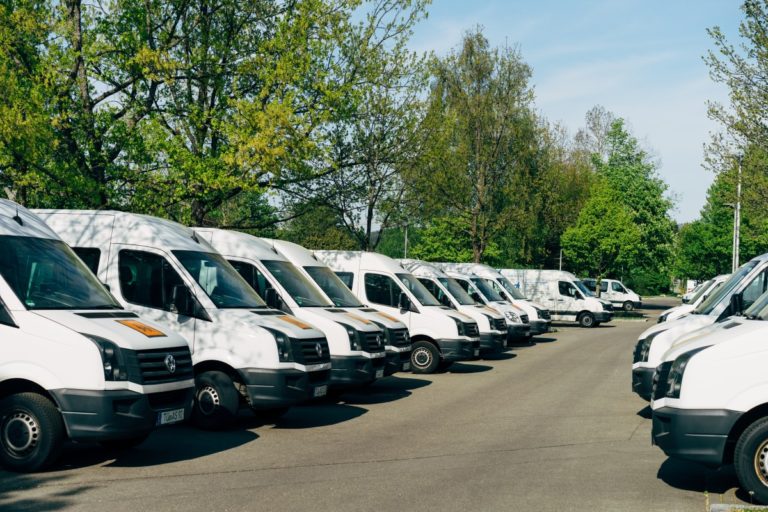
Commercial auto insurance is a policy designed to cover liability and physical damage for vehicles used in business operations. [cc_button…
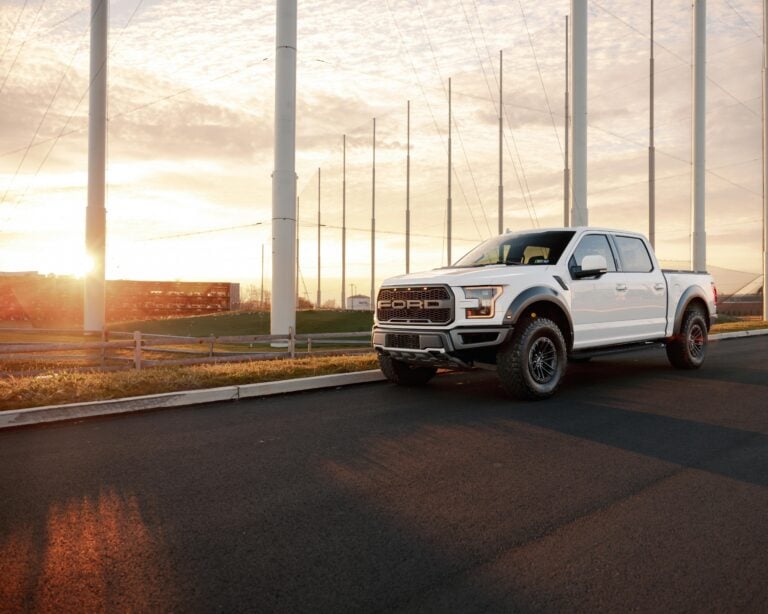
The best commercial auto insurance companies in 2026 are Progressive for newly licensed contractors, ERGO NEXT for specialty trades wanting…
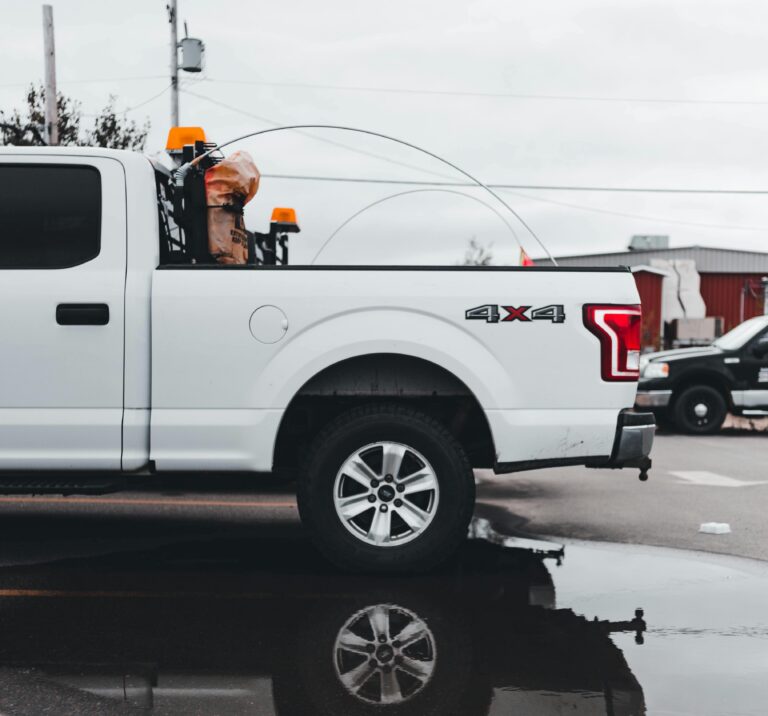
In 2026, commercial auto insurance for a light-duty vehicle typically costs $250 to $400 per month. Because pricing is not…
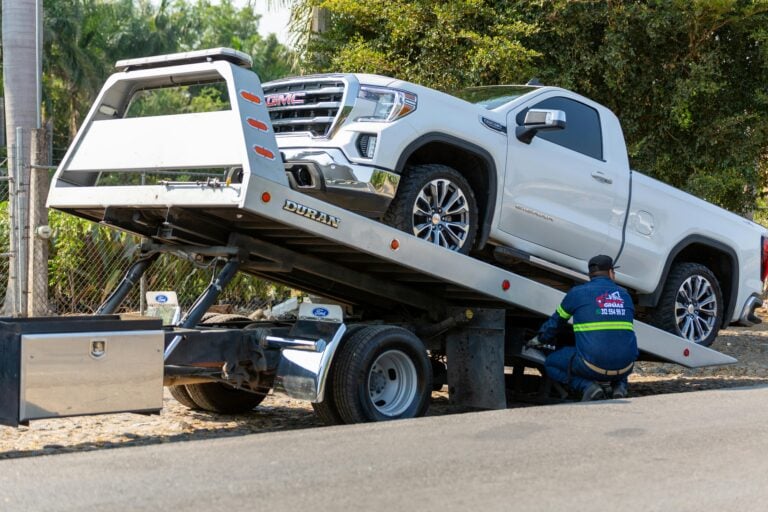
Commercial auto insurance requirements are governed by three distinct authorities: state DMVs require basic split limits for vehicle registration, the…
Commercial auto insurance covers the vehicles owned or used by your business. It protects the company from liability claims if…
The main difference between commercial vs. personal auto insurance is intent: personal policies cover daily commuting, while commercial policies cover…

Based on our evaluation of coverage limits, replacement cost options, and claims processing speeds, the best contractors tools and equipment…
The Hartford, ERGO NEXT, and Hiscox are the best general liability insurance providers for contractors in 2026. Progressive, Thimble, and…
The best builders risk insurance companies for 2026 are Nationwide for general contractors, State Farm for homeowners and owner-builders, and…