
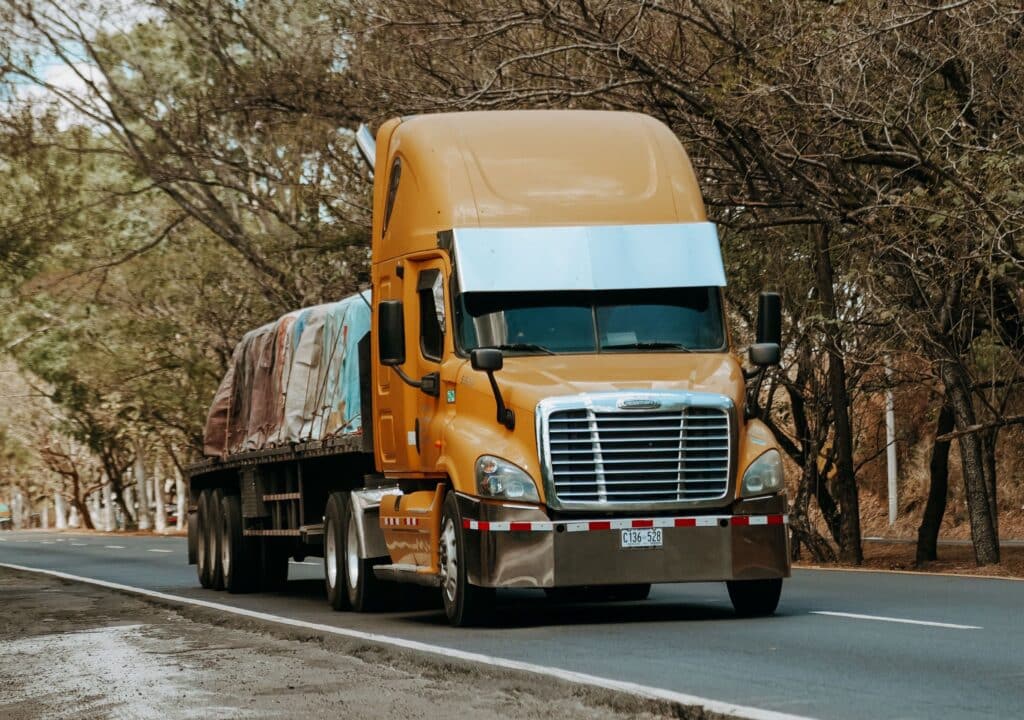


Operating a Class 8 semi truck isn’t like running a fleet of supervisor pickups. When you are chaining down a $500,000 excavator to a lowboy and navigating bridge weight formulas, your liabilities are massive. A standard commercial auto policy won’t protect you if a tiedown chain snaps at 65 mph, a non-owned step-deck is damaged, or you need clearance to bring a permitted oversize load onto a prime commercial job site.
This guide is for heavy civil contractors, site prep crews, and machinery movers operating lowboys, step-decks, and heavy haul semi trucks.
Top Semi Truck Insurance Providers
| Company | Best For | AM Best Rating | Get a Quote |
|---|---|---|---|

Progressive
|
Best for New Ventures | A+ | |
Great West
|
Best for Dedicated Heavy Haul | A+ | |

The Hartford
|
Best for Heavy Civil GCs | A+ |
*We may earn a commission when you click through these links.
Key Takeaways
- Expect high limits: The FMCSA requires a $750,000 minimum liability for standard freight, but moving heavy iron almost always requires $1,000,000 to $2,000,000+ umbrella limits to satisfy general contractors and secure oversize/overweight DOT permits.
- Standard liability leaves the load exposed: Auto liability doesn’t cover the cargo. Trucking operations need Motor Truck Cargo limits that match the full replacement value of their yellow iron, plus Trailer Interchange coverage if routinely pulling non-owned lowboys.
- Costs vary widely: Expect to pay between $9,000 and $15,000+ annually per rig. Your operating radius, driver motor vehicle records (MVRs), and the value of your permitted loads dictate your final premium.
Table of Contents
Related Guides



Semi Truck Insurance Reviews
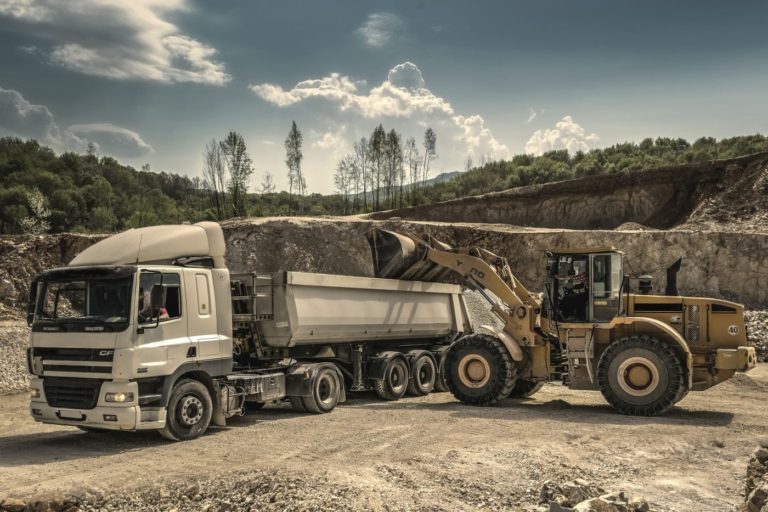
Finding a market for a Class 8 semi pulling a lowboy is entirely different from insuring a standard dry-van operation. Some carriers strictly underwrite dedicated heavy-haul motor carriers, while others focus on general contractors who only move their own excavators and dozers from yard to job site.
Progressive Commercial: Best for New Ventures
Best For
Independent owner-operators, new ventures, and small civil contractors pulling their own equipment.
Service Model
Direct online, independent agents, or brokers.
Financial strength
A+ (Superior) by AM Best
Claims Satisfaction
Average
Telematics
Smart Haul (for ELD users) or Snapshot ProView (offers a minimum 5% discount for non-ELD fleets).
Key Advantage
Broad underwriting appetite. Progressive readily issues fast MCS-90 and state DOT filings for new trucking authorities and offers accessible non-owned trailer coverage.
Overview
Progressive Commercial is the largest commercial auto insurer for a reason: accessibility. Finding a carrier willing to underwrite a newly formed LLC that just bought its first Class 8 tractor to pull a lowboy is difficult. Standard insurers usually demand three years of verified loss runs before taking on heavy-haul exposure. Progressive bypasses this, writing policies for independent machinery movers and new owner-operators immediately.
They also excel at covering non-owned trailers. If you routinely hook up to a rented step-deck or pull another contractor’s lowboy under a trailer interchange agreement, Progressive easily structures the physical damage coverage to protect the third-party equipment.
Pros and Cons
Progressive’s primary strength is its immediate acceptance for new ventures and operators with limited CDL history. They can generate Certificates of Insurance (COIs) and electronic DOT filings within hours to get you on the job site, and they readily write non-owned trailer physical damage.
The downside is that baseline premiums are exceptionally high for new operators lacking a verified loss history. Additionally, the service model is highly transactional; you will likely not have a dedicated claims advocate for complex liability disputes.
Financial Strength and Reputation
Backed by an A+ (Superior) rating from AM Best, Progressive has the institutional capital required to pay out severe heavy-haul claims. While they maintain a large network of in-house commercial truck adjusters, their highly centralized processing model can result in average customer satisfaction scores during complex, multi-party liability disputes or intricate non-owned trailer damage claims, compared to dedicated broker-led relationships.
Policy Features
Progressive offers a modular policy. You can stack primary liability, physical damage for the tractor, and specific Motor Truck Cargo limits based on the actual cash value of the excavators or dozers you haul. They also write non-trucking liability (bobtail) for operators leased onto larger motor carriers.
Price and Value
- Cost tier: Economy to high-risk ($–$$$)
- Savings: Paid-in-full discounts up to 13%, plus usage-based rate reductions for fleets linking their Electronic Logging Devices (ELDs) to the Smart Haul program.
Great West Casualty Company: Best for Dedicated Heavy Haul
Best For
Established, dedicated heavy-haul motor carriers operating 5 to 50+ units.
Service Model
Independent agents specializing in commercial trucking.
Financial strength
A+ (Superior) by AM Best
Claims Satisfaction
Excellent
Telematics
Integrates with multiple major ELD and telematics providers.
Key Advantage
100% focused on the trucking industry with adjusters specifically trained in heavy haul load securement, DOT compliance, and complex heavy wrecker recovery.
Overview
Great West Casualty Company is a premier insurer completely dedicated to the trucking industry. Unlike general commercial carriers that view trucking as just one piece of a broader portfolio, Great West understands the precise operational differences between bumping a dock with dry-van freight and chaining down a 90,000-pound permitted load. Their deep industry integration makes them the go-to market for established heavy haul operations that demand specialized coverage.
Pros and Cons
The primary strength of Great West is their specialized claims and safety services. When a heavy-haul rig goes down, their adjusters know how to coordinate heavy wreckers, manage complex cargo salvage operations, and handle environmental cleanup to mitigate losses.
The downside is their strict underwriting appetite. They typically require an established operating history, solid loss runs, and clean DOT safety scores, making them largely inaccessible to new ventures or single-rig owner-operators just starting out.
Financial Strength and Reputation
Rated A+ (Superior) by AM Best, Great West (part of the Old Republic International Corporation) has immense financial backing. Their reputation in the trucking industry is top-tier, specifically because their in-house legal and claims teams are intimately familiar with FMCSA regulations, heavy haul liability defense, and the nuances of equipment valuation.
Policy Features
They offer expansive Motor Truck Cargo policies that can be scaled to the massive values of heavy iron, alongside comprehensive physical damage and primary liability limits that easily satisfy prime contractor and state permit requirements. Their trailer interchange and non-owned trailer coverages are highly customizable for fleets that routinely pull third-party lowboys.
Price and Value
- Cost tier: Standard to Premium ($$–$$$)
- Savings: Strong safety-driven dividends and rate reductions for fleets with clean loss runs and active safety management programs.
The Hartford: Best for Heavy Civil GCs
Best For
Heavy civil general contractors and site prep crews who own fleets of lowboys to move their own equipment.
Service Model
Independent agents and brokers.
Financial strength
A+ (Superior) by AM Best
Claims Satisfaction
High
Telematics
The FleetAhead program (offers safety tracking and potential premium credits).
Key Advantage
Seamless bundling of commercial fleet auto with General Liability, Builders Risk, and Contractors Equipment (Inland Marine) policies under one roof.
Overview
The Hartford excels when heavy hauling is just one component of a larger heavy civil construction operation. Rather than underwriting standalone for-hire trucking companies, The Hartford specializes in general contractors and excavation crews who utilize their own Class 8 tractors to transport company-owned excavators, dozers, and trenchers. They are the ideal market for seamlessly bridging the gap between over-the-road transit and active dirt-moving operations.
Pros and Cons
The biggest advantage of using The Hartford is eliminating coverage disputes. By placing your commercial auto, general liability, and contractors equipment policies with the same carrier, you avoid finger-pointing between different insurers over which policy responds when an excavator slips off a ramp during unloading.
The drawback is that they are generally less competitive—and often decline—pure for-hire, dedicated heavy-haul motor carriers who do not have accompanying construction operations to insure.
Financial Strength and Reputation
With an A+ (Superior) rating from AM Best, The Hartford is a cornerstone of the American commercial insurance market. They are highly respected in the construction sector, offering dedicated risk engineering teams that help contractors minimize both job site and fleet liabilities.
Policy Features
They provide broad commercial auto forms with high umbrella capacity. The Hartford easily extends the complex Additional Insured, Waiver of Subrogation, and Primary/Non-Contributory endorsements required by project owners. Their contractors equipment floaters integrate perfectly with their fleet auto policies to cover the replacement cost of heavy machinery, whether chained down in transit or tracking through the mud.
Price and Value
- Cost tier: Standard ($$)
- Savings: Substantial multi-line bundling discounts when pairing fleet auto with CGL and Inland Marine, plus potential rate credits for deploying the FleetAhead telematics solution.
National Indemnity Company: Best for Oversize/Overweight Transport

Best For
Specialty transport operations hauling extreme-weight, dimensional, or mega-loads.
Service Model
Specialized wholesale brokers and Managing General Agents (MGAs).
Financial strength
A++ (Superior) by AM Best
Claims Satisfaction
Strong (focused on severe/catastrophic claims mitigation).
Telematics
Agnostic; underwriting relies heavily on route surveys, pilot car integration, and specialized load engineering protocols.
Key Advantage
Unmatched catastrophic excess liability capacity for extreme-weight permitted loads that standard commercial auto markets refuse to touch.
Overview
National Indemnity Company (NICO), a Berkshire Hathaway company, operates in a totally different tier of heavy-haul underwriting. They are the premier market for ultra-heavy, complex transport operations—think moving bridge girders, massive electrical transformers, or multi-million-dollar crawler crane components requiring police escorts and intricate state permits. NICO steps in when standard markets lack the financial capacity or risk appetite for these extreme exposures.
Pros and Cons
NICO’s absolute advantage is their catastrophic liability capacity and willingness to underwrite risks that trigger automatic declinations elsewhere. They readily provide the massive commercial umbrella limits required by state authorities for route permits on mega-loads.
The downside is that they are a specialty/Excess & Surplus (E&S) market. Their premiums reflect the extreme risks they absorb, and their policies can only be accessed through specialized wholesale brokers, adding administrative steps to the buying process.
Financial Strength and Reputation
NICO holds the highest possible A++ (Superior) rating from AM Best. Backed by the immense capital of Berkshire Hathaway, their financial footprint is virtually unparalleled. This provides prime contractors and state transportation departments with absolute certainty that NICO can pay out multi-million-dollar catastrophic heavy-haul claims without hesitation.
Policy Features
NICO provides highly customized manuscript policies designed around specific high-risk hauls or specialty fleets. They offer massive primary and excess liability limits, specialized manuscript cargo forms for unique one-off loads, and highly flexible terms for non-standard transit operations that fall outside normal FMCSA freight definitions.
Price and Value
- Cost tier: Premium / Specialty ($$$$)
- Savings: Not known for standard retail discounts; pricing is heavily experience-rated and based strictly on the rigorousness of the operator’s route planning, engineering surveys, and overall risk management profile.
Liberty Mutual: Best for High-Value Equipment Limits
Best For
Mid-sized to large fleets (10+ units) routinely hauling multi-million-dollar heavy machinery.
Service Model
Independent agents and commercial brokers.
Financial strength
A (Excellent) by AM Best
Claims Satisfaction
Strong
Telematics
Liberty Mutual safety control programs with deep integrations across major OEM and aftermarket telematics providers.
Key Advantage
Massive Motor Truck Cargo and Inland Marine capacity capable of covering million-dollar crawler cranes and directional drills in transit.
Overview
When transporting massive construction assets, primary auto liability is only half the battle. If a standard dry-van carrier loses a load of palletized consumer goods, a $100,000 cargo limit is usually sufficient. But if a driver rolls a lowboy carrying a $1.2 million foundation drill, standard limits leave the operator completely exposed. Liberty Mutual is a powerhouse in the Inland Marine and commercial auto space, offering the massive Motor Truck Cargo limits required to fully insure the replacement value of ultra-heavy iron.
Pros and Cons
Liberty Mutual’s primary advantage is its immense underwriting capacity. They can stack primary auto liability, multi-million-dollar commercial umbrellas, and high-value cargo floaters to satisfy the most demanding prime contractor contracts.
The disadvantage is that their risk appetite skews toward larger, sophisticated fleets. They are typically not an accessible market for single-rig owner-operators or new ventures lacking formalized fleet safety manuals and dedicated risk managers.
Financial Strength and Reputation
Carrying an A (Excellent) rating from AM Best, Liberty Mutual is one of the largest property and casualty insurers in the world. Their dedicated heavy equipment adjusters understand the complexities of heavy civil machinery, meaning they won’t try to total a machine that can be expertly repaired, nor underpay on specialized custom attachments lost in a crash.
Policy Features
They offer highly customizable fleet structures. Beyond standard auto liability and high-limit cargo, they excel at covering specialized heavy-haul physical damage, custom manuscript endorsements for non-owned trailing equipment, and robust bobtail liability for heavily articulated operations.
Price and Value
- Cost tier: Standard to Premium ($$–$$$)
- Savings: Excellent premium rate credits available for fleets that deploy comprehensive risk control measures, including dual-facing dashcams and strict MVR monitoring.
Sentry Insurance: Best for Single-Rig Owner-Operators

Best For
Owner-operators and small fleets (1 to 5 units) looking for dedicated trucking support.
Service Model
Direct writers (Sentry’s specialized agents) and independent brokers.
Financial strength
A+ (Superior) by AM Best
Claims Satisfaction
High
Telematics
Certified ELD and telematics integrations are strongly encouraged and supported.
Key Advantage
Agreed-value physical damage protection and the assignment of dedicated safety consultants even for very small fleets.
Overview
Many carriers treat one-to-five-unit trucking operations as transactional accounts, offering little in the way of risk management support. Sentry Insurance flips this script. As one of the largest specialized trucking insurers in the nation, Sentry assigns dedicated safety consultants to their policyholders, helping small heavy-haul operators navigate FMCSA compliance, DOT audits, and load securement protocols.
Pros and Cons
Sentry’s biggest pro for heavy haulers is their willingness to write “Agreed Value” physical damage coverage. Heavy-haul Class 8 tractors are often heavily upfitted with heavy-duty drive axles, specialized gearing, and custom fifth wheels. Standard Actual Cash Value (ACV) policies heavily depreciate these upgrades after a total loss. Agreed Value guarantees a set payout.
The main con is that Sentry can be highly selective regarding driver experience; they strictly enforce clean MVRs and typically demand 2+ years of CDL experience.
Financial Strength and Reputation
Sentry boasts an A+ (Superior) rating from AM Best. Because they specialize so heavily in transportation, their claims department is uniquely efficient at getting downed heavy rigs towed, assessed, and repaired, minimizing the catastrophic downtime that can bankrupt a single-rig owner-operator.
Policy Features
In addition to Agreed Value physical damage, Sentry offers robust primary liability, Motor Truck Cargo, and highly flexible non-trucking liability (NTL) and bobtail coverages for independent contractors who lease their heavy-haul equipment onto larger motor carrier authorities.
Price and Value
- Cost tier: Standard ($$)
- Savings: Highly competitive baseline rates for operators with spotless MVRs, plus additional rate credits for engaging with their proprietary safety management programs.
Nationwide: Best for Mixed Fleet Operations
Best For
Civil contractors operating mixed fleets ranging from Class 8 heavy haulers down to standard supervisor pickup trucks (3 to 25 units).
Service Model
Independent agents and brokers.
Financial strength
A+ (Superior) by AM Best
Claims Satisfaction
High
Telematics
Nationwide Vantage 360 (fleet tracking and telematics for mixed vehicle classes).
Key Advantage
Composite fleet structures that seamlessly cover heavy haulers, tri-axle dump trucks, and light-duty pickups under a single commercial auto policy.
Overview
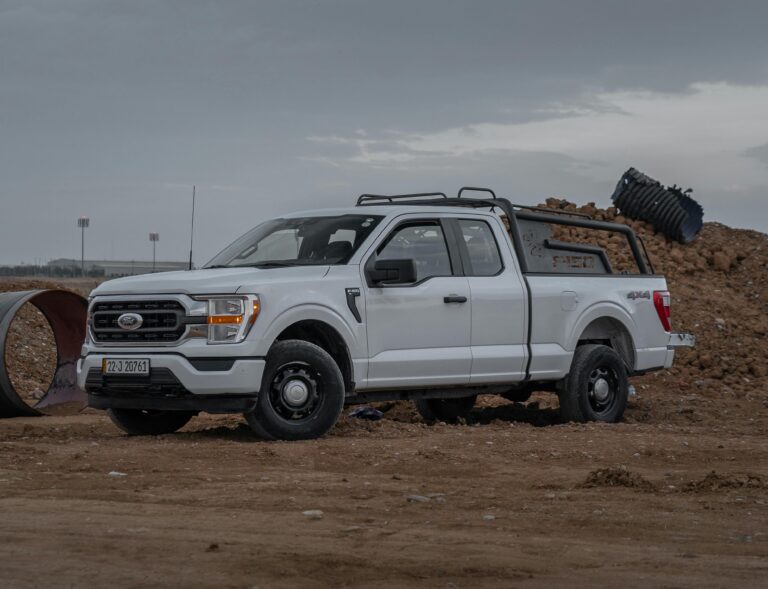
Most heavy civil contractors don’t just run Class 8 tractors. A typical equipment yard features a mix of F-250s for site superintendents, Class 7 dump trucks for aggregate hauling, and a heavy lowboy rig for moving the excavators. Nationwide excels at underwriting these mixed fleet operations. Rather than forcing a contractor to piece together different policies for different vehicle weight classes, Nationwide brings the entire fleet under one roof.
Pros and Cons
Nationwide’s greatest strength is administrative simplicity. By grouping all power units onto one commercial auto schedule, contractors benefit from composite fleet pricing and single-renewal dates.
The downside is that while they are fantastic for standard mixed civil fleets, they lack the extreme catastrophic umbrella and specialty cargo capacity of a specialized E&S market like NICO if you are hauling 150,000-pound permitted mega-loads.
Financial Strength and Reputation
Holding an A+ (Superior) AM Best rating, Nationwide is a massive, highly stable carrier. They possess a deep bench of commercial auto adjusters accustomed to handling multi-vehicle fleet claims, making them highly reliable when an incident involves both standard commuter traffic and heavy construction vehicles.
Policy Features
They offer excellent primary liability, physical damage, and Motor Truck Cargo limits suitable for standard heavy civil operations. Furthermore, their Vantage 360 telematics program is uniquely designed to track driver behavior across vastly different vehicle types, normalizing safety data between a driver in an F-150 and a driver in a Kenworth.
Price and Value
- Cost tier: Standard ($$)
- Savings: Significant premium reductions are available through multi-vehicle fleet scheduling and bundling the auto policy with their robust contractors general liability (CGL) products.
Semi Truck Insurance Company Comparison
When comparing carriers for a Class 8 semi pulling heavy iron, baseline premiums don’t tell the whole story. A cheap policy is useless if it caps Motor Truck Cargo limits below the value of your excavator or excludes non-owned trailer damage. The table below compares the top semi truck insurers based on their target fleet sizes, financial strength, and specialized heavy-haul underwriting features.
.
| Carrier | Best For | AM Best Rating | Fleet Size Focus | Key Underwriting Feature |
| Progressive Commercial | New ventures | A+ (Superior) | 1 to 5 units | Broad new-venture acceptance and rapid electronic DOT/MCS-90 filings |
| Great West Casualty | Dedicated heavy haul | A+ (Superior) | 5 to 50+ units | 100% trucking focus with specialized adjusters trained in load securement |
| The Hartford | Heavy civil GCs | A+ (Superior) | 10+ units | Seamless bundling of fleet auto with General Liability and Builders Risk |
| National Indemnity (NICO) | Oversize/overweight transport | A++ (Superior) | Specialty hauls | Catastrophic excess liability capacity for extreme-weight permitted loads |
| Liberty Mutual | High-value equipment limits | A (Excellent) | 10+ units | Massive Motor Truck Cargo limits to cover million-dollar cranes and drills |
| Sentry Insurance | Single-rig owner-operators | A+ (Superior) | 1 to 5 units | Agreed-value physical damage protection and dedicated safety consultants |
| Nationwide | Mixed fleet operations | A+ (Superior) | 3 to 25 units | Composite fleet structures spanning heavy haulers, dump trucks, and pickups |
To review carriers that can protect any vehicle in your fleet, see our best commercial auto and best commercial truck insurance guides.
What Does Semi Truck Insurance Cover?
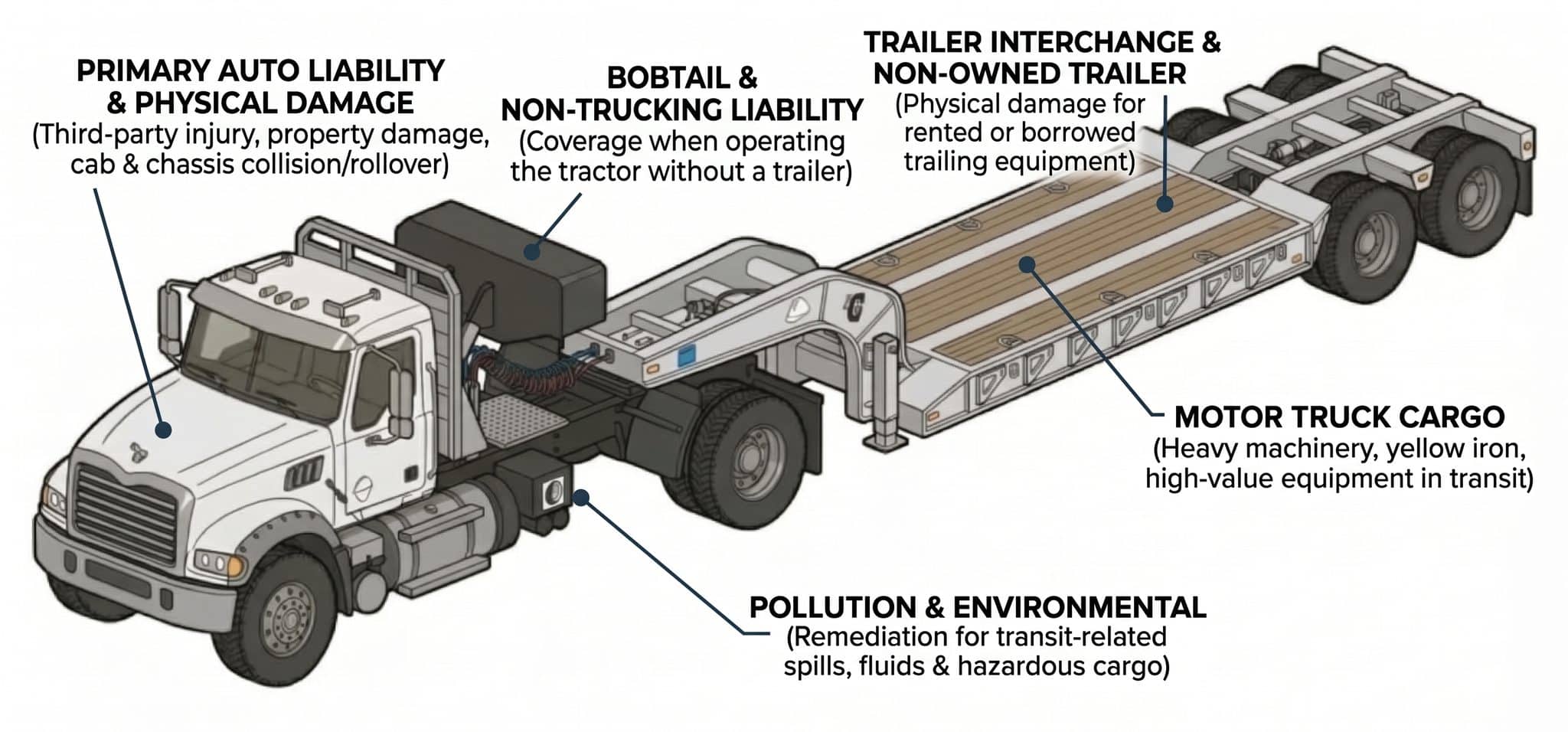
Standard commercial auto insurance is designed for single-unit vehicles like box trucks or service vans. Insuring a Class 8 semi truck requires a different approach because the risk is divided into three separate parts: the tractor, the trailing equipment, and the machinery being transported.
A properly structured heavy-haul policy uses specific endorsements to cover all three.
Primary Auto Liability and Physical Damage Coverage
When a fully loaded semi truck is involved in a highway collision, the resulting property damage and bodily injury claims are substantial. Primary auto liability covers these costs when your driver is legally at fault. If a truck rear-ends passenger traffic or a lowboy damages a highway guardrail, this coverage pays the third-party medical bills, legal judgments, and repair costs.
Protecting your own tractor falls under physical damage coverage, which includes collision (crashes and rollovers) and comprehensive (fire, theft, and weather). Because heavy-haul tractors often feature expensive upfits like heavy-duty axles and custom fifth wheels, standard actual cash value (ACV) settlements can result in severe depreciation after a total loss. Many operators use agreed-value policies to guarantee a payout that matches their actual investment in the truck.
Motor Truck Cargo and Trailer Coverage
Primary auto liability protects the public, and physical damage protects your tractor. Neither covers the payload or a borrowed trailer.
If a tiedown chain fails and an excavator falls from the trailer, the auto policy provides zero coverage for the destroyed equipment. Motor Truck Cargo insurance covers the replacement cost of the freight while in transit. For machinery movers, this cargo limit must be explicitly scaled to match the replacement value of the heaviest equipment being hauled.
Additionally, contractors frequently pull trailing equipment they do not own. Trailer Interchange coverage pays for physical damage to a third-party trailer, but it only applies if you are operating under a formal, written interchange agreement. If a driver borrows a rental yard’s step-deck or another contractor’s lowboy without formal paperwork, Non-Owned Trailer coverage is required to protect the asset during transit.
Bobtail and Non-Trucking Liability Coverage
Semi trucks frequently operate without a trailer attached.
Bobtail insurance provides liability protection specifically when a driver operates the tractor without a trailing unit. This covers the vehicle during trips like deadheading back to the yard after dropping a lowboy at an excavation site, regardless of whether the trip is business-related.
Non-trucking liability (NTL) serves a different operational purpose. NTL covers the tractor strictly when it is driven for personal, non-business reasons on off-duty days. Independent owner-operators who lease their equipment onto a larger motor carrier’s operating authority rely on NTL to provide baseline liability protection when running personal errands.
Pollution and Environmental Liability Coverage
If a semi truck crashes and ruptures its saddle tanks, spilling 150 gallons of diesel across the highway, standard commercial auto policies generally cover the emergency hazmat cleanup for the truck’s own operating fluids. However, motor carriers that transport hazardous materials or contaminated demolition soil must add a broadened pollution endorsement to cover the cleanup of the actual cargo.
For a detailed breakdown of how standard policy endorsements interact with these job site exclusions across your entire fleet, review our comprehensive guide to commercial truck insurance coverage
What Semi Truck Insurance Does NOT Cover
A heavy-haul auto policy is strictly designed for transit. The moment the rig stops and the transit phase ends, commercial auto coverage and cargo limits typically shut off. Relying on a commercial auto policy to cover the entire equipment relocation cycle leaves operators exposed to three specific gaps.
- Rigging and Unloading Failures: If a driver removes the binders and an operator tracks a dozer off the side of the lowboy ramps, the resulting damage is rarely covered by the auto policy. Once the tie-downs are off and the machine is moving under its own power, the transit phase is over. Liability for property damage during offloading shifts to general liability insurance.
- Stationary Staging and Yard Storage: Motor Truck Cargo insurance covers heavy machinery while it is moving down the highway. If you drop a loaded step-deck at a staging area on Friday and the equipment is stolen or vandalized over the weekend, the cargo policy will likely deny the claim because the load was no longer in transit. Protecting parked and staged machinery requires a contractors tools and equipment policy.
- Load Securement Injuries: Securing a permitted load is physically dangerous work. If a driver slips off a wet trailer deck while throwing a chain, or a rigger gets a hand crushed by a ratcheting binder, the commercial auto policy will not pay their medical bills. Employee injuries fall entirely under workers’ compensation insurance.
Semi Truck Insurance Requirements
Operating a heavy-haul semi truck requires compliance with overlapping federal transportation laws, state highway regulations, and private construction contracts. Meeting statutory federal minimums allows the vehicle to operate legally on public roads, but satisfying a prime contractor’s insurance standards is what ultimately grants access to an active job site.
Federal Semi Truck Requirements
Federal Motor Carrier Safety Administration (FMCSA) safety oversight begins at a Gross Vehicle Weight Rating (GVWR) of 10,001 pounds, which requires an active USDOT number. However, regulatory obligations increase significantly when a truck and trailer exceed a Gross Combination Weight Rating (GCWR) of 26,001 pounds.
Because a Class 8 tractor pulling a lowboy easily exceeds this threshold, operators must hold a valid Class A Commercial Driver’s License (CDL). Motor carriers operating at this weight must also register their drivers in the FMCSA Drug and Alcohol Clearinghouse for pre-employment and random testing.
For interstate motor carriers hauling non-hazardous freight, federal law mandates a minimum of $750,000 in primary auto liability. Interstate operations must also maintain an active MCS-90 endorsement. The MCS-90 is not an insurance policy; it is a federal regulatory guarantee. It ensures the public receives compensation for severe accidents or environmental spill cleanups, even if the insurance carrier denies the specific claim due to a policy exclusion.
State Semi Truck Requirements
Transporting heavy civil equipment frequently exceeds the standard 80,000-pound federal highway weight limit. When securing state-issued oversize or overweight route permits, state departments of transportation often mandate liability limits that far exceed the federal baseline.
Additionally, local insurance agents must file specific documentation—such as a Form E—directly with state authorities to verify the motor carrier maintains active liability coverage that meets state-specific statutes.
General Contractor Requirements
The $750,000 federal liability minimum is rarely sufficient for heavy civil construction. Attempting to enter a commercial project site with baseline coverage will typically result in an immediate work-stop order.
Prime contractors enforce their own risk standards through Master Service Agreements (MSAs). They routinely demand $1,000,000 in primary auto liability, paired with a $2,000,000 to $5,000,000 commercial umbrella policy. Before granting site access, general contractors require a Certificate of Insurance (COI) verifying three specific policy endorsements:
- Additional Insured: An additional insured endorsement protects the general contractor and project owner under your auto policy if your vehicle causes third-party property damage or injury on the site.
- Waiver of Subrogation: A waiver of subrogation prevents your commercial auto insurer from seeking financial reimbursement from the general contractor after paying a covered claim.
- Primary and Non-Contributory: Primary and noncontributory status dictates that your auto policy responds first to an incident, without seeking contribution from the general contractor’s liability coverage.
For a full breakdown of DOT filings and federal limits, read our guide to commercial truck insurance requirements.
How Much Does Semi Truck Insurance Cost?
For a single heavy-haul rig operating under its own authority, expect a full package policy to land between $9,000 and $15,000+ per year. This includes primary auto liability, physical damage for the tractor and trailer, and motor truck cargo for the machinery.
However, heavy-haul insurance is highly volatile. A new business securing its first DOT number, or an established fleet with recent out-of-service (OOS) violations and poor safety scores, will routinely see premiums push past $20,000 per truck.
Heavy-Haul Pricing Factors
Insurance underwriters do not evaluate heavy-haul operations using the same metrics as dry van fleets or dump trucks. Your rate is built around three specific operational hazards:
Operating radius: The distance you travel dictates your baseline liability risk. Local machinery movers transporting excavators within a localized area secure the best rates because they spend less time at sustained highway speeds. Expanding into regional or long-haul routes drastically increases the probability of a high-speed collision, which directly drives up liability costs.
Equipment weight and value: The payload determines the severity of the exposure. Insuring a $1.2 million directional drill costs significantly more than hauling standard legal-weight freight. Furthermore, routinely transporting permitted, overweight, or oversize loads introduces catastrophic liability risks. Navigating bridge weight calculations and requiring police escorts pushes liability and cargo premiums significantly higher.
Driver experience and history: Safely stopping a 100,000+ pound combination vehicle requires specialized skill. Hiring operators with less than two years of Class A CDL experience, or employing drivers with recent moving infractions and logbook violations on their Motor Vehicle Record (MVR), will severely inflate your premium or result in outright carrier declination.
Strategies to Lower Heavy-Haul Premiums
Keeping your insurance rates under control requires proving to underwriters that you operate a strict, documented fleet. To escape high-risk pricing tiers, heavy haulers implement a few specific strategies:
- Install dual-facing dashcams: Deploying forward-facing and cab-facing video protects against fraudulent injury suits when passenger vehicles cut off a lowboy. Objective video proof verifying your driver’s lane discipline and following distance often yields a 5% to 15% reduction on auto liability premiums.
- Document tiedown and securement training: Maintaining formal records of driver training on FMCSA cargo securement rules (49 CFR Part 393) proves you actively manage load-shift risks. Mitigating load-shift incidents keeps your cargo and workers’ compensation rates stable.
- Raise physical damage deductibles: Increasing the deductibles on your tractor and trailing equipment from $1,000 to $2,500 or $5,000 instantly reduces annual physical damage costs, provided the business retains enough cash reserves to absorb minor repairs out of pocket.
Cheap Semi Truck Insurance
“Cheap” is a relative term in the heavy-haul world, and pursuing the lowest premium is a dangerous strategy if it means skimping on Motor Truck Cargo limits while hauling a $500,000 excavator. However, for newly minted LLCs, independent owner-operators, or small dirt crews trying to minimize fixed overhead, securing the lowest possible baseline rates for primary liability is critical.
Single-rig operators should also look into association-backed rates through the Owner-Operator Independent Drivers Association (OOIDA).
Otherwise, the key is finding commercial carriers that offer highly competitive entry points for FMCSA compliance without exposing your business to catastrophic gaps.
| Company | Best For | AM Best Rating | Get a Quote |
|---|---|---|---|
|
Progressive
|
The most accessible entry point for new motor carrier authorities lacking verified loss runs. | A+ |
*We may earn a commission when you click through these links.
Frequently Asked Questions
Is a semi truck covered by a personal auto policy?
No. Personal auto policies explicitly exclude commercial motor vehicles exceeding standard weight thresholds (typically 10,000 pounds GVWR) and strictly exclude any vehicle operated in commercial hauling. Attempting to insure a Class 8 tractor under a personal policy will result in immediate claim denial and potential policy cancellation for material misrepresentation. Commercial heavy hauling requires a dedicated commercial auto policy rated for Class 8 power units and specific trailing equipment.
Do I need a Class A CDL to drive a semi truck?
Yes. Any combination vehicle with a Gross Combination Weight Rating (GCWR) of 26,001 or more pounds, where the towed unit exceeds 10,000 pounds GVWR, legally mandates a Class A Commercial Driver’s License (CDL). Because a Class 8 tractor pulling an empty step-deck or lowboy already exceeds these statutory weight thresholds, operators must hold a valid Class A CDL with appropriate endorsements before operating on public roads.
What is the difference between Trailer Interchange and Non-Owned Trailer coverage?
Trailer Interchange coverage applies physical damage protection to a third-party trailer only when you operate under a formal, written trailer interchange agreement with the trailer’s owner. Non-Owned Trailer physical damage coverage protects a borrowed or rented trailer when no written interchange agreement exists. Both endorsements cover physical damage to the trailing unit, but they trigger under different contractual conditions.
Does primary auto liability cover the equipment being hauled on a lowboy?
No. Primary auto liability only pays for third-party bodily injury and property damage caused by your vehicle in a crash. It provides zero coverage for the payload on your deck. To insure excavators, dozers, or other heavy machinery against transit damage, overturns, or load-shift impacts, haulers must carry Motor Truck Cargo insurance or schedule the machines on an Inland Marine equipment floater scaled to their full replacement value.
What is the difference between Bobtail and Non-Trucking Liability?
Bobtail insurance provides liability coverage when driving a tractor without a trailer attached, regardless of whether the trip is business-related (such as returning to the yard after dropping a lowboy). Non-Trucking Liability (NTL) provides liability coverage only when operating the tractor for personal, non-business reasons on off-duty days. Independent owner-operators leased onto a motor carrier typically carry NTL or Bobtail to cover personal movement when off the clock.
References & Additional Resources
- Federal Motor Carrier Safety Administration (FMCSA). The primary federal agency regulating commercial motor vehicle safety, operating authorities, and statutory financial liability minimums across interstate freight corridors.
- Commercial Vehicle Safety Alliance (CVSA). A nonprofit association of commercial vehicle safety officials that develops uniform North American roadside inspection criteria and out-of-service rules.
- Associated General Contractors of America (AGC). A leading construction trade organization outlining standard master contract stipulations, site safety programs, and commercial subcontract insurance requirements.
- Specialized Carriers & Rigging Association (SC&RA). An international trade association dedicated to heavy machinery transport, oversize crane operations, and the technical legal standards for equipment securement.
Related
Commercial auto insurance is a policy designed to cover liability and physical damage for vehicles used in business operations. [cc_button…
The best commercial auto insurance companies in 2026 are Progressive for newly licensed contractors, ERGO NEXT for specialty trades wanting…
In 2026, commercial auto insurance for a light-duty vehicle typically costs $250 to $400 per month. Because pricing is not…
Commercial auto insurance requirements are governed by three distinct authorities: state DMVs require basic split limits for vehicle registration, the…
Commercial auto insurance covers the vehicles owned or used by your business. It protects the company from liability claims if…
The main difference between commercial vs. personal auto insurance is intent: personal policies cover daily commuting, while commercial policies cover…

Based on our evaluation of coverage limits, replacement cost options, and claims processing speeds, the best contractors tools and equipment…

The Hartford, ERGO NEXT, and Hiscox are the best general liability insurance providers for contractors in 2026. Progressive, Thimble, and…
The best builders risk insurance companies for 2026 are Nationwide for general contractors, State Farm for homeowners and owner-builders, and…