


Relying on a personal auto policy to cover business activities carries severe financial risk due to the standard “business use exclusion.” If you or an employee causes an accident while hauling tools to a job site, delivering materials, or even running a company errand, a personal auto policy will typically deny the claim. That denial leaves your business directly responsible for all third-party medical bills, property damage, and legal defense fees.
This guide is for general contractors, specialty trades, and construction business owners who need to understand the coverage mechanics, limits, and costs associated with commercial auto policies.
Key Takeaways
- Standard contracts require a $1M limit: Most commercial clients and general contractors require a $1,000,000 Combined Single Limit (CSL) before allowing your vehicles on a job site.
- Vehicle weight triggers federal rules: Operating trucks over 10,000 lbs Gross Vehicle Weight (GVW) or crossing state lines often triggers Department of Transportation (DOT) regulations, requiring specific federal filings.
- Employee vehicles create company liability: If an employee crashes their personal car while picking up supplies for the job, the business can be sued. Hired and Non-Owned Auto (HNOA) coverage protects the company in these scenarios.

Get a Commercial Auto Insurance Quote With ERGO NEXT
Table of Contents
Read on for a complete breakdown of commercial auto insurance. If you already know what you are looking for, jump directly to the resource you need:
- Cost Guide: View rate breakdowns based on vehicle weight, radius, and trade classification.
- Coverage Guide: Understand exactly what is covered, from auto liability to physical damage.
- Requirements Guide: Ensure your policy meets contractual mandates and DOT regulations.
- Best Companies: Compare top carriers to find the right balance of price, fleet management perks, and quick COI access.
- Commercial vs. Personal Auto: Learn when the “business use exclusion” applies and why relying on a personal policy leaves you exposed.
- Commercial Auto vs. Truck: Understand the vehicle weight and for-hire triggers that push your fleet into the heavy trucking category.

What Is Commercial Auto Insurance?
Commercial auto insurance is a liability and physical damage policy built specifically to cover vehicles used for business operations. Its primary purpose is to step in exactly where personal auto insurance stops.
Every personal auto policy contains a business use exclusion. If you or an employee are hauling materials, driving between job sites, or transporting a crew and cause an accident, a personal auto policy will typically deny the claim. A commercial auto policy fills that void, transferring the financial risk of operating a business fleet to an insurance carrier.
Beyond simply allowing business use, commercial auto policies are structured differently to handle higher financial exposures.
Combined Single Limit (CSL) vs. Split Limits
Personal auto policies divide coverage into split limits, typically written as 100/300/50. This structure caps payouts at $100,000 for bodily injury per person, $300,000 for bodily injury per accident, and strictly limits property damage to $50,000.
Commercial auto policies replace this with a Combined Single Limit (CSL). A CSL—most commonly set at $1,000,000—provides a single, undivided pool of capital available for any combination of bodily injury or property damage resulting from a single accident.
This structure exists because commercial accidents frequently cause massive property damage that instantly exceeds personal auto caps. If an employee driving a heavily loaded company F-350 loses control and strikes a commercial building or totals another contractor’s equipment trailer, the property damage alone can easily surpass $150,000. A personal policy’s $50,000 property damage cap would leave the business directly liable for the remaining $100,000 out of pocket. A $1,000,000 CSL absorbs the entire property damage claim directly from the single available limit, protecting the company’s operating capital.
What Does Commercial Auto Insurance Cover?
A standard commercial auto policy provides four primary coverage components that shield a business from vehicle-related losses:
- Auto Liability (Bodily Injury & Property Damage): Covers legal defense and settlement costs when an employee causes an accident that injures a third party or damages another person’s property, structure, or vehicle.
- Physical Damage (Collision & Comprehensive): Pays to repair or replace company-owned vehicles damaged in a rollover or crash with another vehicle (Collision), or lost due to theft, vandalism, hail, fire, or striking an animal (Comprehensive).
- Medical Payments / Personal Injury Protection (PIP): Pays medical, surgical, or funeral expenses for the driver and passengers in a company vehicle after an accident, regardless of who caused it. (Note: If an employee is injured while driving for work, your workers’ compensation insurance typically serves as the primary coverage for their medical bills and lost wages, rather than the auto policy’s PIP.)
- Uninsured / Underinsured Motorist (UM/UIM): Covers bodily injury and, in some states, property damage if a company driver is hit by a motorist who flees the scene or lacks adequate liability limits to pay for the damage.
| Coverage Component | Operational Function | Primary Risk Addressed |
| Auto Liability | Pays third-party bodily injury and property damage claims caused by company vehicles. | Lawsuits, medical claims, and structural damage caused by employees on the road. |
| Collision | Pays for repairs to company vehicles after striking another vehicle, object, or rolling over. | Vehicle damage from on-road driving accidents. |
| Comprehensive | Covers physical loss to company vehicles from non-collision events. | Theft of work trucks, broken windshields, fire, vandalism, or storm damage. |
| Medical Payments / PIP | Pays immediate medical bills for drivers and passengers in the company vehicle. | Out-of-pocket medical costs following an accident, regardless of fault. |
| Uninsured / Underinsured Motorist | Absorbs medical and property losses when the at-fault driver cannot pay. | Accidents caused by hit-and-run drivers or underinsured motorists. |
The Hired & Non-Owned Auto (HNOA) Endorsement
A standard commercial auto policy covers vehicles listed directly on the policy schedule. However, construction operations routinely rely on vehicles the company does not own—specifically, employee-owned personal cars and short-term rental vehicles.
If a project manager drives their personal truck to a job site, or a crew member uses their personal car to pick up additional fittings from a supply house, the business inherits legal exposure the moment that trip begins. Under the legal doctrine of vicarious liability, an employer is responsible for damages caused by an employee acting within the scope of their employment.
If an employee causes a major accident while running a work errand, the injured party’s attorney will sue both the driver and the construction company. The employee’s personal auto insurance responds first, but personal liability limits are often capped at state minimums (e.g., $25,000 or $50,000). Once those personal limits are exhausted, the injured party targets the business.
Hired and Non-Owned Auto (HNOA) coverage attaches to a commercial auto policy to resolve this gap:
- Non-Owned Auto Coverage: Protects the business when employees use their personal vehicles for company business. It acts as secondary liability coverage over the driver’s personal policy, absorbing claims that exceed the employee’s personal limits.
- Hired Auto Coverage: Protects the business when renting or leasing vehicles for temporary work, such as renting a box truck to haul materials for a two-week project.
HNOA coverage provides third-party liability protection for the business entity. It does not pay for physical damage to the employee’s personal vehicle.
» Read More: Commercial Auto Coverage Guide
Commercial Auto Insurance Limits & Requirements
Commercial auto coverage limits are rarely a choice. They are dictated by two rigid sources: the commercial contracts you sign and the federal transportation regulations you operate under.
Contractual Mandates
To step onto a commercial job site, general contractors and project owners stipulate exact auto liability minimums within the subcontract agreement. The industry baseline is a $1,000,000 Combined Single Limit (CSL).
General contractors enforce this limit to protect their own balance sheets. If your crew causes an accident on site—such as backing a material delivery truck into a finished structure or hitting a third party while navigating the staging area—the resulting lawsuit will likely target both your business and the GC. The $1,000,000 requirement ensures your insurance policy has enough capital to absorb the financial hit, keeping the GC’s policy clean and their aggregate limits intact.
Alongside the limit requirement, contracts universally mandate that you name the GC or property owner as an Additional Insured on your commercial auto policy. This endorsement formally extends your policy’s legal defense and settlement protection to the upper-tier contractor if they are dragged into a lawsuit resulting from your vehicle operations. They will also likely require a waiver of subrogation and a primary and noncontributory endorsement to ensure your policy pays out first without trying to recoup costs from the GC’s carrier.
Regulatory Mandates (State DOT & FMCSA)
If your vehicles cross state lines for work or exceed specific weight classes, your requirements shift. Typically, operating a vehicle with a Gross Vehicle Weight (GVW) of 10,000 pounds or more across state lines triggers federal oversight by the Federal Motor Carrier Safety Administration (FMCSA), meaning you must obtain a USDOT number and follow federal safety rules.
However, there is a common misconception that this immediately triggers massive federal insurance requirements. If you are a private contractor simply hauling your own crew and tools, your liability limits remain dictated by state law and your private subcontracts.
It is only if your operations transition into for-hire hauling or you transport hazardous materials that the FMCSA dictates minimum liability limits ranging from $750,000 to $5,000,000. When these specific rules apply, you are required to attach an MCS-90 endorsement to your policy—a legal guarantee to the government that you can pay for public liability and environmental restoration.
» Read More: Commercial Auto Insurance Requirements
How Much Does Commercial Auto Insurance Cost?
For standard construction operations, commercial auto insurance typically costs between $2,500 and $5,000 per vehicle annually. However, that is a baseline range for light-to-medium-duty passenger vehicles and standard pickups. A fleet of box trucks, heavy commercial vehicles, or a company with a history of at-fault claims will pay significantly more.
Commercial auto premiums are calculated on a per-vehicle basis, with underwriters evaluating four primary rating factors to determine the final cost.
- Gross Vehicle Weight (GVW): Vehicle weight directly dictates the potential severity of an accident. A 5,000-pound half-ton pickup will cause far less third-party property damage in a collision than a 14,000-pound loaded dump truck. Carriers price the physical momentum of heavier vehicles accordingly.
- Radius of Operations: Underwriters look at how far your vehicles travel daily. A local radius (typically under 50 miles) keeps premiums lower. Expanding to a regional radius (up to 200 miles) or interstate travel increases the premium due to highway speeds, longer drive times, and driver fatigue.
- Trade Classification: The materials you haul and the nature of your work impact your rate. A residential painting contractor carrying ladders and hand tools presents lower road risk than a site preparation contractor hauling heavy machinery on a flatbed trailer.
- Driver Motor Vehicle Records (MVR): Carriers pull an MVR for every employee listed as an authorized driver. A clean driving record keeps rates low. A single employee with a recent DUI, reckless driving charge, or multiple speeding tickets can double the premium for their assigned vehicle—or force the carrier to exclude that employee from coverage entirely.
| Vehicle Class | Example | Estimated Annual Premium (Per Vehicle) |
|---|---|---|
| Passenger / Sales Vehicles | Sedans, Small SUVs | $2,100 – $3,600 |
| Light Duty (<10,000 lbs) | Ford F-150, Cargo Vans | $2,700 – $5,400 |
| Medium / Heavy Duty (10,001+ lbs) | Ford F-450, Isuzu Box Trucks | $4,500 – $8,400+ |
» Read More: 2026 Commercial Auto Cost Guide
How Commercial Auto Differs From Other Policies
Contractors often confuse commercial auto insurance with related coverages, leading to denied claims or contract breaches. Understanding the boundaries of your auto policy ensures you do not carry overlapping coverage or leave massive operational exposures uninsured.
Commercial Auto vs. Personal Auto
The dividing line between these two policies is the business use exclusion. Personal auto policies are strictly rated for commuting and personal travel. If an insurance adjuster determines a vehicle was being used for business purposes at the time of an accident—such as hauling project materials or driving to a client site—the personal policy will deny the claim.
Furthermore, personal auto policies cannot satisfy commercial contract requirements. General contractors universally require a $1,000,000 Combined Single Limit (CSL). Personal policies max out at split limits (typically 250/500/100) that fall far short of standard indemnification requirements.
» Read More: Commercial Auto vs. Personal Auto Insurance
Commercial Auto vs. Commercial Truck Insurance
While the terms are often used interchangeably, commercial truck insurance is a specialized, higher-risk subset of commercial auto insurance. The transition between the two is dictated by vehicle weight and operational radius.
Standard commercial auto covers light-to-medium fleets: F-150s, transit vans, and light box trucks operating locally. Once a vehicle exceeds 10,000 pounds Gross Vehicle Weight (GVW)—or specifically crosses the 26,000-pound threshold requiring a Commercial Driver’s License (CDL)—the risk profile changes. Heavy vehicles like dump trucks, concrete mixers, and tractor-trailers fall into the commercial truck category. These vehicles cause catastrophic damage in an accident and are heavily regulated by the FMCSA, requiring specialized underwriting and federal filings like the MCS-90.
» Read More: Commercial Auto vs. Commercial Truck Insurance
Commercial Auto vs. Inland Marine (Tools & Equipment)
The most common coverage gap in construction fleet management involves stolen tools. If a company van is broken into overnight and $15,000 worth of power tools and surveying equipment are stolen, the commercial auto policy will pay to replace the van’s broken window, but it will pay absolutely nothing for the stolen tools.
Commercial auto insurance only covers the vehicle itself and permanently attached equipment (like a welded ladder rack or a bolted-in shelving unit). It explicitly excludes unattached cargo, tools, and materials in transit. To cover the physical assets you carry inside the vehicle, you must carry a separate Inland Marine (Tools & Equipment) policy.
» Read More: Tools & Equipment Insurance Guide
Commercial Auto vs. General Liability
The division between General Liability (GL) and Commercial Auto is defined by the standard auto exclusion built into ISO General Liability policy forms. A GL policy covers third-party bodily injury and property damage resulting from general construction operations, but it explicitly denies coverage for losses arising from the ownership, maintenance, or use of any motor vehicle.
If a visitor trips over a conduit pipe on your job site, your GL policy responds. If an employee backs a pickup truck into a subcontractor’s material rack or strikes a pedestrian while driving between job sites, GL will deny the claim outright under the auto exclusion. Commercial Auto exists specifically to absorb that excluded road and transit liability.
The main operational overlap for contractors occurs between vehicles classified as “autos” and those classified as “mobile equipment.” Standard licensed road vehicles—such as pickups, service vans, and dump trucks—must be insured under a Commercial Auto policy. Heavy machinery designed primarily for off-road use, such as bulldozers, skid steers, or backhoes, falls under General Liability for operational claims on the job site. However, the moment that equipment is loaded onto a trailer and towed on public roads, liability for any accidents occurring during transport shifts directly to the Commercial Auto policy on the towing vehicle.
» Read More: What is General Liability Insurance?
How to Choose the Best Commercial Auto Insurance Company
Selecting a commercial auto insurer requires looking beyond the baseline premium. The administrative efficiency, payment structure, and claims support a carrier provides directly impact daily cash flow and job site access—especially for small operations running one to three vehicles.
When evaluating commercial auto carriers, small-to-mid-sized construction businesses should prioritize various operational capabilities that might apply to their operations:
- Instant Digital COI Access: Homeowners, general contractors, and supply yards routinely require proof of coverage before allowing you on site or releasing materials. A carrier with an intuitive mobile app lets you generate and email custom Certificates of Insurance (COIs) instantly from the cab of your truck, preventing project delays.
- Mixed-Use Vehicle Flexibility: Many small contractors rely on a single truck for both job site work and personal driving. Look for carriers that accommodate personal-use mileage on commercial policies without penalizing rates or adding restrictive coverage endorsements.
- Downtime & Commercial Rental Support: If your primary work truck is sidelined after an accident, your daily revenue stops. Choose a carrier that provides robust rental reimbursement limits—specifically for commercial-grade replacement trucks—or fast-track claims handling to get your vehicle back on the road.
- Low Upfront Billing Options: Cash flow can fluctuate between billing cycles. Carriers offering low down payments and flexible monthly payment schedules make it easier to maintain continuous coverage without tying up working capital.
- Rapid Driver Vetting and MVR Approval: Construction hiring moves fast. If a carrier takes 3 to 5 business days to pull an MVR and approve a new driver, that new employee cannot legally operate a work truck, leaving them stranded or causing project delays. Carriers with instant automated driver screening allow you to add crew members to your policy same-day.
- Trailer and Towing Coverage Alignment: Most trade contractors pull utility, tilt, or dump trailers. Some carriers automatically extend liability to attached trailers, while others require every trailer over a certain weight class to be individually scheduled and rated. Choosing a carrier with generous trailering provisions prevents unlisted trailer claims from being denied.
- Hired & Non-Owned Auto (HNOA) Availability: Some budget/direct-to-consumer commercial auto insurers exclude HNOA or charge high minimum premiums for it. Ensuring a carrier easily bundles HNOA prevents coverage gaps when employees run errands in personal vehicles or when you rent an extra box truck for a multi-week job.
- Broad Radius Allowances: Small trades often expand their service area for larger bids. Certain carriers restrict coverage to a strict 50-mile radius and impose steep surcharges if a vehicle is involved in an accident outside that area. Looking for carriers with flexible regional radius terms avoids unexpected claims disputes when working out-of-town jobs.
- Attached Equipment Endorsements: Standard commercial auto covers the truck, but contractors often add $5,000 to $15,000 in permanently mounted accessories—like custom utility beds, lift gates, ladder racks, and transfer tanks. A good commercial carrier provides clear endorsements to schedule attached equipment so you aren’t paid out strictly on a stock vehicle valuation after a total loss.
| Company | Best For | AM Best Rating | Get Quote |
|---|---|---|---|
|
ERGO NEXT
|
Contractors who want fast, fully online quotes and mobile policy management | A+ | |
Progressive
|
New ventures and drivers with imperfect records; covers pickups to heavy dump trucks | A+ | |

biBERK
|
Independent subcontractors who need instant COIs and direct-to-carrier savings | A++ |
*We may earn a commission when you click through these links.
Ready to compare quotes from carriers like ERGO NEXT, Progressive, and biBERK? Read our reviews of the Best Commercial Auto Insurance Companies for Contractors.
Frequently Asked Questions
Do I need commercial auto insurance if I am a sole proprietor?
Yes, if you use your vehicle to carry tools, transport materials, or travel between job sites daily. Sole proprietors often assume that because the vehicle is registered in their personal name, a personal auto policy is sufficient. However, personal insurers evaluate risk based on personal commuting and errand driving.
If you are involved in an accident while hauling job materials, towing an equipment trailer, or driving between active job sites, the adjuster will inspect the vehicle and review the circumstances of the trip. Once business activity is established, the personal insurer will apply the business use exclusion and deny coverage for third-party liability and vehicle repairs, leaving you personally responsible for all damages.
What are commercial auto insurance symbols?
Commercial auto insurance symbols are standard numerical codes established by the Insurance Services Office (ISO) that appear on your policy declarations page. They define exactly which vehicles are covered under each section of your policy.
- Symbol 1 (Any Auto): Provides the broadest coverage available. It automatically covers any vehicle owned, hired, leased, or borrowed by your business, ensuring immediate coverage when you rent or purchase additional vehicles without needing to call your broker first.
- Symbol 7 (Specifically Described Autos): Restricts coverage strictly to the specific vehicles listed on your policy schedule. If a vehicle is not explicitly written on that list, it receives zero coverage.
- Symbol 8 (Hired Autos Only): Covers vehicles your business leases, hires, rents, or borrows for work operations, such as short-term rental trucks.
- Symbol 9 (Non-Owned Autos Only): Covers vehicles used in your business operations that your company does not own, lease, or rent—specifically employees’ personal vehicles used for work errands.
Are my tools covered if my work truck is stolen?
No. Commercial auto insurance—even with full comprehensive physical damage coverage—only covers the vehicle itself and permanently mounted equipment, such as a bolted-down utility bed, lift gate, or welded ladder rack.
Loose hand tools, power tools, diagnostic equipment, and unattached building materials sitting in the cab, bed, or toolboxes are explicitly excluded from commercial auto policies. Protecting your mobile gear against theft or transit damage requires a separate Inland Marine policy, commonly written as a Contractor’s Tools and Equipment floater.
References & Additional Resources
- Federal Motor Carrier Safety Administration (FMCSA): The federal agency responsible for regulating interstate commercial motor vehicle operations. The FMCSA establishes the minimum financial responsibility limits based on vehicle weight and cargo classification (ranging from $750,000 to $5,000,000) and oversees mandatory federal insurance filings like the MCS-90 and BMC-91.
- Insurance Services Office (ISO): The advisory organization that develops standard property and casualty insurance policy language. ISO drafted the standard Business Auto Coverage Form (CA 00 01) used by the vast majority of commercial carriers, and established the numerical auto symbol system (Symbols 1 through 9) that dictates exactly which vehicles receive coverage.
- National Association of Insurance Commissioners (NAIC): The regulatory support organization governed by chief state insurance regulators. The NAIC tracks and outlines the state-level mandates that establish the minimum baseline liability limits required to register and operate commercial vehicles within individual state borders.
- ACORD: The global standards-setting body for the insurance and financial services industries. ACORD maintains the standardized forms used to process and verify coverage, specifically the ACORD 25 (Certificate of Liability Insurance) that contractors must submit to general contractors to prove they meet commercial auto liability mandates.
Related Guides

Contractor general liability insurance is a standard coverage that protects a business by paying for third-party injuries, property damage, and…

The Hartford, Ergo Next, and Hiscox are the best general liability insurance providers for contractors in 2026. Progressive, Thimble, and…

A standard $1M/$2M general liability policy for a small-to-mid-sized contractor typically costs between $750 and $2,500 annually. [cc_cta placement="hero" resolution="auto"…

Contractor general liability insurance covers financial losses resulting from third-party bodily injury, third-party property damage, advertising injury, and damages arising…

While state licensing boards may only require $50,000 to $100,000 in general liability coverage for contractors, most commercial construction contracts…

While general liability covers physical "occurrences" (accidents) and professional liability covers "wrongful acts" (errors), the distinction between the two has…

Based on our evaluation of coverage limits, replacement cost options, and claims processing speeds, the best contractors tools and equipment…
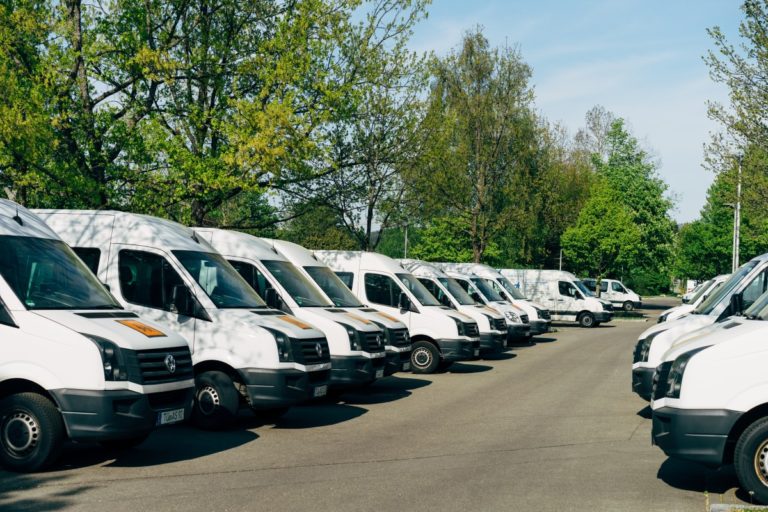
Progressive, Ergo Next, and BiBerk are the best commercial auto insurance providers in 2026. Travelers, Erie, Nationwide, and Liberty Mutual…
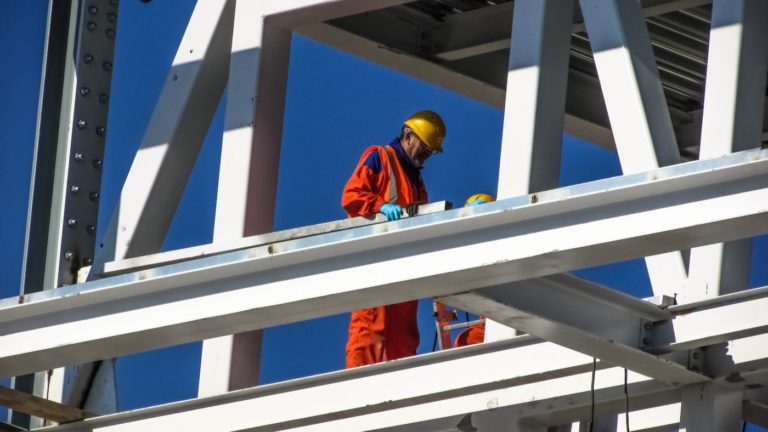
The best builders risk insurance companies for 2026 are Nationwide for general contractors, State Farm for homeowners and owner-builders, and…