
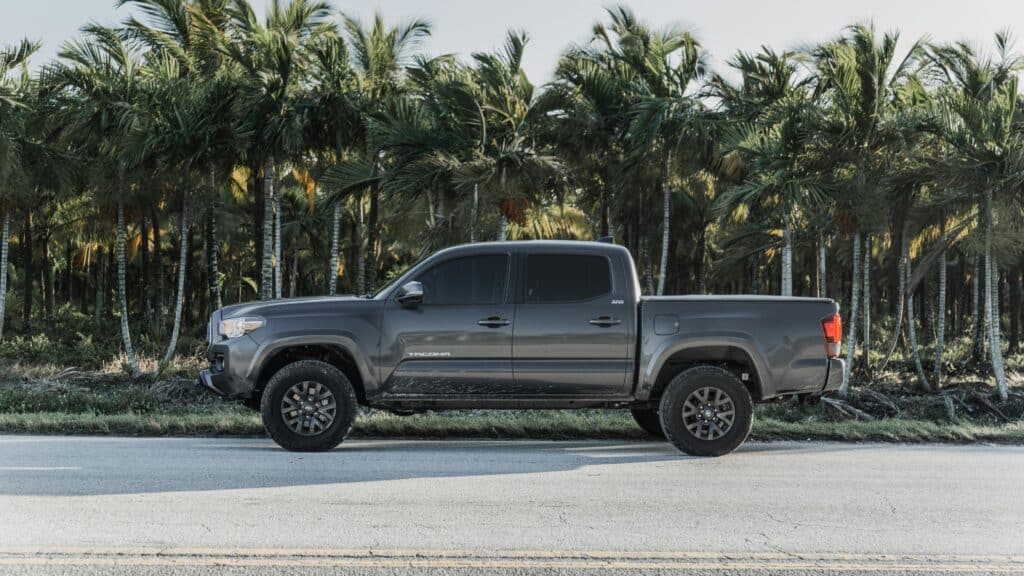


For solo contractors and small business owners, the line between personal and business vehicle use is often blurred. While it may seem cost-effective to use a personal pickup or van for work, doing so without the correct policy creates a significant liability gap.
Personal auto insurance is designed for daily life—commuting to a single place of work, running errands, or social trips. Commercial auto insurance, conversely, is built for vehicles used to generate revenue, transport crews, or move specialized equipment.
The most important distinction is that personal policies contain exclusions for commercial-scale activities. While incidental business use may be covered, tasks like hauling heavy materials or transporting a crew typically fall outside the scope of a personal policy. If an accident occurs while hauling materials to a job site or traveling between multiple project locations, the insurance carrier can legally deny the claim, leaving the business’s assets exposed to litigation.
Key Takeaways
- Personal auto insurance is designed to cover a private commute, not business operations. Using a personal policy for revenue-generating tasks—like hauling equipment or visiting job sites—triggers standard business-use exclusions, which can result in denied claims and massive out-of-pocket costs.
- Most personal auto policies contain explicit business-use exclusions. If a policyholder is hauling materials, traveling between job sites, or performing paid services, the carrier can legally deny the claim.
- Vehicle ownership and modification are common trigger points. Trucks titled to an LLC, outfitted with ladder racks or tool storage, or driven by employees require a commercial policy.
- Commercial policies provide higher and more flexible liability limits. Most construction contracts require a $1,000,000 Combined Single Limit (CSL), which personal split-limit policies are not structured to provide.
- Using a personal policy for business activity can leave both policyholders and their businesses exposed. In a serious accident, plaintiffs can pursue business assets once personal policy limits are exhausted or denied.
Related Resource: This guide covers the business-use exclusion, liability limit differences, and exactly when a commercial policy becomes necessary. If you need a high-level overview of policy structures, common contractual mandates, and 2026 cost benchmarks, see our comprehensive guide: What is Commercial Auto Insurance?
Personal vs. Commercial Policy Finder
1. Who is the legal owner of the vehicle (on the title/registration)?
2. Does the vehicle have permanent work modifications (ladder racks, toolboxes, pipe racks, branded wrap)?
3. Which best describes your typical daily driving?
4. Does a General Contractor or client require a Certificate of Insurance (COI) from you?
- COI Support: Personal policies typically can't add "Additional Insureds" for your clients.
- Asset Protection: Commercial policies are designed to provide Combined Single Limits (CSL) that can help protect business equity.
- Upfit Coverage: Can cover ladder racks and toolboxes that personal policies often exclude.
| Company | Best For | AM Best Rating | Get Quote |
|---|---|---|---|

ERGO NEXT
|
Contractors who want fast, fully online quotes and mobile policy management | A+ | |
Progressive
|
New ventures and drivers with imperfect records; covers pickups to heavy dump trucks | A+ | |

biBERK
|
Independent subcontractors who need instant COIs and direct-to-carrier savings | A++ |
*We may earn a commission when you click through these links.
- Notify your agent of your "Business Use" status.
- Note: This typically stops applying if you begin transporting employees or tools — confirm with your agent.
- Consider a Commercial Policy if you plan to scale your crew this year.
| Company | Best For | AM Best Rating | Get Quote |
|---|---|---|---|
|
ERGO NEXT
|
Contractors who want fast, fully online quotes and mobile policy management | A+ | |
|
Progressive
|
New ventures and drivers with imperfect records; covers pickups to heavy dump trucks | A+ | |
|
biBERK
|
Independent subcontractors who need instant COIs and direct-to-carrier savings | A++ |
*We may earn a commission when you click through these links.
More Commercial Auto Insurance Guides
Table of Contents
Definition of Personal vs. Commercial Auto Insurance
Distinguishing between personal and commercial auto insurance is a matter of how a vehicle is utilized and who owns the asset. For construction professionals, choosing the wrong policy type often results in significant coverage gaps during work-related activities.
Personal Auto Insurance
Personal auto insurance is designed for individuals and families using their owned, leased, or financed vehicles for daily life. This includes:
- Commuting: Regular driving to and from a fixed place of work, school, or a transit station.
- Errands: Daily activities such as grocery shopping or visiting a doctor.
- Recreational Use: Social trips, family vacations, and weekend travel.
Commercial Auto Insurance
Commercial auto insurance is tailored for vehicles owned by a business or used primarily for revenue-generating operations. It provides the specialized protections needed for work-related risks that personal policies are not structured to handle. These operations include:
- Job-Site Travel: Moving between multiple construction sites or visiting clients throughout the day.
- Material Transport: Hauling tools, lumber, heavy equipment, or other trade-specific materials.
- Business Assets: Vehicles titled to an LLC, corporation, or partnership.
The most critical distinction for a contractor is that personal policies generally exclude coverage for most business-related activities. While a personal policy may cover a simple commute, it typically does not protect you once the vehicle is used to perform a service, transport employees, or deliver goods for a fee.
For a deeper dive into standard business policies, see our commercial auto insurance coverage guide.
When a Commercial Policy Becomes Necessary
For many contractors, the transition from a personal to a commercial policy is not a matter of choice but a requirement dictated by the vehicle’s physical configuration, legal ownership, or operational use. Insurance carriers use specific criteria to determine if a risk exceeds the scope of a standard personal auto policy.
Checklist: Commercial Policy Triggers
If a vehicle meets any of the following criteria, insurance carriers typically require a commercial auto policy to ensure claims are covered:
- Business Ownership: The vehicle is titled, registered, or leased in the name of a business entity, such as an LLC, corporation, or partnership.
- Specialized Equipment: The vehicle is equipped with permanent modifications necessary for trade work, including ladder racks, pipe racks, built-in toolboxes, or specialized beds.
- Vehicle Weight: The vehicle has a Gross Vehicle Weight Rating (GVWR) exceeding 10,000 lbs, which is a common threshold for commercial classification and regulatory filings.
- Hazardous Materials and Heavy Loads: The vehicle is used to transport hazardous substances (such as fuel or chemicals) or haul heavy machinery (such as skid steers or mini-excavators).
- For-Hire Services: The operator receives a specific fee to transport goods, materials, or people for others, such as delivery services or debris hauling.
- Commercial Operators: Employees or other drivers use the vehicle as part of their job responsibilities.
Operational Requirements
Beyond physical triggers, the nature of your contracts may require commercial-grade protection. Clients and general contractors frequently require proof of commercial auto insurance through a certificate of insurance (COI) that includes specific endorsements, such as additional insured status. In practice, those same jobs often also require proof of general liability insurance, which is another reason personal auto policies rarely work for commercial job sites.
For more information on state, federal, and common contractual requirements, see our guide on commercial auto insurance requirements.
Business Use Exclusions in Personal Auto Policies
Personal auto insurance is founded on the principle of private risk. Carriers typically define “business use” as driving for specific work-related duties—such as visiting multiple job sites or transporting equipment—rather than standard commuting to and from a permanent workplace.
Most standard personal policies include exclusions for commercial purposes, explicitly stating that coverage does not apply when the vehicle is used for high-risk activities like snow plowing for a fee, towing heavy dump trailers, or hauling another contractor’s debris.
How Carriers Define Business Use
Insurers look beyond a driver’s job title to the specific intent of the trip. If an accident occurs while performing a task that benefits a business, the carrier may cite the following as grounds for claim denial if the vehicle is not properly rated for business use:
- Job-to-Job Travel: While commuting from home to a single fixed office is typically covered, traveling between multiple job sites throughout the day is classified as business use and must be declared to the insurer to ensure the policy remains valid.
- Transporting Tools and Inventory: Carrying power tools, ladders, or business materials (such as lumber or plumbing fixtures) changes the vehicle’s risk profile and is a primary trigger for exclusion.
- Towing for Business: Using a personal vehicle to pull a work trailer is often covered under an ‘artisan’ rating. However, towing ‘for a fee’ (acting as a for-hire carrier) is a commercial activity that requires a separate commercial policy and possibly a commercial truck insurance policy.
- Conducting Paid Services: Activities where the vehicle is used as a for-hire delivery service are typically excluded. Conversely, tasks incidental to a trade—such as a contractor delivering materials to their own job site or a landscaper hauling debris—are often coverable under a personal policy with the appropriate artisan endorsement.
- Vehicle Weight: The vehicle has a Gross Vehicle Weight Rating (GVWR) exceeding 10,000 lbs, which is a common threshold for commercial classification and regulatory filings. For heavier vehicles like dump trucks or semi-tractors, standard commercial auto won’t cut it—learn more in our guide to commercial auto vs. commercial truck insurance.
The reason for these requirements is straightforward: business driving involves more time on the road and higher liability exposure than personal commuting. By performing these tasks without declaring a business use or artisan rating to an insurance carrier, policyholders risk having a claim denied for that specific trip.
Comparison Table: Coverage Scopes
| Activity | Personal Policy | Commercial Policy |
|---|---|---|
| Commuting (Home to Fixed Office) | Covered | Endorsement Required** |
| Transporting Personal Tools | Often Covered* | Covered |
| Transporting Business Inventory/Materials | Excluded | Covered |
| Job-to-Job Travel | Excluded | Covered |
| Towing Work Trailers | Excluded | Covered |
* Unless used for business purposes
** While business owners can sometimes add personal use endorsements, a standard commercial policy does not automatically cover commuting as a default scope of coverage.
Differences in Liability Limits and Asset Protection
The most critical financial distinction between personal and commercial auto insurance is the amount and structure of liability protection. While a personal policy is designed to cover the assets of an individual, a commercial policy is built to safeguard the much larger financial exposure of a business entity.
Split Limits vs. Combined Single Limit (CSL)
Personal and commercial policies handle payouts differently. Most personal policies use split limits, which divide coverage into three distinct buckets: bodily injury per person, total bodily injury per accident, and property damage per accident. For example, a common personal limit of 100/300/100 caps the payout for a single injured person at $100,000, regardless of whether their total bodily injury damages—including medical bills, lost wages, and pain and suffering—are much higher.
Commercial policies typically use a Combined Single Limit (CSL). A CSL policy provides one large pool of coverage—typically $750,000 or $1,000,000—that can be used for any combination of bodily injury and property damage. This flexibility is essential for businesses because a single catastrophic accident can easily exceed the per-person caps of a split-limit policy.
Asset Protection in Litigation
In a business-related accident, plaintiffs are more likely to pursue a lawsuit because a business often has more reachable assets (equipment, real estate, cash flow) than an individual.
- Personal Policies: Frequently offer liability limits up to $500,000. In a severe accident involving multiple vehicles or serious injuries, even these higher amounts are often insufficient to stop a plaintiff from going after your personal or business assets.
- Commercial Policies: Typically feature a $1,000,000 combined single limit (CSL). This industry-standard threshold is designed to absorb the total cost of legal defense, settlements, and judgments, acting as a final layer of protection that prevents a single accident from bankrupting your company.
Like high-quality personal plans, commercial auto insurance includes coverage for legal defense costs, providing an attorney to represent your business in court. These costs are paid in addition to your policy limits, ensuring that your $1,000,000 in coverage isn’t depleted by attorney fees before a settlement is even reached.
If you are ready to upgrade your liability limits, compare top-rated providers in our guide to the best commercial auto insurance companies.
Cost Factors for Business and Personal Policies
Commercial auto insurance premiums are typically higher than personal policy rates because the risk exposure for business operations is significantly greater. Insurance carriers calculate these costs based on the frequency of claims and the potential severity of a payout. While claim frequency has seen a downward trend in recent years due to the integration of safety technology and telematics, the potential severity of a payout remains significantly higher for vehicles used for work, as business policies typically involve higher liability limits and more expensive equipment.
Why Commercial Premiums Are Higher
Several operational factors drive the increased cost of a business-grade policy:
- Higher Liability Limits: While personal policies often carry lower limits, commercial policies typically provide a standard limit of $1,000,000 in Combined Single Limit (CSL) coverage. Depending on the state and vehicle weight—such as heavy trucks in New Jersey requiring at least $1.5 million to meet legal minimums—these higher liability limits cost more to maintain.
- Increased Usage: Vehicles used for business generally spend more time on the road and cover more mileage than those used for personal commuting, which statistically increases the chance of an accident.
- Vehicle Weight and Equipment: Commercial vehicles—such as utility trucks or those hauling trailers—are heavier and carry expensive equipment, leading to higher damage costs in a collision.
- Multiple Drivers: Commercial policies often cover multiple employees with varying driving records, whereas personal policies are designed for household use and typically exclude coverage for employees performing business-related tasks.
Tax Deductibility and Value
Although the upfront premium is higher, commercial insurance offers a financial advantage that personal insurance does not: tax deductibility. For most business owners and contractors, the premiums paid for a commercial auto policy are a fully deductible business expense. This deduction helps offset the higher cost of coverage while helping businesses remain legally protected and comply with client contracts.
For a detailed breakdown of what you might pay based on your trade and location, see our guide on commercial auto insurance costs.
Frequently Asked Questions
Does a personal policy cover my tools if they are stolen from my truck?
Standard personal auto insurance typically covers the vehicle itself and permanently installed parts, but it does not cover personal property or tools left inside. If tools are stolen, a claim typically must be filed under a homeowners or renters insurance policy, which covers personal property even when it is “off-premises”. Note that these policies have strict sub-limits—often as low as $1,500—for property used primarily for business purposes, so a separate tools and equipment insurance policy or inland marine insurance policy is often necessary for high-value construction equipment.
Can I use my personal truck for a side business?
Using a personal truck for business activities is risky because standard personal policies explicitly exclude coverage for most revenue-generating tasks. While a policyholder may be able to add a “business use” endorsement for occasional tasks, like visiting a client or carrying tools and materials to a job site, it will not provide coverage for performing for-hire deliveries or heavy-duty hauling. If an accident occurs during these excluded activities, the carrier can deny the claim entirely.
What happens if an employee crashes my personal vehicle while on an errand?
If an employee is driving a business owner’s personal vehicle on a business errand and causes an accident, the personal insurer will likely deny the claim because standard personal policies exclude coverage for business-related activities. Because the personal policy provides no protection in these scenarios, the business itself can be held vicariously liable and sued for damages. If the accident also injures the employee while they are acting within the scope of employment, that medical exposure may separately implicate workers’ compensation insurance.
Is a commercial policy required if I have a DOT number?
Yes. If a truck or fleet requires a USDOT number, it means the vehicle meets federal thresholds for vehicle weight, passenger capacity, or interstate commerce. Personal auto insurance policies strictly exclude vehicles that operate at this level. Even for a private carrier—such as a contractor hauling their own tools and equipment—that does not need for-hire Operating Authority (an MC number), the weight and operational use of a DOT-registered vehicle will require a commercial auto policy.
References
- Federal Motor Carrier Safety Administration (FMCSA). A U.S. Department of Transportation agency that regulates interstate motor carriers, establishes USDOT number requirements, and enforces mandatory commercial liability insurance filings.
- ISO Business Auto Coverage Form (CA 00 01). The standardized commercial auto policy form defining liability limit structures and covered auto designations commonly used in business auto policies.
Related Guides
Commercial auto insurance is a policy designed to cover liability and physical damage for vehicles used in business operations. [cc_button…
The best commercial auto insurance companies in 2026 are Progressive for newly licensed contractors, ERGO NEXT for specialty trades wanting…
In 2026, commercial auto insurance for a light-duty vehicle typically costs $250 to $400 per month. Because pricing is not…
Commercial auto insurance requirements are governed by three distinct authorities: state DMVs require basic split limits for vehicle registration, the…
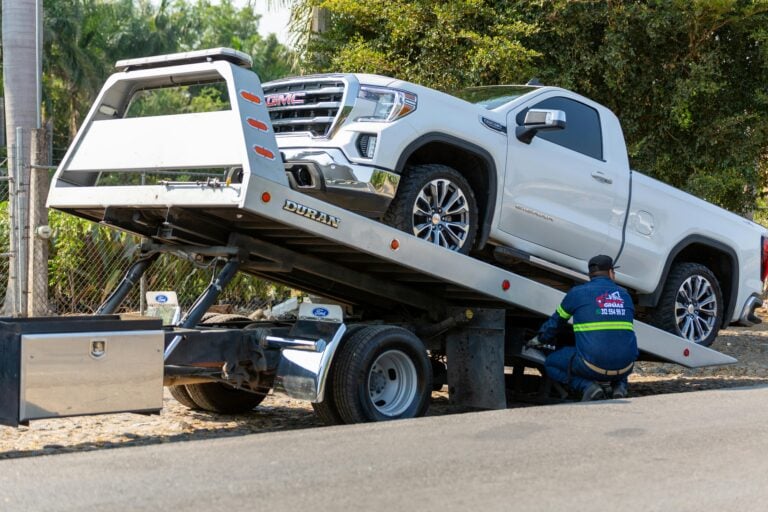
Commercial auto insurance covers the vehicles owned or used by your business. It protects the company from liability claims if…
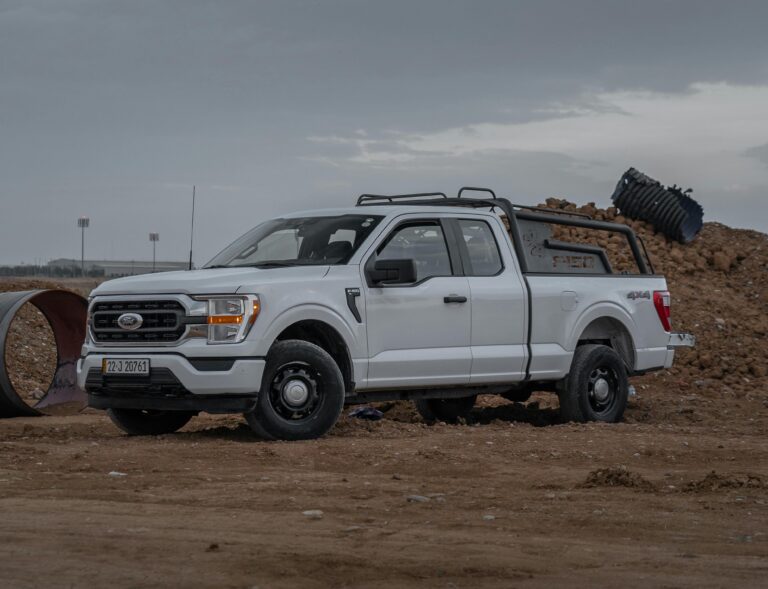
The main difference between commercial auto and commercial truck insurance comes down to vehicle size and payload. Commercial auto covers…

Based on our evaluation of coverage limits, replacement cost options, and claims processing speeds, the best contractors tools and equipment…

The Hartford, ERGO NEXT, and Hiscox are the best general liability insurance providers for contractors in 2026. Progressive, Thimble, and…

The best builders risk insurance companies for 2026 are Nationwide for general contractors, State Farm for homeowners and owner-builders, and…