
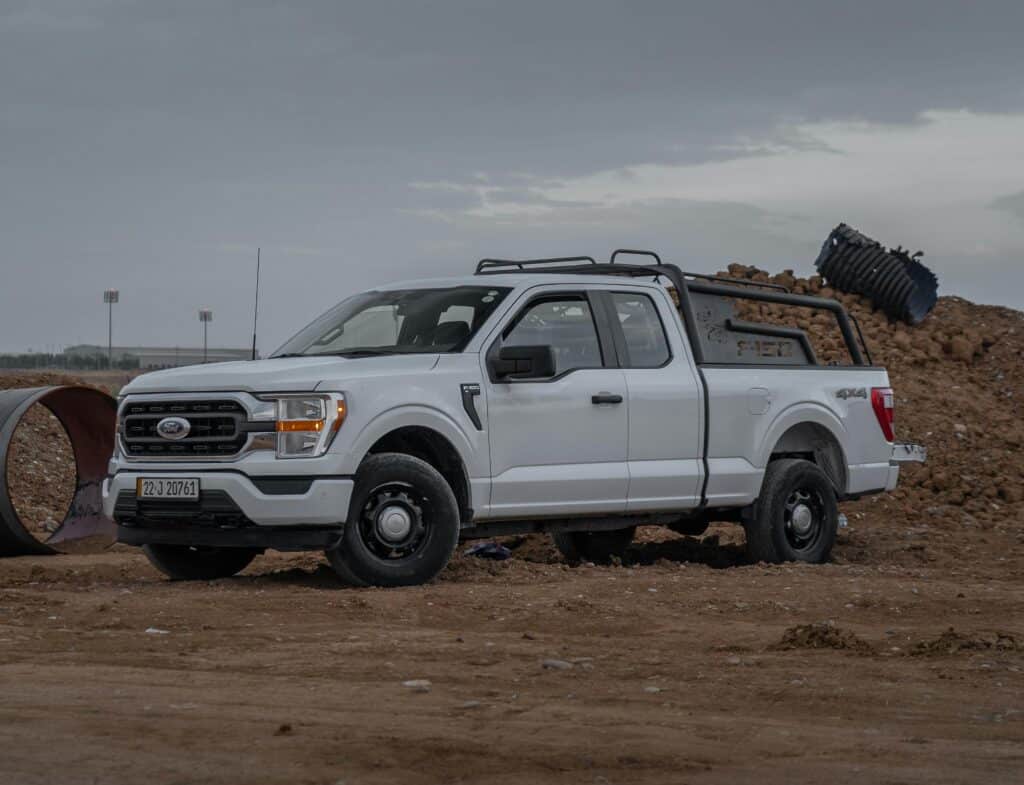


In the construction industry, selecting the wrong vehicle policy can lead to denied claims and operational shutdowns. While both commercial auto and commercial truck insurance provide liability and physical damage coverage, they are designed for distinct operational roles. Choosing between them depends on how you use your vehicles, the weight of your equipment, and whether you haul materials for a fee.
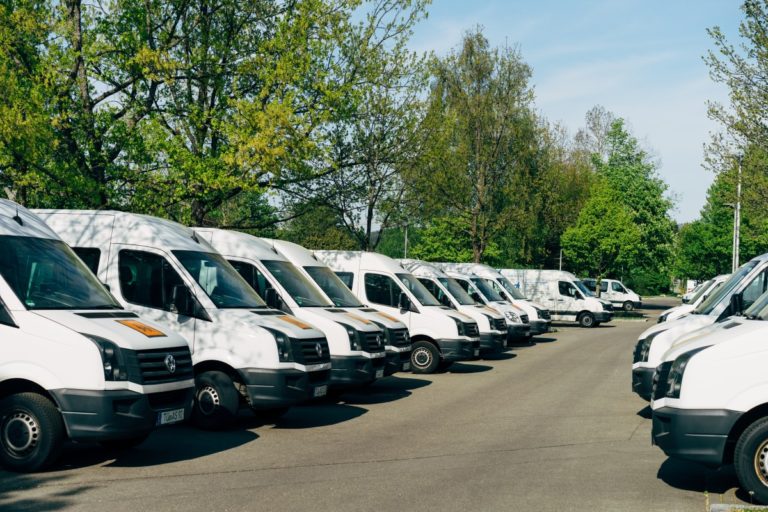
A standard commercial auto policy, often issued as a Business Auto Policy (BAP), is primarily for service-based vehicles. These are the pickups, vans, and SUVs used by trades like plumbing, electrical, or HVAC to transport crews and tools to job sites.
Commercial truck insurance is a more robust set of coverages tailored for the heavy hauling and logistics sectors. Businesses operating dump trucks, semi-tractors, or any vehicle hauling materials or cargo for-hire typically require this specialized coverage to meet federal and state regulatory standards.
Understanding these differences is necessary for maintaining compliance and ensuring your fleet is protected during transit, whether you are moving a crew to a site or hauling heavy equipment across state lines.
Key Takeaways
- Commercial auto is designed for service vehicles transporting your own crew and equipment. Commercial truck insurance applies when a vehicle’s primary function is hauling heavy loads or transporting goods for a fee.
- Vehicle weight and interstate operations often determine which policy is required. Trucks or combinations of 10,001 lbs or more crossing state lines can trigger federal motor carrier regulations and higher liability requirements.
- Trucking policies typically include regulatory filings and cargo coverage that standard auto policies do not. For-hire operations frequently require federal filings such as BMC-91X and endorsements like the MCS-90 to remain compliant.
- Using the wrong policy can result in denied claims or revoked operating authority. A pickup used for paid hauling may fall outside the scope of a standard business auto policy.
Related Resource: This guide covers the specific weight thresholds, cargo rules, and regulatory filings that push a vehicle into the heavy trucking category. If you need a high-level overview of standard commercial auto policies, contractual mandates, and 2026 cost benchmarks, see our comprehensive guide: What is Commercial Auto Insurance?
Commercial Auto vs. Trucking Finder
1. What is the Gross Vehicle Weight Rating (GVWR) of your heaviest vehicle?
2. How will the vehicle(s) be used most often?
3. Do your business operations cross state lines?
- Motor Truck Cargo: Commonly used to help protect materials not owned by you.
- MCS-90 Endorsement: Often needed to help demonstrate public liability compliance.
- Filings: You may need BMC-91 or Form E state filings — confirm with your state.
| Company | Best For | AM Best Rating | Get a Quote |
|---|---|---|---|

Progressive
|
Top pick for small fleets; one of the largest selections of commercial truck policies with great quoting tools | A+ | |

The Hartford
|
High-risk drivers and large fleet management; top-ranked for customer satisfaction | A+ | |

Sentry
|
Best customer experience with highly customizable policies; 34-year streak of A+ financial ratings | A+ |
*We may earn a commission when you click through these links.
- Inland Marine: Consider a "Tools & Equipment" floater to help cover gear in the truck.
- Hired & Non-Owned: Designed to help provide coverage if employees use personal trucks for business.
- Rated Drivers: Insurers often require all crew members to be listed to help ensure claim validity.
| Company | Best For | AM Best Rating | Get Quote |
|---|---|---|---|

ERGO NEXT
|
Contractors who want fast, fully online quotes and mobile policy management | A+ | |
|
Progressive
|
New ventures and drivers with imperfect records; covers pickups to heavy dump trucks | A+ | |

biBERK
|
Independent subcontractors who need instant COIs and direct-to-carrier savings | A++ |
*We may earn a commission when you click through these links.
More Commercial Auto Insurance Guides
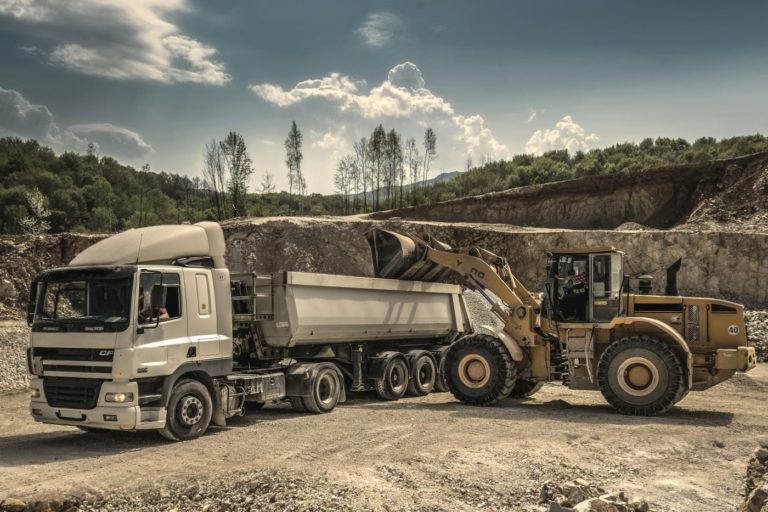
Table of Contents
Key Differences Between Commercial Auto and Commercial Truck Insurance
The classification of a vehicle policy is determined by three primary factors: Gross Vehicle Weight Rating (GVWR), the radius of operation, and the vehicle’s intended use. In the construction industry, a useful distinction is whether the vehicle is designated for ‘service use’—such as transporting employees, tools, and equipment to a job site—or for-hire use, where the vehicle is used to transport goods or materials for others in exchange for a fee.
Determining Policy Type by Vehicle Use
Standard commercial auto insurance—typically written on a Business Auto Policy (BAP)—is generally sufficient for service-oriented operations. This includes vehicles used to transport a crew, their personal protective equipment (PPE), and the tools necessary to perform a trade, such as a plumber’s van or an electrician’s pickup truck.
Specialized commercial truck insurance is typically recommended when the vehicle’s primary function is hauling. If you are moving dirt, gravel, or construction debris for a third party for a fee, a standard commercial auto policy may lack the necessary provisions for for-hire transportation. These operations often require a motor carrier policy or a highly endorsed BAP that includes specific coverage for cargo and meets higher federal or state liability limits.
If your operations fit the standard service profile, you can compare top-rated carriers in our roundup of the best commercial auto insurance companies.
Technical and Regulatory Differences
Weight thresholds and federal filings are the technical triggers that move a vehicle from an auto policy to a trucking policy.
- Gross Vehicle Weight Rating (GVWR): Commercial auto policies typically cover light-duty vehicles like pickups and vans. Once a vehicle exceeds certain weight classes or is used for heavy hauling—such as a dump truck or a semi-tractor—it requires commercial truck insurance.
- Regulatory Filings: For-hire trucking operations often require federal or state filings, such as the BMC-91X or MCS-90, to prove the business maintains the minimum required public liability insurance. Standard commercial auto policies rarely involve these filings.
- Cargo Coverage: While commercial auto insurance focuses on the vehicle and liability, trucking insurance frequently includes Motor Truck Cargo insurance. This is necessary for protecting materials owned by others while they are in your possession.
Comparison Table: Auto vs. Truck Insurance
| Feature | Commercial Auto | Commercial Truck |
|---|---|---|
| Primary Use | Service / Commuting | For-Hire Hauling / Logistics |
| Typical Vehicles | Pickups, Vans, SUVs | Dump Trucks, Semis, Heavy Haul |
| Regulatory Filings | Rarely required | MCS-90 / BMC-91 often required |
| Cargo Coverage | Not standard | Required for for-hire hauling |
Determining Your Policy Needs by Vehicle Type and Use
Selecting the correct policy requires an analysis of the vehicle’s physical specifications and its specific operational role. While vehicle size is a strong indicator, the intent of the trip often dictates which coverage is legally and operationally necessary.
Light-Duty vs. Heavy-Duty Classifications
Most construction fleets utilize a mix of vehicle weight classes. The insurance industry typically separates these based on Gross Vehicle Weight Rating (GVWR):
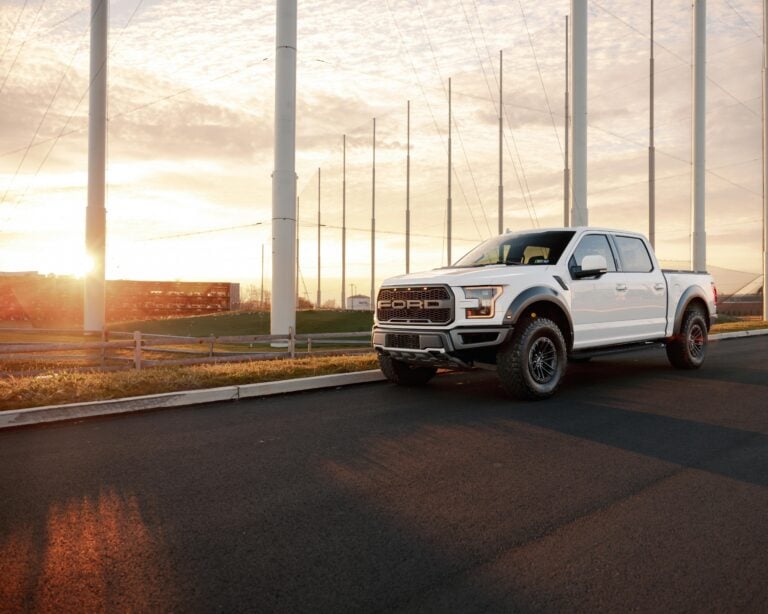
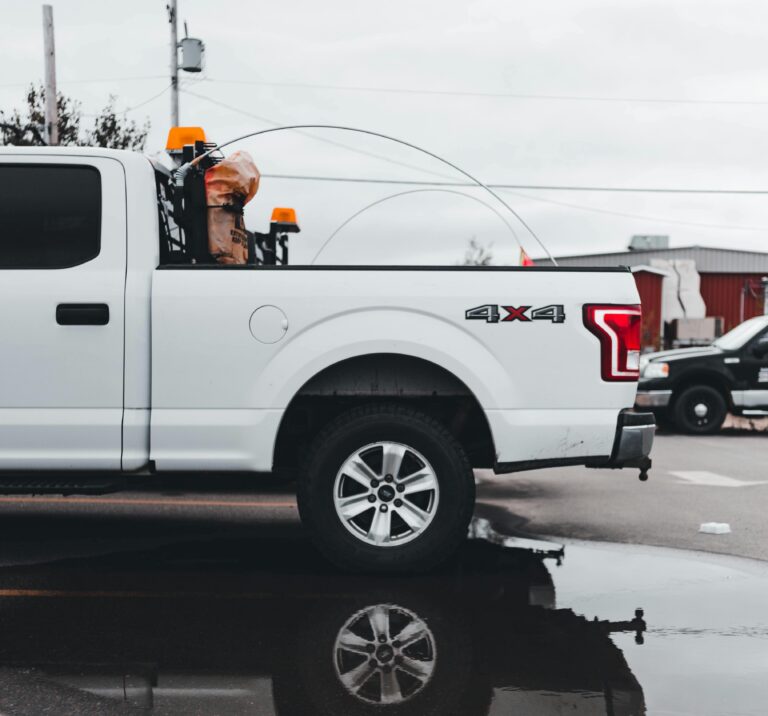
- Light-Duty Vehicles: This category includes standard pickups (F-150, Silverado 1500), cargo vans, and SUVs. These are almost always covered under a Commercial Auto policy when used to transport a contractor to a job site. (Note: Relying on a standard personal policy for these daily work tasks creates a massive liability gap. Learn more in our commercial vs. personal auto insurance guide.)
- Medium-Duty Vehicles: Larger work trucks like the Ford F-450 or Ram 4500 often sit on the fence. If used strictly as a service vehicle with a utility body, they fit under Commercial Auto. However, if they are used to haul heavy trailers for-hire, they may require a Trucking policy.
- Heavy-Duty Vehicles: Dump trucks, cement mixers, and semi-tractors used for equipment transport are classified as heavy-duty. Due to the high liability risk associated with their weight—often exceeding 26,000 lbs—these vehicles require specialized Commercial Truck insurance.
The Problem of Mixed-Use Vehicles
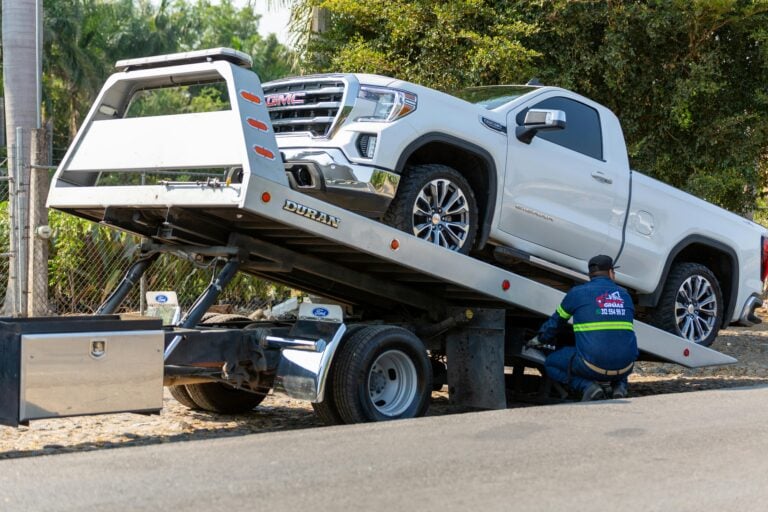
A common point of confusion occurs when a light-duty vehicle performs heavy-duty tasks. For example, a heavy pickup truck used to tow a lowboy trailer carrying a skid steer for a fee is no longer performing a service function; it is performing a hauling function.
In this scenario, the vehicle may cross the threshold into the trucking category. Insurance carriers look at whether the vehicle is for-hire—meaning the operator is being paid specifically to move the load—or not-for-hire, where the movement of equipment is merely incidental to a construction contract. Crossing state lines while hauling for-hire places the operation under the jurisdiction of federal trucking regulations regardless of vehicle size.
Choosing the Right Policy
To determine which path to take, businesses can evaluate their operations against these three triggers:
- Weight: Is the vehicle’s GVWR over 26,000 lbs? (If yes, insurers require a Commercial Truck policy).
- Revenue: Is the business paid a specific line-item fee to transport materials or equipment for others? (If yes, insurers require a Commercial Truck policy).
- Geography: Does the vehicle haul materials across state lines? (If yes, federal regulations require a Trucking policy with federal filings).
Coverage Structure and Specialized Endorsements
The structural differences between commercial auto and commercial truck policies center on how they handle liability and what they protect inside or behind the vehicle. Standard auto policies are built for liability and physical damage to the unit itself, while trucking policies are designed to satisfy more complex contractual and regulatory demands.
Standard Coverage vs. Trucking Gaps
A standard commercial auto insurance policy typically provides Liability, Medical Payments, Uninsured Motorist, and Physical Damage (Comprehensive and Collision) coverages. While these protect the business if a driver causes an accident, they often contain exclusions for for-hire transportation and heavy equipment operations.
Commercial Truck insurance provides these same foundations but layers on specialized endorsements that are absent in a standard business auto suite. These additions are not just optional extras; they are often the primary reason a hauler is legally allowed to operate.
Motor Truck Cargo Insurance
One of the most significant distinctions is the handling of cargo. A standard commercial auto policy rarely covers the items being transported, especially if they belong to a third party.
- Commercial Auto: Typically relies on inland marine or tools and equipment insurance to cover the business’s own tools. It does not cover materials owned by others being hauled for a fee.
- Commercial Truck: Includes or adds motor truck cargo insurance. This covers the liability for cargo that is lost or damaged due to fire, collision, or even theft while in transit. Brokers and shippers generally require a minimum of $100,000 in cargo coverage before they will issue a load to a carrier.
Regulatory Filings and Endorsements: MCS-90 and BMC-91
Trucking policies are frequently used as a mechanism for regulatory compliance. When a business operates as a motor carrier, it must prove to the Federal Motor Carrier Safety Administration (FMCSA) or state agencies that it has enough insurance to cover public liability and environmental restoration.
- MCS-90 Endorsement: This is a public liability endorsement required for most for-hire interstate motor carriers. It ensures that the insurer will pay for injuries or property damage even if the specific incident is not otherwise covered by the policy, though the insurer can later seek reimbursement from the business.
- BMC-91X: This is a filing made directly with the FMCSA by the insurance company to confirm that the carrier has the required $750,000 to $5,000,000 in liability coverage, depending on the weight of the vehicles and the materials being hauled.
Trailer Interchange and Non-Owned Trailer Coverage
In the trucking industry, it is common to pull trailers owned by other companies. Commercial Truck insurance often includes Trailer Interchange coverage, which provides physical damage protection for a non-owned trailer while it is in your possession under a written interchange agreement. Standard commercial auto policies generally only cover trailers specifically listed on the policy or those that are owned by the insured.
Related coverage: Whether you insure the vehicle under a commercial auto policy or a trucking policy, that coverage only addresses vehicle-related risks. Contractors often also carry general liability insurance for job-site claims and workers’ compensation insurance for employee injuries.
Cost and Rating Differences for Construction Fleets
The methods insurers use to calculate premiums differ significantly between commercial auto and commercial truck policies. For a construction firm, understanding these rating structures is necessary for accurate project estimating and fleet budgeting.
Rating Methodology: Per Driver vs. Per Power Unit
Commercial auto insurance premiums are primarily driven by the driver-vehicle mix. Insurers evaluate the Motor Vehicle Records (MVRs) of all listed drivers and the specific types of vehicles they operate, such as pickups or vans. Because these vehicles are often used for commuting to job sites or running errands, the risk is tied closely to the individual driver’s history.
In contrast, commercial truck insurance is often rated per “power unit” (the truck or tractor itself). While driver experience still matters, the rating heavily weights the vehicle’s weight class, the type of materials hauled, and the radius of operation. This is because a heavy dump truck or semi-tractor carries a much higher potential for catastrophic damage than a service van, regardless of who is behind the wheel.
Premium Expectations
Generally, commercial truck insurance is more expensive than commercial auto insurance. This higher cost is due to several factors:
- Increased Liability Limits: Trucking operations often require $750,000 to over $1,000,000 in liability coverage to meet federal standards, whereas standard commercial auto policies may carry lower state-minimum limits. (See our state-by-state guide to commercial auto insurance requirements to check your local minimums).
- Cargo Exposure: The addition of Motor Truck Cargo insurance to protect hauled materials adds a layer of premium that service vehicles do not require.
- Weight Class: Light-duty construction vehicles, such as a contractor’s F-150, have significantly lower rates because they cause less damage in an accident than a 26,000+ lb heavy hauler.
Cost Component Breakdown
The primary drivers of your insurance costs shift depending on which policy type you utilize:
- Commercial Auto Cost Drivers:
- Driver MVRs: The primary factor; accidents or violations by a single crew member can spike the entire policy rate.
- Trade Type: Specialty trades (e.g., roofing) may face higher rates than lower-risk trades (e.g., interior painting).
- Vehicle Value: The replacement cost of the pickups or vans in your fleet.
- Commercial Truck Cost Drivers:
- Weight Class and Vehicle Type: A semi-truck or heavy dump truck is significantly more expensive to insure than a medium-duty flatbed.
- Radius of Operation: Hauling materials within a 50-mile radius is less expensive than long-haul interstate transport.
- Cargo Type: Hauling hazardous materials or heavy machinery (e.g., excavators) increases risk and premium compared to hauling gravel or dirt.
- DOT Safety Scores: For carriers with a DOT number, their safety performance history directly impacts their premium—a factor that does not apply to standard auto policies.
For more detailed pricing information, see our guides on commercial auto insurance costs.
Frequently Asked Questions
Can a pickup truck be insured on a commercial truck policy?
Yes. While pickup trucks are typically insured under a standard Commercial Auto policy for service trades like plumbing or HVAC, they must move to a Commercial Trucking policy if they are used for for-hire hauling. For example, if you use a pickup for hot-shot trucking or to haul materials for a fee, a standard business auto policy may exclude coverage for those specific commercial activities.
Do I need a DOT number for a commercial auto policy?
Not necessarily, but the requirement for a USDOT number is based on vehicle weight and operations, not the policy type. Under federal and state safety regulations, a USDOT number is required if a vehicle (or truck-trailer combination) has a Gross Vehicle Weight Rating (GVWR) of 10,001 lbs or more and is used for business. This rule applies to many large pickups and service trucks even if they are on a standard commercial auto policy.
Is commercial truck insurance more expensive than commercial auto?
Yes. Commercial truck insurance is generally significantly more expensive because it is designed for higher-risk operations. For-hire transport trucks average between $746 and $954 per month, while a contractor’s commercial auto policy for light-duty vehicles like vans or pickups averages approximately $272 per month. The higher cost for trucking is driven by increased weight, mandatory higher liability limits, and the addition of cargo coverage.
References
- Federal Motor Carrier Safety Administration (FMCSA). A U.S. Department of Transportation agency that defines Gross Vehicle Weight Rating (GVWR) classifications, establishes USDOT number requirements, and enforces federal financial responsibility filings such as the MCS-90 and BMC-91.
- State Departments of Transportation (DOTs). State-level regulatory agencies that oversee intrastate commercial hauling operations and enforce state-specific insurance minimums and operating requirements.
Related Guides
Commercial auto insurance is a policy designed to cover liability and physical damage for vehicles used in business operations. [cc_button…
The best commercial auto insurance companies in 2026 are Progressive for newly licensed contractors, ERGO NEXT for specialty trades wanting…
In 2026, commercial auto insurance for a light-duty vehicle typically costs $250 to $400 per month. Because pricing is not…
Commercial auto insurance requirements are governed by three distinct authorities: state DMVs require basic split limits for vehicle registration, the…
Commercial auto insurance covers the vehicles owned or used by your business. It protects the company from liability claims if…
The main difference between commercial vs. personal auto insurance is intent: personal policies cover daily commuting, while commercial policies cover…

Based on our evaluation of coverage limits, replacement cost options, and claims processing speeds, the best contractors tools and equipment…

The Hartford, ERGO NEXT, and Hiscox are the best general liability insurance providers for contractors in 2026. Progressive, Thimble, and…

The best builders risk insurance companies for 2026 are Nationwide for general contractors, State Farm for homeowners and owner-builders, and…