


The construction industry carries one of the highest business failure rates in the country. Most contractors do not shut down because they lack field expertise; they fail because they mismanage cash flow.
Standard accounting measures financial health over fixed, predictable periods. Construction accounting measures financial health by project over highly irregular timeframes. A single job might take three weeks or three years, require heavy upfront material and labor costs, and involve 5% to 10% retainage withheld until closeout. Standard business accounting methods do not account for these conditions. Contractors must treat every job site as an individual profit center and track costs accordingly.
This guide is for construction business owners, project managers, and accounting staff who need a practical understanding of how money moves through a construction business—from field-level job costing to managing cash flow and compliance.
Key Takeaways:
- Project-based financials: Construction accounting requires tracking direct costs, overhead, and revenue per job rather than globally.
- Cash flow timing: Contractors must float weekly payroll and labor burden—including taxes, insurance, and benefits—long before progress payments clear.
- Compliance and taxation: Public jobs, multi-state operations, and union fringes require specialized tracking beyond standard payroll.
- System limitations: Generic accounting software lacks the structure to run work-in-progress (WIP) schedules, AIA billing, and accurate job profitability reports.
Table of Contents


How Construction Accounting Differs from Standard Accounting
Most standard businesses use period-based accounting. They look at a profit and loss (P&L) statement for a specific timeframe—a month, a quarter, or a year—and assess whether the company made money. In construction, relying solely on a company-wide P&L will obscure operational reality. Construction accounting breaks the business down into units, treating every project as its own distinct business.
Project-Based vs. Period-Based Accounting
If a manufacturing plant sells 1,000 widgets in Q1, the revenue and costs match that specific quarter. If a general contractor builds three identical retail shells, the costs and timelines will vary based on site conditions, weather delays, and local labor rates.
Because of this variance, a quarterly company-wide P&L provides an incomplete picture for a project manager. A contractor might show an overall profit for the month, masking the fact that Job A is operating at a loss while Job B subsidizes it. Construction accounting solves this by treating every job site as an individual profit center. Every material purchase, hour of labor, and subcontractor invoice must be mapped directly to the specific project using job costing rather than grouped into a general expense account.
Long-Term Contracts and Irregular Cash Flow
A retail business incurs a cost, sells a product, and collects cash within days. Construction contracts can stretch over months or years, creating massive gaps between when expenses are incurred and when cash is received.
For example, a commercial contractor might buy $50,000 in steel in October, install it in November, bill the owner in December, and collect the cash in February. That single sequence of events crosses multiple financial periods and a tax year. Because cash goes out the door long before it comes back, contractors cannot rely on a simple cash-basis view to gauge financial health. They must use specialized revenue recognition methods to match earned revenue against incurred costs at specific milestones, preventing the balance sheet from showing artificial losses during heavy production months.
Equipment Tracking and Capital Assets
For most businesses, capital assets remain stationary. Office computers sit on desks and depreciate on a predictable schedule. In construction, capital assets are highly mobile and subject to heavy wear across multiple locations.
A contractor’s excavator might sit idle for a week, move to a highway project for three days, and then transfer to a residential subdivision. The costs of operating that machinery—including fuel, maintenance, insurance, and depreciation—must be tracked and allocated to the exact jobs where the machine was used. To accomplish this, contractors often establish internal equipment rental rates. The company effectively rents the owned equipment to its own projects. If equipment costs remain in a general overhead bucket, project margins will look artificially high, which can lead the contractor to underbid future jobs.
Structuring a Construction Chart of Accounts (COA)
A standard business chart of accounts (COA) categorizes money coming in and money going out. A construction COA must do that while also tracking exactly where that money was spent down to the specific project phase. If the ledger is not structured for project-level tracking from day one, accurate job costing is impossible.
Direct, Indirect, and Overhead Costs
A generic COA often groups expenses into broad accounts like “Payroll” or “Vehicle Expenses.” This structure does not work in construction. A project manager needs to know exactly how much labor went into pouring a foundation on a specific site, not the total company payroll for the month.
A construction COA explicitly separates costs into three distinct tiers:
| Cost Category | Definition | Real-World Examples | How It’s Tracked |
|---|---|---|---|
| Direct Costs | Expenses that only exist because a specific project exists. | Lumber, drywall, framing labor, subcontractor invoices, rented excavators. | Coded directly to the specific job and phase (e.g., Job 101 – Phase 03 Concrete). |
| Indirect Costs (Project Overhead) | Costs that support projects, but are shared across multiple active jobs. | Project Manager’s salary, superintendent’s truck fuel, shared site fencing. | Prorated and allocated across the specific jobs that utilized the resource. |
| General Overhead | Expenses required to run the company, regardless of field work. | Office rent, accounting software, executive salaries, liability insurance. | Allocated to jobs mathematically at month-end based on total labor hours or revenue %. |
Structuring the ledger this way prevents shared overhead from hiding the true cost of field operations, laying the foundation for accurate cost tracking and job costing.
Setting Up Cost of Goods Sold (COGS) for Construction
In retail or manufacturing, Cost of Goods Sold (COGS) represents the wholesale price of inventory sold. In construction, COGS represents the direct costs of building the project.
A proper construction COA structures COGS into four primary categories:
- Labor: Wages, payroll taxes, and benefits for field workers
- Materials: Raw materials consumed specifically by the project
- Subcontractors: Payments made to specialty trades performing scope on the job
- Equipment: Third-party rental fees or internal allocation rates for heavy machinery
Grouping project expenses into these distinct categories allows the finance team to generate accurate job profitability reports and prevents direct job costs from bleeding into the company’s general operating expenses.
Using Standardized Cost Codes
A well-structured COA relies on a standardized list of construction cost codes to track expenses at a granular level. Cost codes act as a taxonomy, matching every dollar spent to a specific task.
Commercial contractors typically integrate the CSI MasterFormat into their ledger, which assigns a specific numerical code to every trade and task (for example, Division 03 for Concrete). Residential builders often rely on the NAHB cost code structure. When a project manager approves a material invoice in the field, they assign the relevant cost code before the invoice hits the accounting system. This workflow allows the contractor to efficiently track construction project costs by comparing estimated budgets directly against actual spending in real-time, catching overruns before the phase is finished.
» Free Download: Costruction Cost Codes List
Job Costing: Tracking Profitability by Project
Job costing forms the foundation of construction financial management. Instead of looking at whether the company made money this month, job costing shows exactly which phases of which projects generated profit and which operated at a loss.
The Mechanics of Job Costing: Coding vs. Allocating
For job costing to work, every dollar spent must be assigned to a project.
For direct costs, this process is straightforward. The expense is coded directly to the project ledger the moment a purchase order is created or a timesheet is submitted.
The real challenge of job costing lies in allocating shared expenses. If an indirect cost is not properly split, project margins distort. For example, if a project manager oversees four commercial builds simultaneously, the accounting system must split that manager’s salary and truck fuel across those four specific jobs. If the entire vehicle expense is assigned to one project’s ledger, that job will look artificially unprofitable. If it remains in general company overhead, all four jobs will show artificially high margins.
The same mathematical rigor applies to general overhead. Contractors cannot leave office rent and executive salaries in a general account. To determine true project profitability, a portion of this general overhead must be allocated to every active job, usually based on a project’s percentage of total company revenue or total labor hours.
If a contractor’s annual general overhead is $500,000 and Job A represents 20% of the company’s total labor hours for the year, Job A must absorb $100,000 of that overhead. Without this allocation, a contractor might close a job showing a 15% gross margin, unaware that their net margin is actually negative after factoring in the home office.
Accounting for Labor Burden
Labor burden represents the total cost of putting an employee in the field. Bidding or job costing based solely on a worker’s base hourly wage guarantees a financial loss.
If a union electrician earns a base wage of $45 per hour, the contractor’s true cost to employ that electrician includes state and federal payroll taxes, workers’ compensation premiums, health insurance, pension contributions, and vehicle or tool allowances. Once factored in, that $45 per hour base wage often translates to a $75 per hour labor burden.
The accounting system must apply this fully burdened rate directly to the project ledger. If the estimating team bids the labor at $55 per hour and the accounting team tracks it at the $45 base rate, the project will operate at a loss on every hour worked while the internal financial reports continue to show a profit.
» Free Resource: Labor Burden Calculator
The Financial Impact of Construction Contracts
In construction, the specific type of contract signed for a project determines how risk is allocated and how the accounting team must track expenses. A billing process that works for one contract structure will cause cash flow bottlenecks on another. Beyond managing these core billing formats, the finance team must also track the financial impact of mid-job contract modifications, delays, and disputes.
Fixed-Price (Lump Sum) Contracts
In a fixed-price contract, the contractor agrees to deliver a defined scope of work for a set dollar amount. From an external billing perspective, the accounting workload is straightforward—the finance team invoices based on the percentage of completion against the Schedule of Values (SOV), without needing to prove individual material costs to the owner.
However, the internal accounting burden shifts to strict budget tracking. For the accounting team, fixed-price jobs require tracking actual field costs against the original estimate daily. If a job is estimated at $500,000 and costs hit $530,000 due to material price spikes, the contractor absorbs the $30,000 loss. Under a lump sum format, internal job costing accuracy dictates whether the company protects its margin or operates at a loss.
Cost-Plus Contracts
A cost-plus contract reimburses the contractor for all project-related expenses and adds a predetermined fee (the “plus”) for profit and overhead. While this protects the contractor from cost overruns, it transfers a heavy administrative burden to the back office.
Project owners will not pay a cost-plus invoice without substantiation. The accounting department must track, compile, and present every material receipt, subcontractor invoice, and payroll record tied to the job before submitting a pay application. If a field worker loses a material receipt or miscodes an expense, the owner will reject the line item, forcing the contractor to absorb the unverified cost.
Time-and-Materials (T&M) Contracts
T&M contracts bill the project owner based on actual hours worked and materials consumed, usually with a built-in markup percentage.
The primary accounting challenge here is managing the spread between internal payroll costs and external billable rates. A carpenter might earn a base wage of $35 per hour, cost the company $55 per hour after labor burden (taxes, insurance, benefits), and be billed to the client at $90 per hour. The accounting system must translate internal payroll hours into external client invoices, ensuring that no billable time is dropped between the field and the office.
Accounting for Change Orders
When a project scope changes due to hidden site conditions or owner requests, the financial baseline of the job shifts. Because a construction change order legally adjusts both the total contract value and the project budget mid-job, it requires immediate back-office action.
From an accounting perspective, a change order is not just an approval for the field crew to do extra work. The finance team must update the project budget inside the ledger and adjust the billing schedule on the AIA G703 form. If a superintendent executes out-of-scope work before the change order is entered into the accounting system, the contractor has no mechanism to bill for that work during the next progress payment cycle.
» Free Resource: Change Order Form Template
Managing Contract Risk: Force Majeure and Back Charges
Beyond standard change orders, the accounting team manages contract mechanisms tied to project delays and defects. Force majeure clauses protect contractors from liquidated damages when unforeseen events—such as extreme weather—halt a project. When triggered, the accounting team must adjust WIP schedules, extend cash flow projections, and alter billing cycles to reflect the delay.
Additionally, the finance team must track and enforce back charges. If a GC’s field crew repairs a subcontractor’s defective work, the field superintendent reports those hours to the back office. The accounting team then deducts (back charges) that internal labor cost from the subcontractor’s next progress payment. Failing to document back charges means the GC absorbs the subcontractor’s mistakes directly out of their own profit margin.
Revenue Recognition Methods
Revenue recognition dictates when a contractor officially claims money as earned income on their financial statements. In retail, revenue is recognized the moment a customer buys an item. In construction, where a single project can span multiple tax years and cash payments lag months behind field progress, choosing when to recognize revenue directly impacts tax liabilities, bonding capacity, and the accuracy of the balance sheet.
Comparison of Construction Accounting Methods
Contractors choose their accounting method based on project duration, annual revenue, and bonding needs. While specialty trades running short-term jobs often select cash-basis or completed contract methods, large commercial contractors must adopt the Percentage of Completion (PCM) method to comply with IRS regulations and surety standards.
| Accounting Method | Revenue Recognition Trigger | Best Use Case | IRS Rules & Notes |
|---|---|---|---|
| Cash-Basis | When cash actually clears the bank account. | Small residential trades, handymen, one-off service calls. | Not allowed for large C-Corps or companies carrying heavy inventory/materials. |
| Accrual-Basis | When invoices are sent and bills are received. | General commercial businesses, short-term project contractors. | Standard for standard business, but lacks nuance for multi-year construction projects. |
| Percentage of Completion (PCM) | Progressively, based on the cost-to-cost formula (% of costs incurred to date). | Commercial contractors, heavy civil, multi-year projects. | Mandated by the IRS for large contractors (generally >$30M gross receipts). Required by sureties. |
| Completed Contract (CCM) | 100% recognized only when the project is fully finished. | Short-duration residential trades (e.g., roofers), spec home builders. | Great for tax deferral, but hated by bonding companies because it hides active profitability. |
Cash vs. Accrual Basis Accounting in Construction
Cash-basis accounting records revenue when a check clears the bank and records expenses when a bill is paid. Accrual-basis accounting records revenue when it is earned and expenses when they are incurred, regardless of when the actual cash moves.
Relying on cash-basis accounting distorts the financial reality of long-term construction projects. Consider a general contractor executing a six-month, $2 million commercial build. During the first two months, the contractor spends $400,000 on site prep, foundation work, and structural steel, but the owner has not yet approved the first progress payment. Under a cash-basis system, the company’s profit and loss statement shows a devastating $400,000 loss. When the owner finally pays a $700,000 invoice in month three, the system suddenly shows a massive, artificial profit windfall. Accrual accounting fixes this distortion by matching the costs incurred directly against the revenue earned during that specific billing cycle.
Percentage of Completion Method (PCM)
The Percentage of Completion Method (PCM) is the standard accrual method for long-term construction contracts. It allows contractors to recognize revenue and profit progressively as the project moves forward, rather than waiting until final closeout. The IRS mandates PCM for large contractors—generally those exceeding a specific annual gross receipt threshold (currently set at $30 million for recent tax years, though subject to adjustment).
PCM typically relies on the cost-to-cost formula to determine exactly how much revenue a contractor can claim.
- Formula: Divide the actual job costs incurred to date by the total estimated project costs. This yields the percentage of completion.
If a contractor has a $1 million contract with $800,000 in estimated total costs, and they spend $200,000 in the first month, the project is 25% complete. Under PCM, the contractor recognizes 25% of the total contract value—or $250,000—as revenue for that month, regardless of what they actually billed the client. This method provides sureties and banks with an accurate, real-time picture of a contractor’s financial position.
Completed Contract Method (CCM)
The Completed Contract Method (CCM) is an alternative accrual strategy where a contractor defers recognizing any project revenue, and deducting any project expenses, until the job is 100% finished.
Specialty trades with short project durations (like residential roofers or driveway paving contractors) often use CCM because the administrative burden of calculating PCM for a three-day job is operationally unnecessary. Certain residential homebuilders also use CCM as a tax deferral strategy. If a custom home build starts in October and finishes in March, CCM allows the builder to defer the recognized profit and associated tax burden into the following year. However, for commercial contractors running multi-year projects, using CCM creates blind spots in financial reporting and is rarely accepted by bonding companies.
Progress Billing and Cash Flow Management
Contractors cannot front the cash for a multi-year commercial build and wait until completion to get paid. They must bill the project owner incrementally as work gets done. However, securing these progress payments requires accurate documentation. If a contractor submits an incorrect pay application, the owner or architect will reject the invoice, delaying cash flow for another 30 to 60 days.
The Schedule of Values (SOV) and AIA Forms
Before a project starts, the contractor submits a Schedule of Values (SOV). This document breaks down the total contract value into individual line items, such as site prep, foundation, framing, and electrical.
During the billing cycle, the accounting team uses the SOV to generate progress invoices, typically using the industry-standard AIA G702 and G703 forms. The G703 (Continuation Sheet) tracks the financial status of every line item: what was scheduled, what was previously billed, what is being billed this period, and the balance to finish. If the SOV allocates $100,000 for drywall and the superintendent reports the drywall is 50% complete, the accounting team bills $50,000 for that line item on the G703. The G702 (Application and Certificate for Payment) summarizes these totals and requires the architect’s signature to authorize the release of funds.
Accounting for Retainage (Retention)
Retainage in construction is a financial control mechanism where the project owner withholds a percentage—usually 5% to 10%—of every progress payment until the job is substantially complete.
From an accounting perspective, retainage creates a cash flow deficit. If a contractor completes $100,000 of work in a month, they must pay their field labor, material suppliers, and overhead at 100%. However, the owner only writes a check for $90,000. That missing $10,000 sits on the contractor’s balance sheet as “Accounts Receivable – Retainage.” It is earned revenue, but it is entirely illiquid. Contractors must structure their cash reserves to float this deficit, as the withheld retainage often represents the contractor’s entire profit margin on the job.
Subcontractor Pay Apps and Lien Waivers
General contractors must manage the exact same progress billing process in reverse with their subcontractors, often relying on specialized accounting software for general contractors to track the incoming paperwork. A specialty trade submits a pay app to the GC for the work they completed that month.
The GC’s accounting team must verify the field progress, but releasing the funds requires specific documentation. Before handing over the check, the GC must collect an unconditional lien waiver from the subcontractor. This document legally waives the subcontractor’s right to file a mechanic’s lien against the property for that specific payment amount. If the accounting department releases the check without securing the waiver, and the subcontractor fails to pay their own material suppliers, those suppliers can file a lien on the project owner’s property. The GC then faces the prospect of paying for the same materials twice to clear the title.
Additionally, the accounting team must verify that the subcontractor’s Certificate of Insurance (COI) is active before releasing funds. If a GC pays a subcontractor whose Workers’ Compensation or General Liability policy has expired, the GC inherits that risk, and the GC will absorb the premium costs for that uninsured exposure during their annual audit. Finally, the accounting department must track and apply back charges. If a GC’s field crew repairs a subcontractor’s defective work, the finance team must formally document that labor cost and deduct (back charge) the amount from the subcontractor’s progress payment.
Cash Flow Forecasting
Because of 60-to-90-day payment delays, 10% retainage withholdings, and weekly payroll obligations, profitability does not equal liquidity. A job can show a 20% margin on paper while draining the contractor’s operating cash in the field.
Cash flow forecasting maps the operational project schedule against the realities of the ledger. The finance team projects exactly when cash will leave the bank (weekly payroll, Net-30 material bills) versus when it will arrive (approved AIA pay apps, eventual retainage release). By plotting this timeline, the contractor identifies exactly when the business will face a cash deficit. Seeing this shortfall 60 days in advance allows the contractor to proactively draw on a line of credit rather than missing a Friday payroll.
Tracking Financial Health
Contractors cannot determine the financial health of an active job by simply looking at the bank account balance. A project checking account might hold $200,000, creating the illusion of a high profit margin. However, if the contractor still owes $150,000 to subcontractors and $80,000 in upcoming labor costs to finish the job, that project is actually operating at a $30,000 loss. To track true financial health, construction finance teams rely on specialized reporting to map field progress against the billing cycle.
What is a Work-in-Progress (WIP) Schedule?
The Work-in-Progress (WIP) schedule is the central financial report for an active construction company. It provides a real-time snapshot of every ongoing project, calculating whether each job is tracking over or under its estimated margin.
A standard WIP schedule tracks four core metrics for every job:
- Total Contract Value: The original contract amount plus any formally approved change orders.
- Estimated Cost at Completion: The total projected cost to finish the job, which updates as field realities change.
- Cost to Date: The actual dollars spent on labor, materials, equipment, and subcontractors so far.
- Billed to Date: The total amount invoiced to the project owner.
By comparing the Cost to Date against the Estimated Cost at Completion, the WIP calculates the exact percentage of completion. The accounting team then uses that percentage to determine exactly how much revenue the contractor has earned, regardless of what has been billed.
Example Work-in-Progress (WIP) Schedule
| Project | Total Contract Value | Est. Cost at Completion | Costs to Date | % Complete | Earned Revenue | Billed to Date | Over / (Under) Billed |
|---|---|---|---|---|---|---|---|
| Job 101 (Office Build) | $1,000,000 | $800,000 | $400,000 | 50% | $500,000 | $450,000 | ( $50,000 ) |
| Job 102 (Retail Shell) | $500,000 | $400,000 | $100,000 | 25% | $125,000 | $175,000 | $50,000 |
- Job 102 is Overbilled: The contractor has only earned $125,000 worth of revenue, but has successfully billed the owner for $175,000. That $50,000 in cash is a liability that must be reserved to finish the job.
- Job 101 is Underbilled: The contractor has earned $500,000 worth of revenue based on field progress, but has only billed $450,000. The contractor is floating that $50,000 deficit.
Overbilling (Billings in Excess of Costs)
Overbilling occurs when a contractor invoices for a higher percentage of the contract value than the percentage of costs they have actually incurred. If a contractor has completed 30% of the job costs but has successfully billed for 50% of the contract value, they are overbilled by 20%.
In the field, overbilling is a positive cash flow strategy. It means the project owner is funding the construction, keeping the contractor from dipping into a line of credit to float material purchases. However, on the balance sheet, overbilling is categorized as a liability. The contractor has collected cash for work they have not yet performed. If a contractor views this overbilled cash as pure profit and spends it on general company overhead, they will face a cash shortage when the bills for that remaining 20% of work arrive.
Underbilling (Costs in Excess of Billings)
Underbilling is the exact opposite. It happens when a contractor incurs 50% of the job costs but has only billed the owner for 30% of the contract value.
On a balance sheet, underbilling is classified as a short-term asset—it represents revenue the contractor has earned but not yet invoiced. In reality, persistent underbilling drains operational cash flow. The contractor is effectively financing the owner’s project. Underbilling typically stems from delayed administrative workflows, such as failing to submit an AIA pay application on time, executing out-of-scope work before a change order is formally approved, or front-loading heavy material purchases without negotiating an upfront mobilization fee.
Preventing Profit Fade
Profit fade occurs when a project’s estimated gross margin steadily shrinks as the job progresses toward closeout. A project manager might report a 15% projected profit margin during the first three months of a build, only for the final WIP schedule to show an 8% margin at final completion.
Profit fade usually results from unrecorded rework, unapproved change orders, or underestimating the final punch list labor costs. Sureties and bonding companies heavily scrutinize WIP schedules specifically to look for profit fade. If a contractor consistently shows a 15% margin at the start of jobs and an 8% margin at the end, the surety will conclude the contractor lacks accurate estimating or field cost controls, which directly reduces the company’s bonding capacity for future bids.
Key Performance Indicators (KPIs) for Construction Financial Health
While the WIP schedule maps project-level performance, the accounting team must track company-wide Key Performance Indicators (KPIs) to monitor overall business health. Sureties, banks, and bonding companies scrutinize these four metrics to determine a contractor’s financial stability and bonding capacity:
- Days Sales Outstanding (DSO): The average number of days it takes project owners to pay their invoices. Because of retainage and delayed pay apps, construction DSO is historically high (often 60–90 days). Tracking this ensures the contractor has enough liquidity to survive the gap between payroll and payday.
- Current Ratio (Liquidity): Calculated by dividing current assets by current liabilities. A healthy construction firm aims for a ratio of at least 1.25 to 1.5, proving they can cover short-term debts (like upcoming subcontractor payments) with cash on hand or incoming receivables.
- Working Capital Turnover: Calculated by dividing total revenue by working capital. This tells a surety how efficiently a contractor is using cash to fund projects. If the ratio is too high (e.g., >15:1), the contractor is over-leveraged and at risk of a cash flow deficit if a single project owner delays a payment.
- Backlog Profitability: Tracking backlog (uncompleted contracted work) isn’t just about revenue—it’s about margin. Sureties look at the estimated gross profit of the backlog to ensure the contractor isn’t padding their pipeline with low-margin jobs just to keep field crews busy.
Construction Payroll and Compliance
Standard business payroll is a straightforward calculation: multiply an employee’s hourly rate by the hours worked, deduct standard taxes, and issue a check. Construction payroll requires tracking variables like state lines, multiple trade classifications, and federal prevailing wage laws within a single pay period. Managing these variables requires specialized payroll tracking.
Multi-State and Multi-Rate Tracking
In construction, a worker’s pay rate often changes based on the task they perform rather than their job title, and these base rates vary significantly across the United States. A field worker might spend Monday operating an excavator at $40 per hour and Tuesday performing site cleanup at $25 per hour. The accounting system must track these separate rates to maintain compliance and apply accurate job costs.
This complexity multiplies when contractors cross state lines. If a crew from Pennsylvania drives to a job site in Ohio for three days, the contractor must navigate two different sets of state income tax withholding rules and differing state-level unemployment insurance rates. Furthermore, workers’ compensation insurance premiums are tied directly to these specific trade classifications and geographic locations. If the payroll system fails to split a worker’s time correctly between the two states and tasks, the contractor absorbs the highest applicable premium rate during their annual insurance audit.
Davis-Bacon and Certified Payroll Reporting
Contractors executing federally funded or assisted projects must comply with the Davis-Bacon Act. This law requires contractors to pay laborers and mechanics a prevailing wage determined by the Department of Labor based on the specific geographic location and trade.
To prove compliance, the contractor’s accounting team must submit weekly certified payroll reports, typically using federal Form WH-347. This document details every worker on the site, their specific work classification, their hourly rate, and the exact fringe benefits paid out. If a contractor inadvertently pays a worker less than the required prevailing wage rate, or fails to submit the weekly certified report on time, the government agency can withhold progress payments for the project. Willful violations can lead to debarment, removing the contractor’s ability to bid on public work.
Union Payroll and Fringe Benefit Tracking
Working with organized labor introduces specific contractual payroll obligations. Union contractors manage complex deductions and employer contributions known as fringe benefits alongside standard paychecks.
These fringes typically include payments into union-managed health and welfare funds, pension trusts, and apprenticeship training programs. The accounting department must track these obligations down to the exact hour worked and remit the funds to the specific union trusts on required weekly or monthly schedules. If a contractor miscalculates a fringe contribution or misses a remittance deadline, the union can pull their members off the job site, resulting in formal grievances and costly work stoppages.
» Read More: Most Unionized Cities
Taxation and Audit Considerations
Construction taxation involves much more than standard annual income tax. Contractors manage complex material sales tax rules, execute massive capital asset deductions, and face regular audits from insurance carriers and surety providers.
Multi-State Sales and Use Tax
In standard retail, a business uses a resale certificate to buy inventory tax-free, and then collects the sales tax from the final customer at the register. In construction, the opposite is true. Because contractors alter real property, the state generally views the contractor—not the project owner—as the final consumer of the raw materials.
When a contractor buys $100,000 in lumber for a job, they pay the sales tax directly to the supplier upfront, build that cost into their project estimate, and do not charge the project owner sales tax on the final invoice.
The accounting challenge stems from two exceptions that can derail project budgets if mishandled: Use Tax and Tax-Exempt Projects.
- Use Tax: If a contractor buys pipe in a state with zero sales tax and transports it to a job site in a state that charges 7%, the contractor must self-assess and remit the 7% use tax to the destination state. If the accounting team fails to track where materials are installed, the contractor absorbs the unbudgeted tax liability during a state audit.
- Tax-Exempt Projects: When building for a government agency or non-profit, the project owner’s tax-exempt status often passes down to the materials. The contractor can purchase materials tax-free using a project-specific exemption certificate. If the finance team fails to secure and provide this certificate to their suppliers, the contractor pays an unnecessary tax that eats directly into the job’s profit margin.
Equipment Depreciation Strategies
Purchasing heavy machinery requires significant upfront capital. Contractors use depreciation to recover the cost of these assets over time, reducing their taxable income.
Section 179 of the IRS tax code allows construction businesses to deduct the full purchase price of qualifying equipment—such as bulldozers, cranes, or heavy-duty work trucks—in the exact tax year the equipment is placed into service, rather than spreading the deduction over the machine’s multi-year useful life.
Bonus depreciation provides another mechanism to accelerate these write-offs. While the Tax Cuts and Jobs Act (TCJA) originally scheduled bonus depreciation to phase down to 20% for 2026, the One Big Beautiful Bill Act (OBBBA) reversed this phase-down. As confirmed by IRS Notice 2026-11, 100% bonus depreciation is now permanent for qualified property acquired after January 19, 2025.
Because Section 179 has strict dollar limits and cannot create a net operating loss, while bonus depreciation has no cap and can create a loss to carry forward, a contractor’s finance team must model these schedules strategically to optimize long-term cash flow.
Preparing for Insurance and Surety Audits
Contractors face routine audits from their general liability carriers, workers’ compensation providers, and surety bonding companies.
Workers’ compensation premiums are calculated using estimated payrolls tied to specific trade classifications. At the end of the policy year, the insurance carrier audits the contractor’s actual payroll data. If the accounting system grouped all labor together instead of separating high-rate roofing hours from lower-rate painting hours, the auditor will classify all undocumented time under the highest-risk category. This results in an unexpected premium surcharge.
Similarly, sureties base a contractor’s total bonding capacity on the accuracy of their financial reporting. A mathematically sound Work-in-Progress (WIP) schedule proves to the underwriter that the contractor maintains control over job costs and billings. If the audit reveals unaccounted profit fade or sloppy cost allocation, the surety will restrict the company’s surety bonds, locking them out of bidding on larger projects.
Because of these unique tax and audit burdens, contractors cannot rely on a general-practice CPA. A standard corporate accountant will often default to cash-basis or simple accrual methods, unaware of Percentage of Completion (PCM) requirements, multi-state use tax, or union fringe benefit reporting. A contractor must hire a CPA who specializes strictly in construction finance to avoid filing non-compliant returns, mismanaging heavy equipment depreciation, or having their financial statements rejected by surety underwriters.
Choosing Construction Accounting Software
Standard business software tracks generic income and expenses. Attempting to force multi-year project financials, retainage, and certified payroll into a generic platform requires heavy manual workarounds. A construction business scales only when its accounting system is engineered to handle the industry’s operational realities. Evaluating construction accounting software for a business requires matching the platform’s feature set to the company’s specific trade, revenue size, and compliance burden.
» Read More: Best Construction Accounting Software
Core Capabilities to Look For
A purpose-built construction accounting platform eliminates spreadsheet-based financial tracking. Because accounting acts as the financial core of the business, the chosen platform must integrate with the company’s other operational tools to prevent double-entry. The accounting system must natively connect to construction estimating software to pull original bid data directly into the ledger, and to construction project management software to sync change orders, field reports, and subcontractor pay apps.
Once integrated, the software must feature native job costing tied to standardized cost codes, generating Work-in-Progress (WIP) schedules automatically by comparing actual field costs against the budget. For compliance, the system must calculate multi-state, multi-rate prevailing wages and populate WH-347 certified payroll reports. Finally, the platform needs built-in progress billing, translating field completion percentages directly into standard AIA G702 and G703 formats.
Find the Right System for Your Business Profile
An accounting platform that works for a local residential remodeler will fail a mid-market commercial general contractor. Matching the back-office software to the company requires evaluating tools built for a specific operational scale:
- For Startups & Small Trades (<$5M Revenue): Companies transitioning off spreadsheets need straightforward job costing without heavy implementation costs. Evaluating accounting software for small contractors ensures the system fits a smaller budget while handling basic project tracking. Firms wanting to stay within the Intuit ecosystem can evaluate QuickBooks for Contractors to determine if upgrading to the Enterprise edition resolves their retainage and reporting limitations.
- For Subcontractors ($1M to $50M+ Revenue): Specialty trades face the heaviest labor compliance burdens in the industry. Standard accounting systems fail when splitting a worker’s timecard across multiple prevailing wage rates or states. Subs require accounting software for subcontractors engineered specifically to automate Davis-Bacon compliance and track union fringe benefits down to the hour.
- For General Contractors ($10M to $100M+ Revenue): GCs need strict financial controls over sub-tiers to protect cash flow. The back office requires accounting software for general contractors built to automate AIA progress billing, track retainage, and manage accounts payable holds—automatically freezing payments if a sub lacks an unconditional lien waiver or active insurance certificate.
- For Enterprise & Heavy Civil ($50M+ Revenue): When operations scale to multi-entity consolidations, inter-company billing, or internal equipment rental agreements, large firms rely on construction ERP software to unify field and office data, instantly syncing change orders to the WIP schedule.



Construction Software Pricing
Construction software pricing diverges heavily from standard Software-as-a-Service (SaaS) models. Rather than simple per-user monthly fees, vendors frequently price systems based on annual company revenue, total contract volume, or modular feature tiers. A contractor might pay a base fee for the core ledger, but incur separate licensing costs for an equipment tracking module or a certified payroll engine.
However, the ongoing subscription is only a fraction of the Total Cost of Ownership (TCO). Upfront implementation and startup fees often match or exceed the first year’s software licensing costs. These initial capital expenditures cover migrating historical project data from the old system, building custom financial reports, and configuring the software to match the company’s specific chart of accounts. Evaluating these pricing models requires a contractor to map both the immediate deployment costs and the long-term licensing fees against their projected operational scale over a three-to-five-year horizon.
Software Implementation and Training
Purchasing the software is only the initial step; the transition process dictates whether the deployment succeeds or fails. Construction accounting implementations take months. Finance teams must rebuild the chart of accounts, migrate active project data, and establish standardized cost codes across the entire company.
During the rollout phase, contractors often run parallel payrolls—processing payroll in both the old and new systems simultaneously for a month to verify data accuracy before cutting the cord. Rushing this implementation process, or failing to properly train field staff on the new digital time-tracking or purchase order workflows, results in corrupted job cost data and disrupts active cash flow.
Next Steps to Improve Your Financial Processes
Construction accounting requires treating every job site as an independent financial entity. Executing disciplined job costing, managing progress billings, and maintaining accurate Work-in-Progress (WIP) schedules ensures regulatory compliance while providing sureties with the financial transparency required to maintain or expand bonding limits.
To evaluate and strengthen current financial workflows, contractors should focus on three immediate operational steps:
- Audit the Chart of Accounts: Ensure the ledger explicitly separates direct job costs (labor, materials, equipment, and subcontracts) from general company overhead, using standardized cost codes across all projects.
- Establish Monthly WIP Reviews: Project managers and finance teams should review WIP schedules together at the end of every monthly billing cycle to identify underbilling, unapproved change orders, and profit fade before project closeout.
- Eliminate Manual Spreadsheet Workarounds: If calculating percentage of completion, formatting AIA progress pay apps, or generating WH-347 prevailing wage reports requires exporting ledger data into Excel, transition to a purpose-built construction accounting platform.
Related Construction Accounting Guides
For a deeper breakdown of the specific financial mechanics, reporting strategies, and software tools mentioned in this guide, explore our targeted resources below:

A construction cost code is a standardized numerical identifier used to categorize and track specific labor, material, and equipment expenses.…

Job costing is an accounting method that enables contractors and construction companies to track, budget, and manage the costs associated…

Tracking construction costs requires categorizing every labor, material, and equipment expense using a standardized list of cost codes. This provides…

Retainage is the portion of a contract price (typically 5% to 10%) intentionally withheld from progress payments until a project…

Labor burden is the added expense a company pays on top of employee wages to cover benefits, taxes, and other…
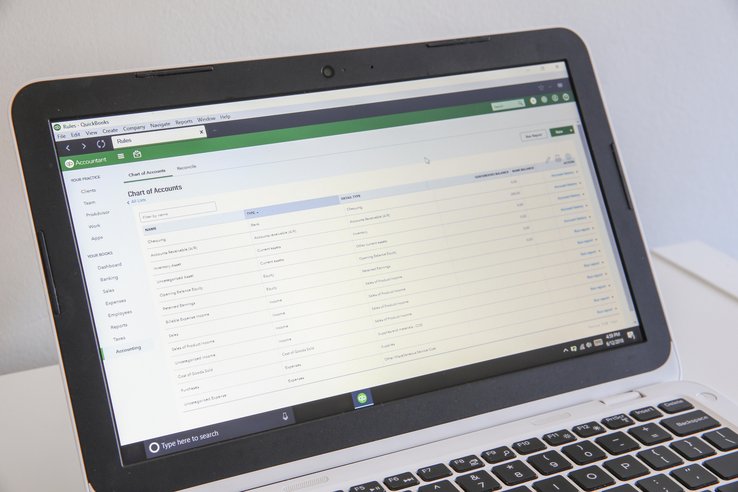
The best construction accounting software in 2026 are QuickBooks Online for small contractors, CrewCost for growing and midmarket construction businesses,…
Frequently Asked Questions
What is the difference between construction accounting and standard accounting?
Standard accounting measures financial performance across an entire company over fixed periods, like a fiscal quarter or year. Construction accounting isolates every job site as a distinct profit center. Because a single project might span multiple tax years and involve irregular cash flow—such as upfront material purchases followed by 60-day payment delays—contractors must track direct costs, allocate overhead, and recognize revenue on a per-project basis to determine actual profitability.
What is the best revenue recognition method for a construction company?
Most commercial contractors rely on the Percentage of Completion Method (PCM). PCM matches earned revenue with incurred costs as the project progresses, providing an accurate picture of job profitability and preventing artificial balance sheet losses during heavy production months. The IRS mandates PCM for contractors exceeding specific gross receipt thresholds. Conversely, short-term specialty trades and certain residential builders often use the Completed Contract Method (CCM) to defer recognizing revenue until project completion.
How do retainage withholdings affect a contractor’s cash flow?
Project owners and general contractors typically withhold 5% to 10% of every progress payment until a job reaches substantial completion to ensure work meets contract specifications. Because contractors must pay labor, subcontractors, and suppliers at 100% during the active billing cycle, this withholding creates a temporary cash flow deficit. In many cases, the withheld retainage represents the contractor’s entire profit margin on the job, forcing the business to float operational costs or rely on a line of credit until final closeout.
What does it mean if a project is overbilled?
Overbilling occurs when a contractor invoices the project owner for a higher percentage of the contract value than the actual percentage of costs incurred to date. From a field operations standpoint, overbilling provides positive cash flow, funding current project operations. However, on the balance sheet, overbilling is recorded as a short-term liability (Billings in Excess of Costs). The contractor has collected cash for field work not yet performed and must reserve those funds to cover future labor and material costs required to complete that scope.
Do contractors pay sales tax on building materials?
In most states, contractors are legally considered the end-user of construction materials and pay sales tax directly to the supplier at the point of purchase. However, rules shift based on project type and location. On public works or non-profit projects, contractors can often buy materials tax-free using a project-specific exemption certificate. Additionally, if a contractor purchases materials in a state with low or no sales tax and transports them to a job site in a state with a higher rate, the contractor owes destination-based use tax to the state where the materials are permanently installed.
References & Additional Resources
- Construction Financial Management Association (CFMA): The primary professional organization for construction financial professionals who establish industry-standard benchmarks for job costing, WIP reporting, and financial controls.
- American Institute of Architects (AIA): The leading professional organization for architects and design professionals who design and publish the standard G702 and G703 progress billing forms used across commercial construction.
- Internal Revenue Service (IRS): The federal revenue agency of the United States who defines the gross receipt thresholds mandating the use of the Percentage of Completion Method (PCM) for long-term construction contracts.
- U.S. Department of Labor (DOL): The federal agency responsible for enforcing wage and hour standards who sets prevailing wage rates under the Davis-Bacon Act and mandates WH-347 certified payroll reporting on federally funded projects.